
How to Write a Job Description: Complete Guide, Template & Samples
Recruit
Job Description
15 min read

Key Highlights
A strong job description attracts qualified candidates before the first interview begins.
Clear job titles improve search visibility and help candidates understand the role faster.
Separate must-have and nice-to-have qualifications to avoid discouraging suitable applicants.
Salary range, work setup, and reporting details improve transparency and candidate experience.
An ATS helps teams standardize job descriptions, manage applicants, and keep hiring workflows organized.
Introduction
Most job descriptions are written simply to explain a role. However, the best ones go beyond listing responsibilities; they attract the right candidates. That difference often determines who applies and who doesn't.
A job description that simply outlines duties and requirements feels like a checklist. Candidates quickly move on to opportunities that clearly explain the role and why it's worth considering.
Knowing how to write a job description means treating it as your first opportunity to attract qualified candidates, not just another document to complete.
The right words encourage the right people to apply, while unclear ones may cause them to look elsewhere.
In this guide, you’ll learn how to write a clear job description, what to include, what mistakes to avoid, and how to use templates and examples to get started.
What Makes a Great Job Description?
A great job description explains the role clearly, attracts suitable candidates, and helps the hiring team evaluate applicants consistently.
It gives candidates enough information to understand the job without making the description too long or confusing.
The best job descriptions answer five basic questions:
What is the role?
What will the person do?
What skills and qualifications are required?
Who will the person work with or report to?
Why should a qualified candidate apply?
That clarity matters because poor role definition creates expensive hiring problems. A weak job description increases the risk of attracting the wrong candidates. In fact, some hiring-cost estimates put the average cost of a bad hire at around $15,000, and the cost rises even higher for senior or specialized roles.
Think of a job description as a blueprint for a role. Before hiring begins, the company defines the work that needs to be done, the skills required for the role, and how the position fits within the team.
Once these details are clearly documented, recruiters know who to look for, candidates know whether the role is right for them, and managers have clear expectations from the start.
“We’ve gotten so far away from what the actual intent of a job description is and what it should be.” -Trent Cotton, Head of Talent Insights, iCIMS
Job Description vs Job Posting: Know the Difference
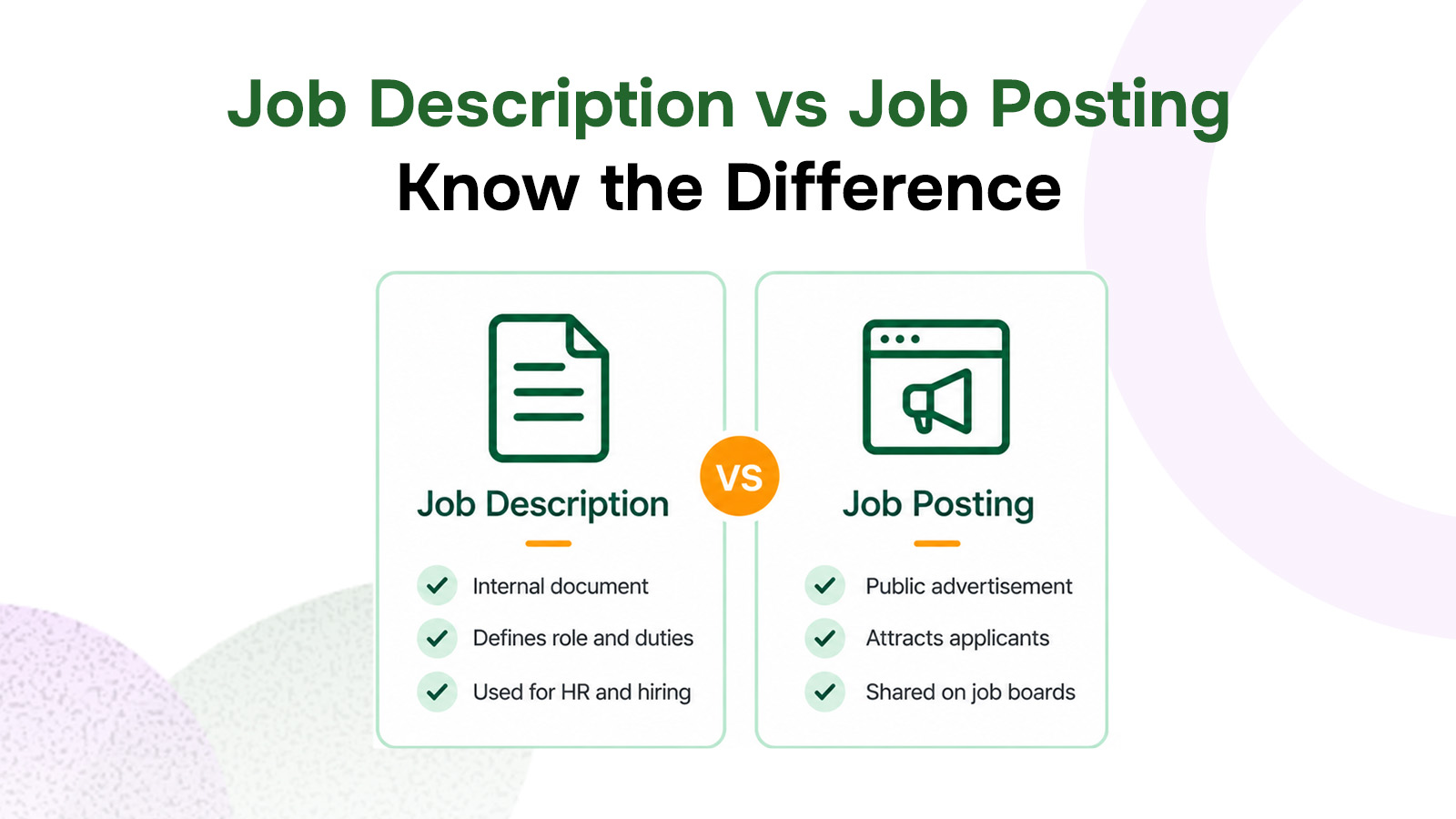
While a job description and a job posting are connected, they are not the same. A job description defines the role internally, and job posting advertises it externally.
For example, an internal job description includes job classification, reporting lines, essential functions, and performance expectations.
A job posting focuses more on the role summary, main duties, salary range, benefits, company culture, and application steps.
The table below shows how they differ by purpose, audience, tone, level of detail, and where each one is used.
Area | Job Description | Job Posting |
Main purpose | Defines the role and its requirements | Attracts qualified candidates to apply |
Main audience | HR teams, hiring managers, employees, and recruiters | Job seekers and potential candidates |
Tone | Clear, structured, and informative | Clear, engaging, and candidate-focused |
Detail level | Comprehensive and detailed | Concise and easy to scan |
Used for | Hiring, performance management, HR planning, and compliance | Job boards, career pages, company websites, and social media |
How to Write a Job Description Step by Step
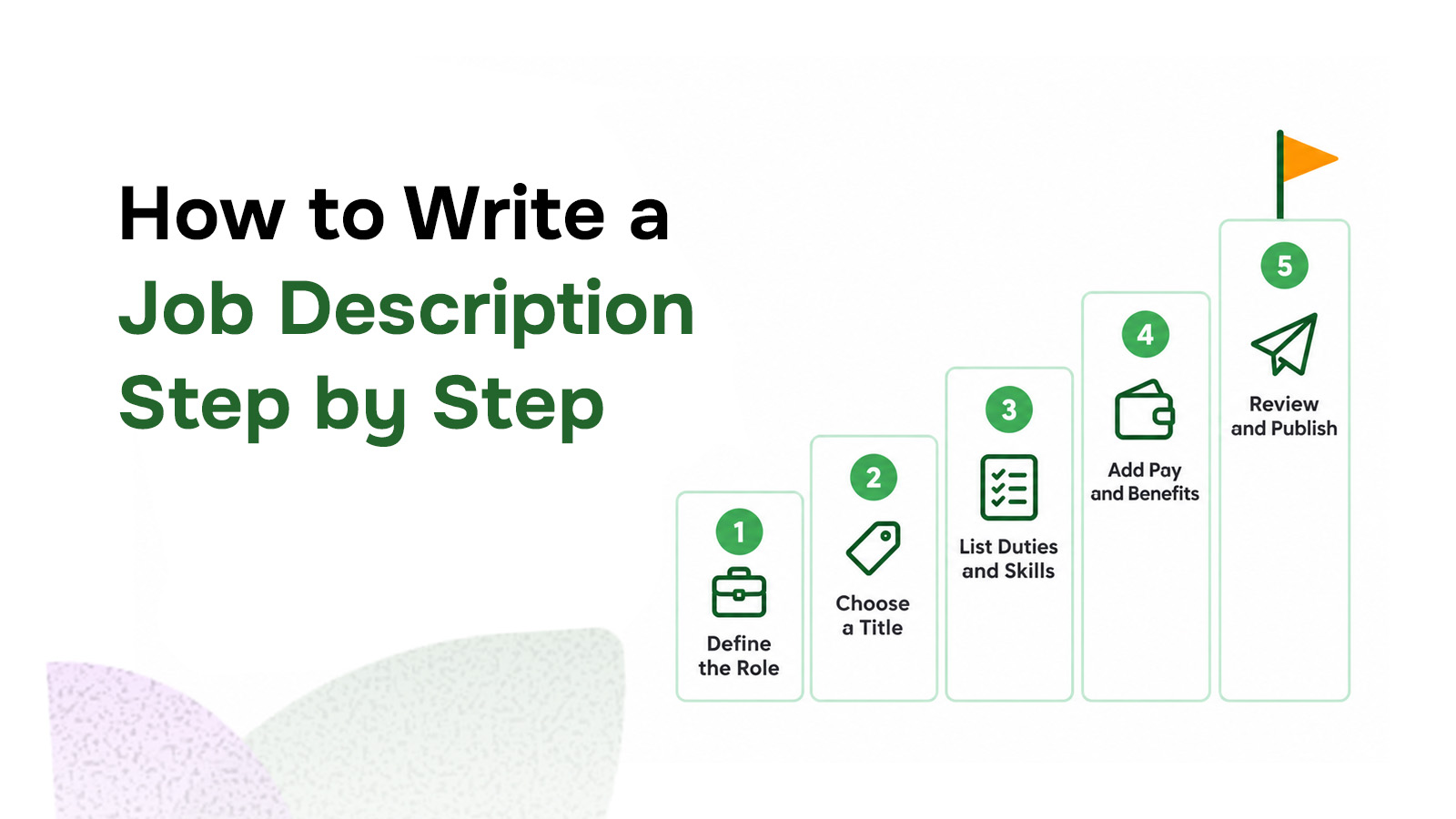
Writing a job description becomes easier when you follow a simple structure as:
Step 1: Analyze the Role
Before writing a word, find out what the job involves and talk to the hiring manager about their expectations.
This process helps you identify the role's actual responsibilities rather than assumptions.
For example, “we need a marketing person” is not enough. That could mean an SEO specialist, social media executive, paid ads manager, content writer, brand strategist, or marketing coordinator.
A better hiring need sounds like this: We need someone to improve organic traffic by managing keyword research, SEO content planning, on-page optimization, and monthly performance reporting.
Step 2: Write a Clear and Searchable Job Title
Choose a standard, searchable title that clearly reflects the role and seniority.
The title should indicate the level, such as Junior, Senior, or Lead, and the function, such as Marketing, Sales, or Engineering.
Avoid creative titles like "Marketing Rockstar", “Coding Ninja”, and “Sales Wizard” because candidates rarely search for them.
A clear title like "Senior Marketing Manager" is easier to find and understand.
Step 3: Draft a Short Summary
Write a short summary in two or three sentences explaining what the role does and why it matters.
Since this is the first section that candidates read, highlight the most appealing part of the job.
For example, “We are hiring an SEO Specialist to improve organic search performance across our website and blog. This role will work with the content and marketing teams to handle keyword research, on-page optimization, content recommendations, and monthly SEO reporting.”
Avoid summaries that sound impressive but say very little and use specific language to attract better-fit candidates.
Step 4: List Key Responsibilities
Key responsibilities explain what the person will actually do in the role. This is one of the most important parts of an effective job description.
Include five to eight bullet points describing the role's main responsibilities. But if the list becomes too long, candidates may feel the job is overloaded or unclear,
For example, a Digital Marketing Executive job description may include:
Conduct keyword research for website and blog content
Plan and publish social media content
Track campaign performance using analytics tools
Coordinate with designers for campaign creatives
Support SEO, paid ads, and email marketing activities
This makes the role easier to understand and helps candidates compare their experience with job requirements.
Step 5: Define Qualifications and Skills
List the qualifications and skills candidates need to perform the role successfully. Separate them into must-have and nice-to-have requirements.
Must-haves include essential qualifications, such as a required certification or technical skill, while nice-to-haves describe additional skills that are beneficial but not required.
Do not turn every nice-to-have skill into a requirement. If the candidate can learn it after joining, it probably belongs in the preferred section.
Also, keep the list realistic, so qualified candidates are not discouraged from applying.
Step 6: Add the Logistics
Nowadays, salary transparency is becoming a standard part of modern job descriptions.
Some reports suggest that 59% of U.S. job postings included salary information. Therefore, include the salary range so candidates know whether the role matches their expectations before applying.
Additionally, state who the role reports to, whether it includes managing a team, the work location, whether it is remote or hybrid, or on-site.
For example, "Hybrid role based in Kathmandu, reports to the Marketing Manager, NPR 70,000–90,000 per month."
These details help candidates quickly decide whether the role matches their needs and expectations.
“Workers are six times more impacted by pay equity than they are by level of pay.”, -Josh Bersin, Founder and CEO, The Josh Bersin Company
Step 7: Show the Company and Team Context
Candidates want to understand more than the task list. They also want to know what kind of team they will join and why the role matters.
Add a short company or team section that explains:
What the company does
What the team works on
Why the role is open
How the role contributes to the business
Keep this section honest and specific, for example, our marketing team manages website content, SEO, paid campaigns, and lead generation for a B2B SaaS product. This role will help improve organic traffic and support qualified lead growth through better content.”
Step 8: End With a Clear Call to Action
A job description should tell candidates what to do next with a simple, direct, and easy-to-follow call to action.
Examples:
Apply with your updated resume and portfolio.
Submit your CV and a short cover letter.
Apply through the form below.
Send your resume with the subject line “SEO Specialist Application.”
Share your resume and three writing samples.
Rather than saying “interested candidates may contact us”, directly tell candidates how to apply and what documents to submit.
“Most hiring problems can be eliminated by making one fundamental and simple change: replacing job descriptions with a list of performance objectives the new hire is expected to achieve.”,- Lou Adler, CEO and Founder, The Adler Group
Every Application, Organized the Moment It Arrives
Once candidates apply, track each one by role and hiring stage, so no strong applicant slips through the cracks.
A Simple Job Description Template to Start With
Use this job description template as a starting point. Adjust the details based on the role, company, seniority, and hiring goals.
Job Title: [Enter clear job title]
Department: [Enter department name]
Reports To: [Enter manager or role title]
Employment Type: [Full-time, part-time, contract, internship]
Location: [Remote, hybrid, onsite, city, country]
Salary Range: [Enter salary range or compensation details]
Job Summary:
We are hiring a [job title] to [main purpose of the role]. This role will work with [team/department] and focus on [main work areas].
Key Responsibilities:
[Responsibility 1]
[Responsibility 2]
[Responsibility 3]
[Responsibility 4]
[Responsibility 5]
Required Qualifications:
[Required experience]
[Required skill]
[Required education or certification, if needed]
[Required tool or technical knowledge]
Preferred Qualifications:
[Nice-to-have experience]
[Helpful industry background]
[Additional tool or software knowledge]
Skills and Competencies:
[Skill 1]
[Skill 2]
[Skill 3]
[Skill 4]
About the Team: [Briefly explain the team, work environment, and how the role contributes]
Benefits:
[Benefit 1]
[Benefit 2]
[Benefit 3]
How to Apply:
[Explain the application process clearly]
Turn Your Template into a Live Opening
Create the role, publish it, and keep every applicant organized under the job they applied for.
Job Description Examples for Different Roles
Example 1: Content Marketing Specialist
Job Title: Content Marketing Specialist
Department: Marketing
Reports To: Marketing Manager
No. of Vacancies: 1
Employment Type: Full-time
Location: Hybrid, three days on-site, Kathmandu, Nepal
Salary Range: NPR 70,000–90,000 per month
Job Summary: We are hiring a Content Marketing Specialist to grow our blog traffic and bring in qualified leads. This role will work with the marketing team and focus on content creation, SEO, and editorial planning.
Key Responsibilities:
Write and publish four blog articles a week
Manage the monthly content calendar
Optimize content for search using SEO best practices
Track content performance using analytics tools
Coordinate with designers on visuals and assets
Required Qualifications:
2+ years of content writing experience
Strong writing and editing skills
Working knowledge of SEO
Experience with a CMS such as WordPress
Preferred Qualifications:
Experience writing for a SaaS or B2B audience
Familiarity with keyword research tools
Basic knowledge of email marketing
Skills and Competencies:
Clear, engaging writing
Attention to detail
Time management
Data-informed thinking
About the Team: You'll join a small, fast-moving marketing team that ships content weekly and reviews each other's work openly. This role owns the blog and shapes how the brand sounds online.
Benefits:
Health insurance
Paid annual leave
Flexible hybrid schedule
How to Apply: Send your resume and two writing samples through the application link below. Applications are reviewed on a rolling basis.
Example 2: Junior Software Developer
Job Title: Junior Software Developer
Department: Engineering
Reports To: Senior Software Engineer
No. of Vacancies: 1
Employment Type: Full-time
Location: Hybrid, two days on-site, Kathmandu, Nepal
Salary Range: NPR 45,000–65,000 per month
Job Summary: We are hiring a Junior Software Developer to support the development and maintenance of web applications. This role will work with the engineering team and focus on writing clean code, fixing bugs, testing features, and learning production-level development practices.
Key Responsibilities:
Write and maintain frontend or backend code based on project requirements
Fix bugs and improve existing application features
Work with senior developers during code reviews
Test features before deployment
Document technical changes clearly
Coordinate with designers, QA testers, and project managers
Required Qualifications:
Basic knowledge of JavaScript, React, Node.js, or a similar technology stack
Understanding of HTML, CSS, APIs, and databases
Familiarity with Git or version control
Ability to debug simple technical issues
Strong willingness to learn and improve
Preferred Qualifications:
Internship or project experience in web development
Familiarity with Agile development workflows
Basic knowledge of cloud platforms or deployment tools
Skills and Competencies:
Logical thinking
Problem-solving
Attention to detail
Team collaboration
Learning mindset
About the Team: You’ll join an engineering team that builds and maintains web-based software products. This role is designed for someone who understands development fundamentals and wants to grow through real project work, code reviews, and team collaboration.
Benefits:
Health insurance
Paid annual leave
Learning and training support
Flexible hybrid schedule
How to Apply: Send your resume, GitHub profile, and any relevant project links through the application link below.
Example 3: Customer Support Representative
Job Title: Customer Support Representative
Department: Customer Success
Reports To: Customer Support Lead
No. of Vacancies: 2
Employment Type: Full-time
Location: On-site, Lalitpur, Nepal
Salary Range: NPR 35,000–50,000 per month
Job Summary: We are hiring a Customer Support Representative to help customers resolve product questions and service issues quickly. This role will work with the customer success team and focus on customer communication, ticket handling, and issue follow-up.
Key Responsibilities:
Respond to customer queries through email, chat, and phone
Record customer issues in the support system
Troubleshoot common product or service problems
Escalate technical issues to the right internal team
Follow up with customers until their issues are resolved
Maintain clear notes on customer conversations
Required Qualifications:
1+ year of customer support or service experience
Strong written and verbal communication skills
Basic computer and documentation skills
Ability to handle customer concerns calmly
Good problem-solving skills
Preferred Qualifications:
Experience using helpdesk or CRM software
Experience in a SaaS, IT, or service-based company
Basic understanding of technical support workflows
Skills and Competencies:
Clear communication
Patience and empathy
Problem-solving
Attention to detail
Time management
About the Team: You’ll join a customer success team that works closely with product, sales, and technical support. This role helps customers get timely answers and ensures their issues are properly tracked and resolved.
Benefits:
Health insurance
Paid annual leave
Lunch allowance
Supportive team environment
How to Apply: Send your resume through the application link below. Shortlisted candidates will be contacted for a screening call.
“More paragraphs doesn’t make for a better hire.” - Marc Cenedella, CEO of Ladders
Things to Avoid When Writing Job Descriptions

Most weak job descriptions share the same handful of mistakes. Avoid these mistakes:
Using vague titles: Creative names like "Marketing Ninja" hide your role from search and confuse candidates. Stick to standard, searchable titles.
Listing too many requirements: A long wish list of must-haves scares off qualified people. Keep the essentials tight and move the rest to nice-to-have.
Hiding the salary: Skipping pay makes candidates assume the worst and skip your role. A clear range attracts serious applicants.
Writing walls of text: Dense paragraphs and endless bullet points lose readers. Keep it scannable with short sections and clear headings.
Using non-inclusive language: Words like "rockstar," "ninja," or gendered terms can narrow your pool. Use gender-neutral, inclusive wording so everyone qualified feels welcome to apply.
Copying old descriptions: Reusing a three-year-old post means listing duties for the role no longer includes. Update it before every new hire.
Forgetting the candidate experience: A confusing or cold posting sets the tone for how people expect to be treated. Write it like you respect the reader's time.
Why Growing Teams Use an ATS for Job Descriptions
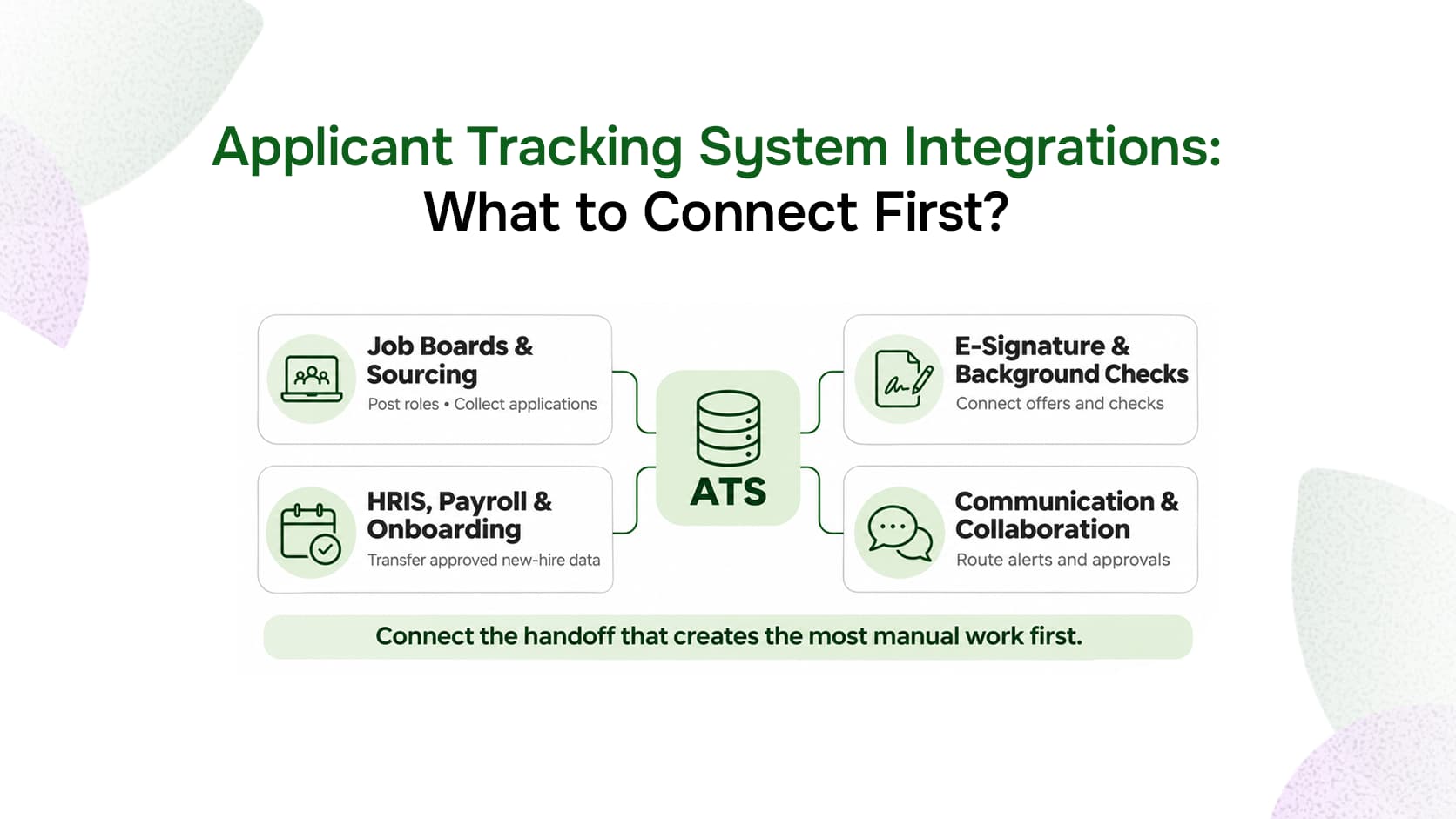
An ATS (Applicant Tracking System) affects how job descriptions are stored, posted, searched, and used in the hiring process.
When every hiring manager writes job descriptions in a different style, the company’s job posts start to feel inconsistent and disconnected.
Using templates inside an ATS helps prevent this by giving every team the same structure for job titles, summaries, responsibilities, qualifications, benefits, and application steps.
It helps with:
Posting jobs to career pages or job boards
Storing job descriptions and templates
Managing applications by role
Tracking candidate sources
Organizing screening stages
Keeping hiring teams aligned
Maintaining candidate records
One Structure for Every Job Post, One Place for Every Applicant
Keep job descriptions consistent across hiring managers, manage applications by role, and see where your best candidates come from.
Try Mercury Recruit FreeConclusion
A job description is the first serious conversation a candidate has with your company, even before a recruiter sends a message or an interview is scheduled.
It tells them what the role is, what the company values, and whether the opportunity deserves their attention.
This is why a rushed job description creates problems early. It brings in candidates who guessed wrong, leaves qualified applicants unsure, and gives you a weaker starting point for screening.
Before you publish your next opening, read the description like a candidate. If it answers what the job is, what success looks like, and why the role is worth applying for, it is ready to support better hiring.
FAQs
Frequently Asked Questions
A job description should include the job title, job summary, key responsibilities, required qualifications, preferred qualifications, skills, salary range, employment details, reporting structure, and application instructions.