
What Is a Job Description? Meaning, Key Components & Example
Recruit
Job Description
9 min read
Key Highlights
Job descriptions define roles, support hiring decisions, and create clear expectations for employers and candidates.
Understanding the key components and purpose of a job description helps improve recruitment and workforce planning.
Job descriptions and specifications serve different purposes but work together to define the role and the ideal candidate.
Following a structured writing process helps create accurate, searchable, and candidate-friendly job descriptions.
Well-written job descriptions support hiring, performance management, legal compliance, onboarding, and long-term employee success.
Introduction
Every great hire begins with the same critical foundation: the job description. It’s not just a list of requirements but the first impression that defines role expectations, signals company culture, and helps top talent decide if the opportunity is worth their time.
Although a job description is the foundation of the recruitment process, many companies underestimate it and write it like a quick checklist.
That approach usually creates a vague role summary that attracts the wrong applicants, confuses qualified candidates, and makes candidate screening harder for recruiters.
So what exactly goes into a job description, and why does each part matter? Let’s start with the basics.
What Is a Job Description?
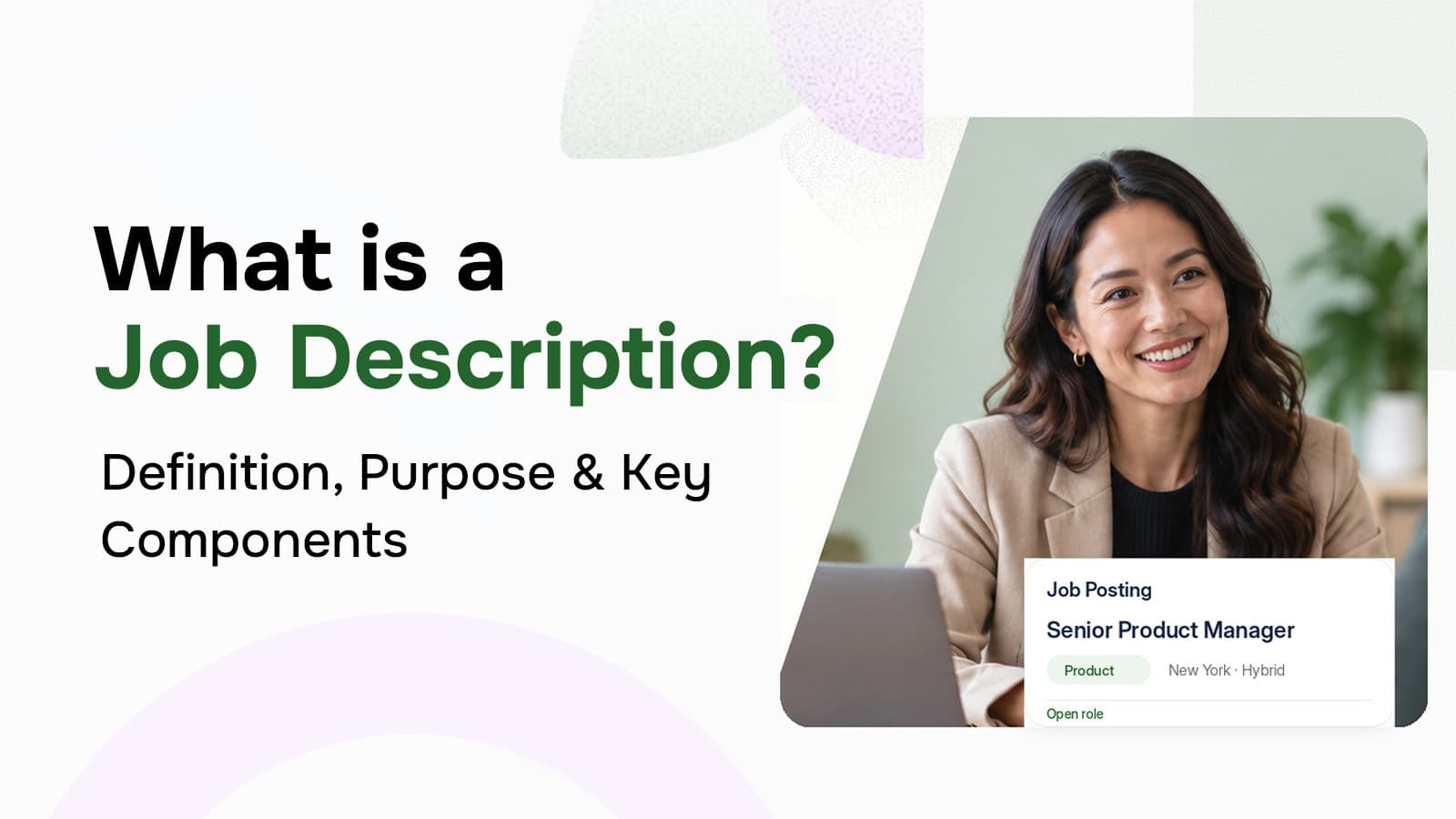
A job description is a written document that explains the duties, responsibilities, qualifications, and reporting structure of a specific role.
It tells the reader what the job involves and what kind of person the company wants.
In HR, the job description does two jobs. Inside the company, it guides hiring, sets expectations, and supports pay and promotion decisions. Outside the company, it becomes the base for the job posting that candidates read.
Think of a job description as a plan for a position. Before hiring begins, the company defines what work needs to be done, what skills the role requires, and how the position fits into the team.
Writing those details down helps recruiters, candidates, and managers understand the role in the same way.
What Is the Purpose of a Job Description?
The purpose of the job description is to define a role clearly so that the right candidate applies and gets hired.
A job description supports several parts of HR and recruitment:
Hiring and candidate screening
Interview planning
Role alignment with hiring managers
Salary and compensation planning
Job classification
Employee onboarding
Performance management
Training and development
Internal promotion planning
Compliance and documentation
Who uses a Job Description?
Primarily five groups use a job description, each for a different reason:
HR team: To define role structure, classification, compliance, and documentation
Recruiters: To screen candidates and writes job postings
Hiring managers: To clarify responsibilities and interview criteria
Candidates: To decides whether the role matches their skills and goals
Leadership: To plan workforce needs, budgets, and team structure
For example, when hiring a Digital Marketing Executive, the HR team creates the job description, the recruiter uses it to source and screen candidates, the hiring manager uses it to evaluate applicants during interviews, the candidate reviews it to understand the role before applying, and leadership ensures the position aligns with the company's hiring needs.
By giving everyone the same role expectations, a job description helps keep the hiring process consistent from start to finish.
Job Description Components You Should Not Miss
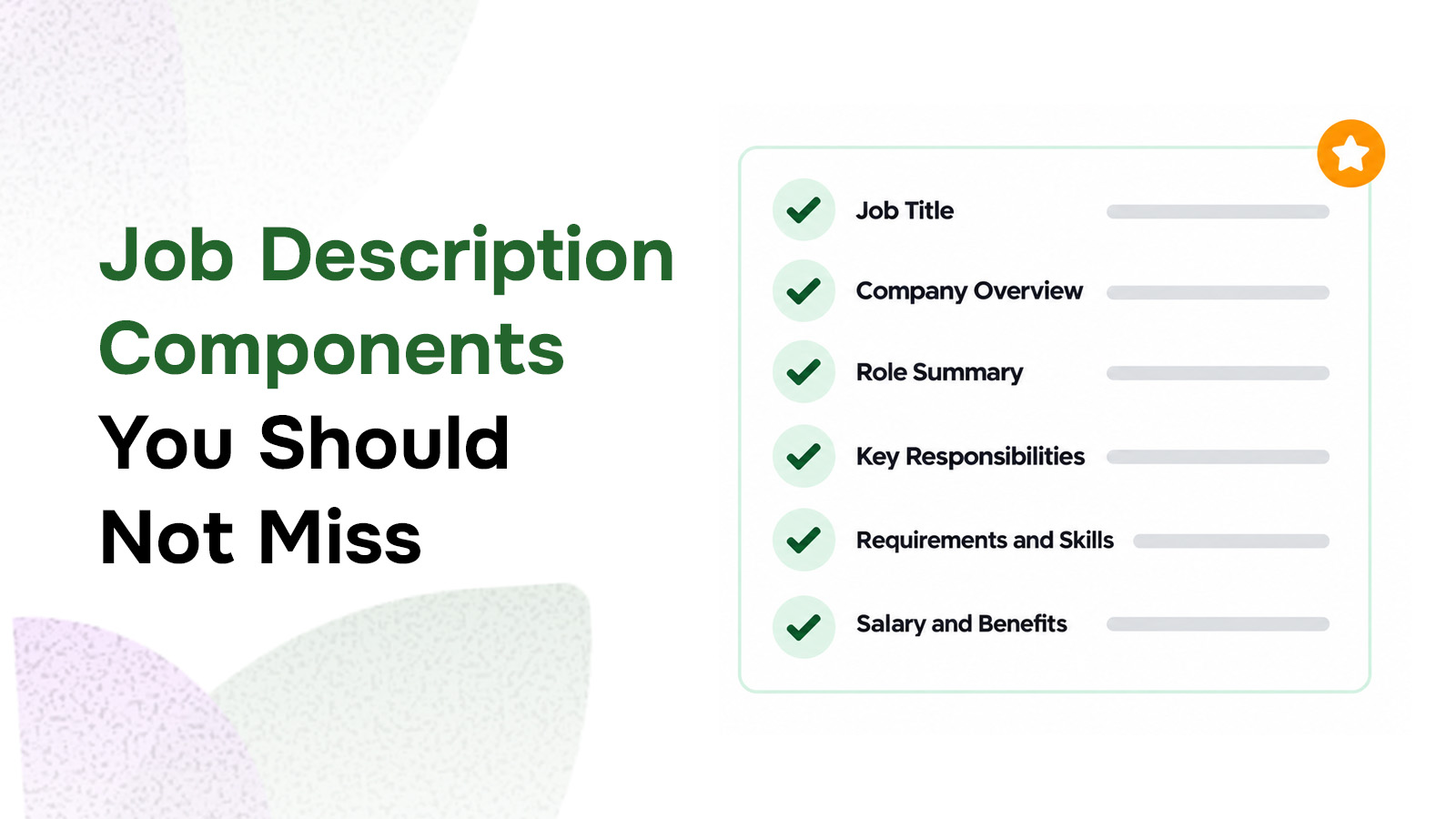
A strong job description includes six core parts:
1. Job Title
The job title identifies the position and gives candidates an immediate understanding of the role.
It reflects the job's function, seniority, and area of responsibility.
A clear and standardized title also helps candidates find the role more easily during their job search.
2. Job Summary
The job summary provides a brief overview of the role and its primary purpose.
It highlights the position's main objective and how it contributes to the organization.
This gives candidates a quick understanding of the role before they review the detailed responsibilities.
3. Key Responsibilities and Duties
Key responsibilities outline the employee's primary duties and day-to-day responsibilities.
It explains what the employee is expected to do after joining the role.
Clear responsibilities help candidates determine whether their experience matches the position.
4. Required Qualifications and Skills
This section outlines the education, work experience, technical skills, certifications, and other qualifications needed for the role.
It defines the minimum requirements candidates should meet before applying.
Some job descriptions also distinguish between required and preferred qualifications.
5. Reporting Structure and Location
The reporting structure explains where the role fits within the organization.
It identifies who the employee reports to, whether the role includes managing a team, and the work location.
It also specifies whether the position is remote, hybrid, or on-site.
6. Compensation and Benefits
This section outlines the salary range and benefits offered for the role. It may include information about bonuses, health insurance, retirement plans, paid leave, or other employee benefits.
Nowadays, salary transparency is becoming a standard part of modern job descriptions.
Some reports suggest that 59% of U.S. job postings included salary information. Providing these details helps candidates understand the overall compensation package before applying.
“Workers are six times more impacted by pay equity than they are by level of pay.” -Josh Bersin, Founder and CEO, The Josh Bersin Company
Job Description vs. Job Specification: What’s the Difference?
A job description explains the role, while a job specification explains the person needed for the role.
Aspect | Job Description | Job Specification |
Focus | The role and its duties | The candidate and their qualifications |
Answers | What does the job involve? | Who can do this job? |
Contains | Job title, duties, responsibilities, reporting structure | Skills, education, experience, qualifications, and personal attributes |
Purpose | Defines the work and expectations of the role | Defines the ideal candidate for the role |
Used by | HR teams, Managers, candidates | Recruiters and hiring managers |
For example, a job description for an Accountant may state that the role involves preparing financial reports, managing invoices, reconciling accounts, and supporting audits.
The corresponding job specification may require a bachelor's degree in finance or accounting, experience with accounting software, strong attention to detail, and knowledge of tax regulations.
In practice, many organizations combine the job description and job specification into a single document.
“We’ve gotten so far away from what the actual intent of a job description is and what it should be.” -Trent Cotton, Head of Talent Insights, iCIMS
Why Every Role Needs a Clear Job Description
A well-written job description provides clarity throughout the employee’s lifecycle and supports decision-making across the organization.
A document that looks like paperwork actually decides whether a company hires well or poorly.
Improves hiring quality: Attracts qualified candidates and reduces mismatched applications.
Supports performance management: Provides a clear benchmark for evaluating employee performance.
Provides legal protection: Documents essential job duties to support compliance with employment and accessibility laws.
Guides the hiring process: Serves as the foundation for job postings, interviews, onboarding, training, and performance reviews.
Turn Job Requirements into Fair, Consistent Evaluations
Score every applicant against the same role criteria, so hiring decisions rest on the job description, not gut feel.
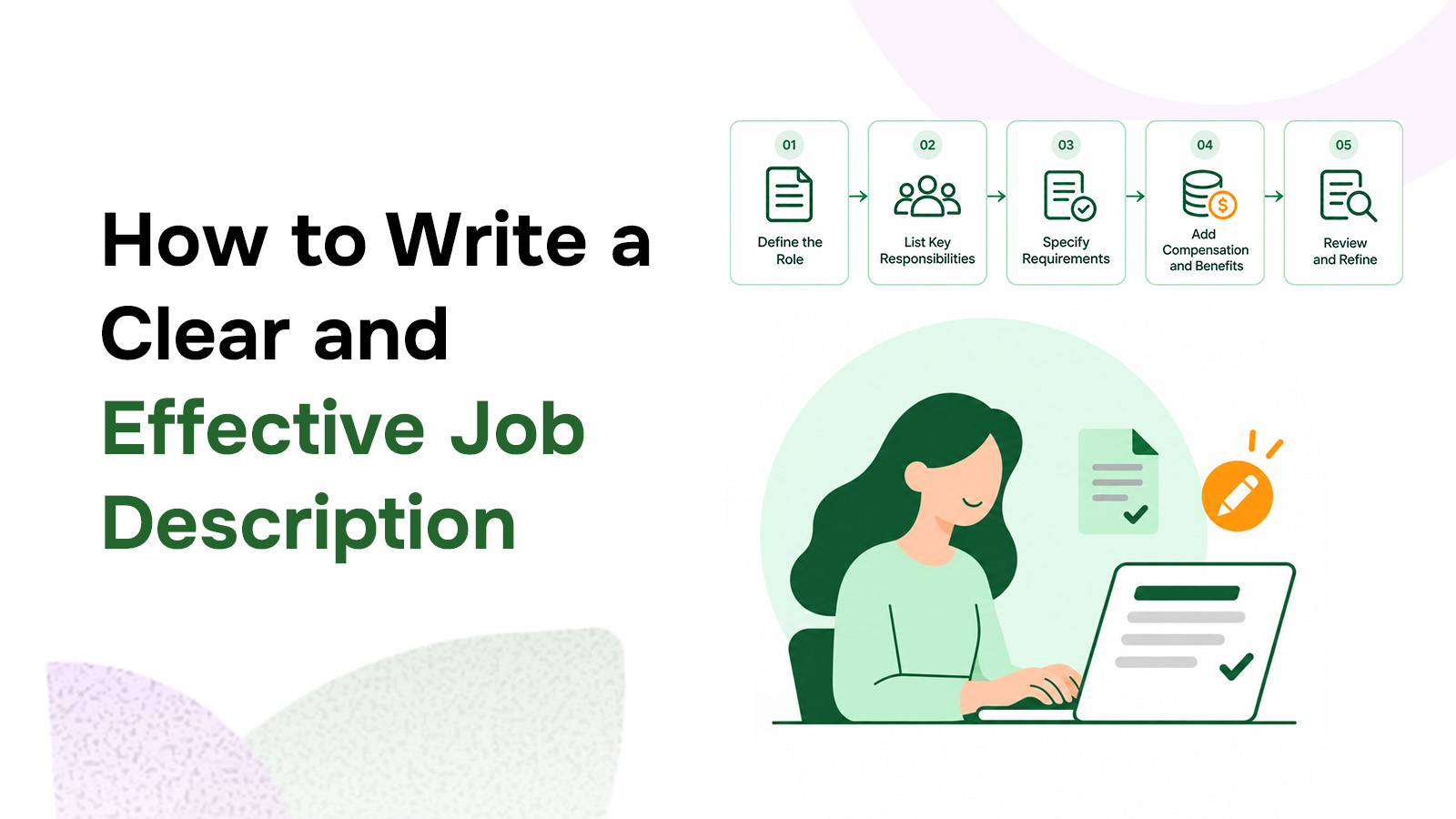
Explore Assessments FeaturesHow to Write a Clear and Effective Job Description
Writing a job description follows six steps:
Analyze the role: Before writing, understand what the job actually involves and talk to the hiring manager about their expectations.
Write a clear job title: Choose a standard, searchable title that clearly reflects the role, function, and seniority level.
Draft a short summary: Write two to three sentences explaining what the role does, why it matters, and what makes the opportunity appealing.
List key responsibilities: Include five to eight bullet points that describe the main tasks the person will handle in the role.
Define qualifications and skills: Separate must-have and nice-to-have requirements so candidates understand what is essential and what is preferred.
Add the logistics: Include details such as reporting line, work location, remote or hybrid setup, salary range, employment type, and team responsibilities.
For a detailed breakdown, read our complete guide on how to write a job description step by step.
“Most hiring problems can be eliminated by making one fundamental and simple change: replacing job descriptions with a list of performance objectives the new hire is expected to achieve.” - Lou Adler, CEO and Founder, The Adler Group
A Well-Written Job Description Example You Can Use
Here's a simple job description that shows the components in action:
Job Title: Content Marketing Specialist
Department: Marketing
Reports To: Marketing Manager
No. of Vacancies: 1
Employment Type: Full-time
Location: Hybrid, three days on-site, Kathmandu, Nepal
Salary Range: NPR 70,000–90,000 per month
Job Summary: We are hiring a Content Marketing Specialist to grow our blog traffic and bring in qualified leads. This role will work with the marketing team and focus on content creation, SEO, and editorial planning.
Key Responsibilities:
Write and publish four blog articles a week
Manage the monthly content calendar
Optimize content for search using SEO best practices
Track content performance using analytics tools
Coordinate with designers on visuals and assets
Required Qualifications:
2+ years of content writing experience
Strong writing and editing skills
Working knowledge of SEO
Experience with a CMS such as WordPress
Preferred Qualifications:
Experience writing for a SaaS or B2B audience
Familiarity with keyword research tools
Basic knowledge of email marketing
Skills and Competencies:
Clear, engaging writing
Attention to detail
Time management
Data-informed thinking
About the Team: You'll join a small, fast-moving marketing team that ships content weekly and reviews each other's work openly. This role owns the blog and shapes how the brand sounds online.
Benefits:
Health insurance
Paid annual leave
Flexible hybrid schedule
How to Apply: Send your resume and two writing samples through the application link below. Applications are reviewed on a rolling basis.
Together, these sections give candidates a complete overview of the role, making it easier to decide whether it matches their skills and expectations.
Your Job Description Is Ready. Is Your Hiring Process?
Post roles, screen applicants, and move the right candidates to an offer, all from one platform.
Try Mercury Recruit FreeConclusion
A job description looks like a simple document, but it runs the entire hiring process. It decides who applies, who gets shortlisted, and how a new hire is evaluated after they join.
A clear description defines the actual responsibilities, asks for the qualifications the role truly requires, and tells candidates exactly what to expect.
Therefore, treat your job description as the foundation of your hiring process.
Get this one right and every other step that follows becomes easier.
FAQs
Frequently Asked Questions
A job description should include the job title, role summary, responsibilities, qualifications, skills, reporting structure, employment details, and compensation information where possible.