
Employee Onboarding Process: Stages, Checklist & 30-60-90 Day Plan
Recruit
Onboarding
18 min read
Key Highlights
Employee onboarding is an ongoing process that helps new hires understand their role, connect with the team, and become productive.
The 4 Cs of onboarding include compliance, clarification, culture, and connection to provide the foundation for a complete onboarding experience.
Onboarding stages are divided into four different stages: Preboarding, the first day, first week, and the first 90 days.
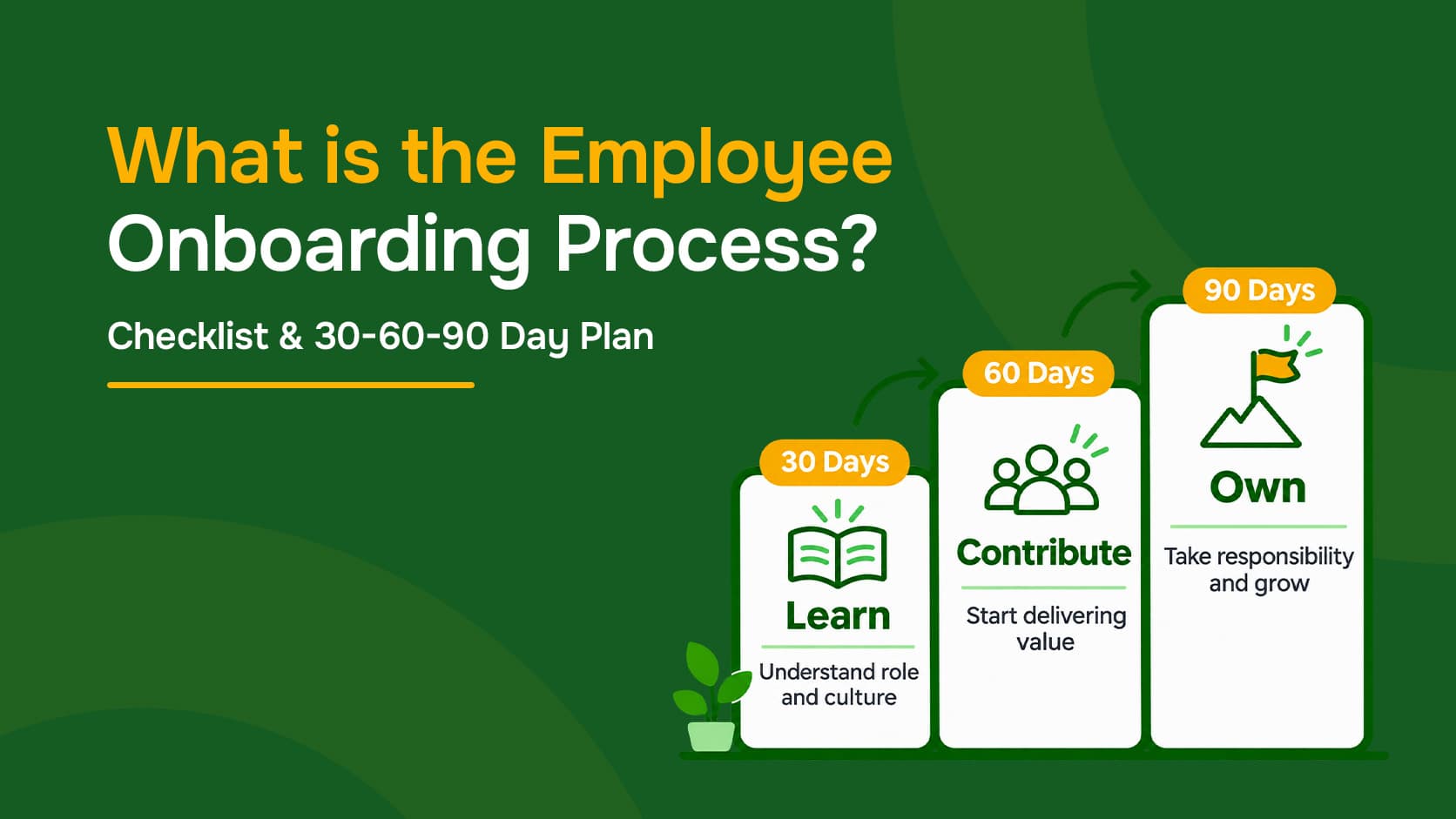
30-60-90-day plan is a structured plan that sets goals and expectations for a new hire's first 90 days. The first 30 days focus on learning, the next 30 on applying skills and contributing, and the final 30 on taking ownership of the role
Introduction
For many organizations, the employee onboarding process ends after the paperwork and first day. That may explain why only 12% of employees believe their company does a great job with onboarding, while just 29% feel prepared and supported to succeed in their new role.
When done well, new hire onboarding helps them adjust faster and creates a better employee experience. In fact, employees with effective onboarding are up to 18 times more likely to feel committed to their workplace.
This guide covers the key stages of employee onboarding, along with a practical checklist. You’ll also find steps to build an effective process and best practices for supporting new hires.
What is the Employee Onboarding Process?
Employee onboarding is a structured process that helps new hires settle into your organization. It begins when a candidate accepts a job offer and may continue through their first few months as they adjust to their role.
Unlike one-time orientation sessions, onboarding provides ongoing support for long-term success. It gives employees the knowledge, resources, and guidance they need to understand their responsibilities and perform their roles effectively.
A structured onboarding process also shapes the employee experience, which is just as important as candidate experience when building a strong employer brand. It helps new hires understand the company culture, build relationships with colleagues, and gain confidence in their roles.
“Customers will never love a company until the employees love it first.” — Simon Sinek, Author and Leadership Speaker
Employee Onboarding vs. Employee Orientation
Employee onboarding and employee orientation are closely related, but they are not the same.
Employee orientation is a single event that introduces new hires to the organization, while employee onboarding is a structured process that supports employees from preboarding through their first few months on the job.
Employee Orientation | Employee Onboarding |
A one-time event, usually on the first day | A structured process that lasts from preboarding to the first 90 days or longer |
Focuses on paperwork, company policies, benefits, compliance, and workplace introductions | Focuses on role-specific training, performance expectations, culture, and relationship building |
Helps employees complete administrative and compliance requirements | Helps employees adapt to their role, team, and organization |
Goal is to prepare employees for their first day | Goal is to improve productivity, engagement, and long-term success |
Part of the onboarding process | Includes orientation along with preboarding, role-specific training, goal setting, regular check-ins, feedback, and ongoing support. |
Usually led by HR. | A shared responsibility between HR, managers, mentors, and team members. |
What are the 4 Cs of Employee Onboarding?
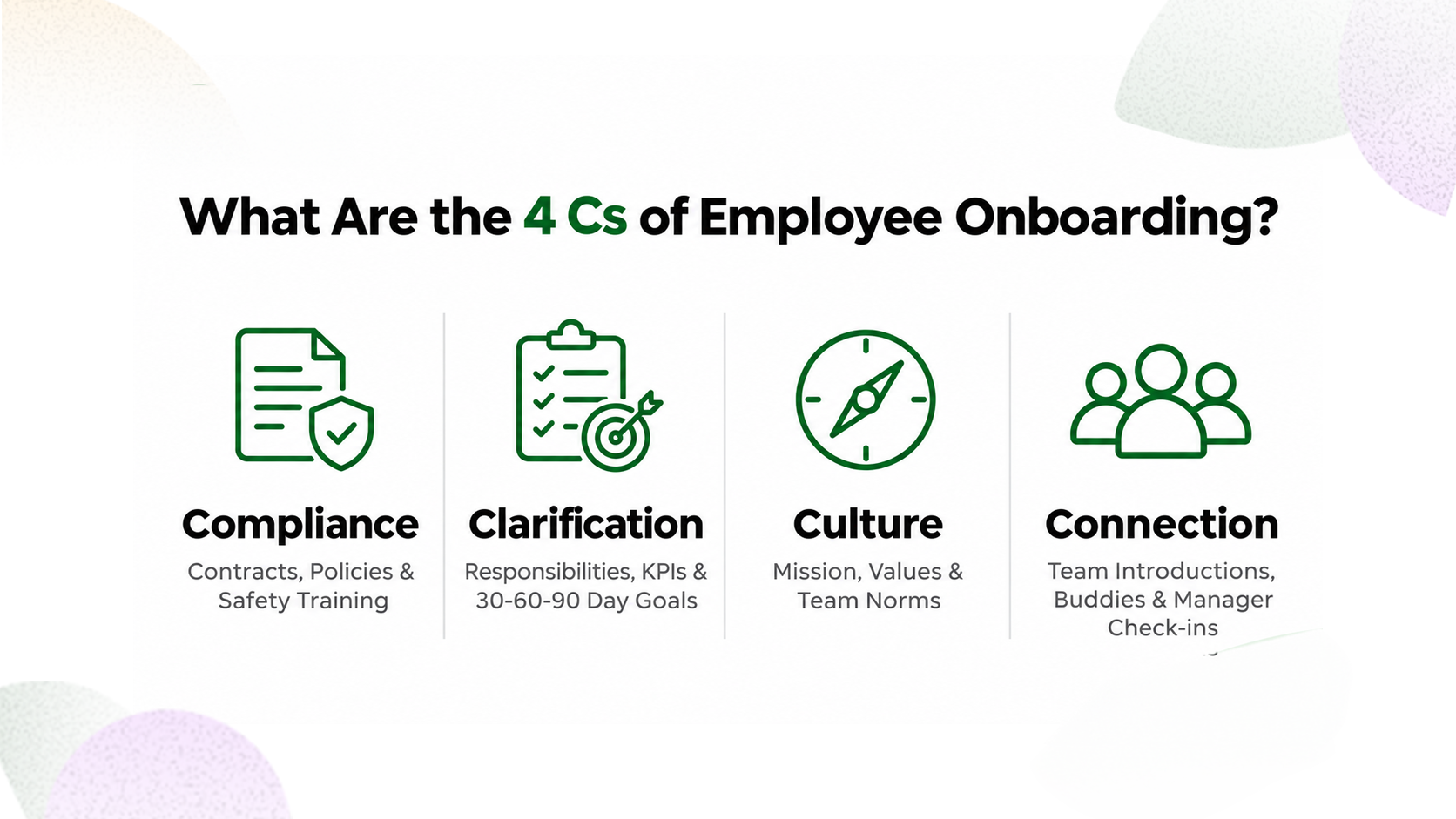
The employee onboarding process is commonly built around the 4 C's of new hire journey: Compliance, Clarification, Culture, and Connection. Each element addresses a different aspect of the employee's journey, from meeting legal requirements to building relationships and setting clear expectations.
1. Compliance
Compliance is the foundation of the onboarding process. It covers all the legal rules and obligations that employees must complete before they can begin work confidently and safely.
It typically includes:
Employment contracts and tax forms
Identity verification and right-to-work documents
Employee handbook acknowledgements
Workplace health and safety training
Policy agreements and electronic signatures
2. Clarification
Clarification ensures the new hires understand their roles and goals from the beginning. Clear expectations reduce uncertainty, prevent mistakes, and help employees become productive sooner.
This usually includes:
Reviewing the job role and responsibilities
Explaining performance expectations and KPIs
Introducing the reporting structure
Setting goals for the first 30, 60, and 90 days
Explaining how success will be measured
3. Culture
Culture introduces new hires to how things actually work beyond written policies. It helps them understand the company's values, communication style, and everyday ways of working.
A cultural experience for a new hire may include:
Introducing the company's mission and values
Explaining team norms and communication practices
Demonstrating how decisions are made
Sharing examples of workplace behaviors and expectations
Encouraging participation in company events and activities
4. Connection
A new employee transition process should focus on helping them build meaningful relationships across the organization. When they feel connected to their team, they are more likely to collaborate effectively, ask for help when needed, and remain engaged.
Organizations often encourage connection through:
Team introductions
Buddy or mentor programs
Regular one-to-one meetings with managers
Informal coffee chats or team lunches
Cross-functional introductions
Building these relationships early reduces isolation, strengthens collaboration, and helps employees feel like part of the team much sooner. According to Gallup, employees with a best friend at work are seven times more likely to be engaged, and close workplace friendships can increase job satisfaction by up to 50%.
Hand Over Every New Hire with Full Context
Keep offer details, notes, and hiring history on one candidate profile.
The Employee Onboarding Process: Step by Step
Onboarding works best when it’s planned in stages rather than squeezed into the first day. Here’s what each stage covers, from offer acceptance through the end of the first 90 days.
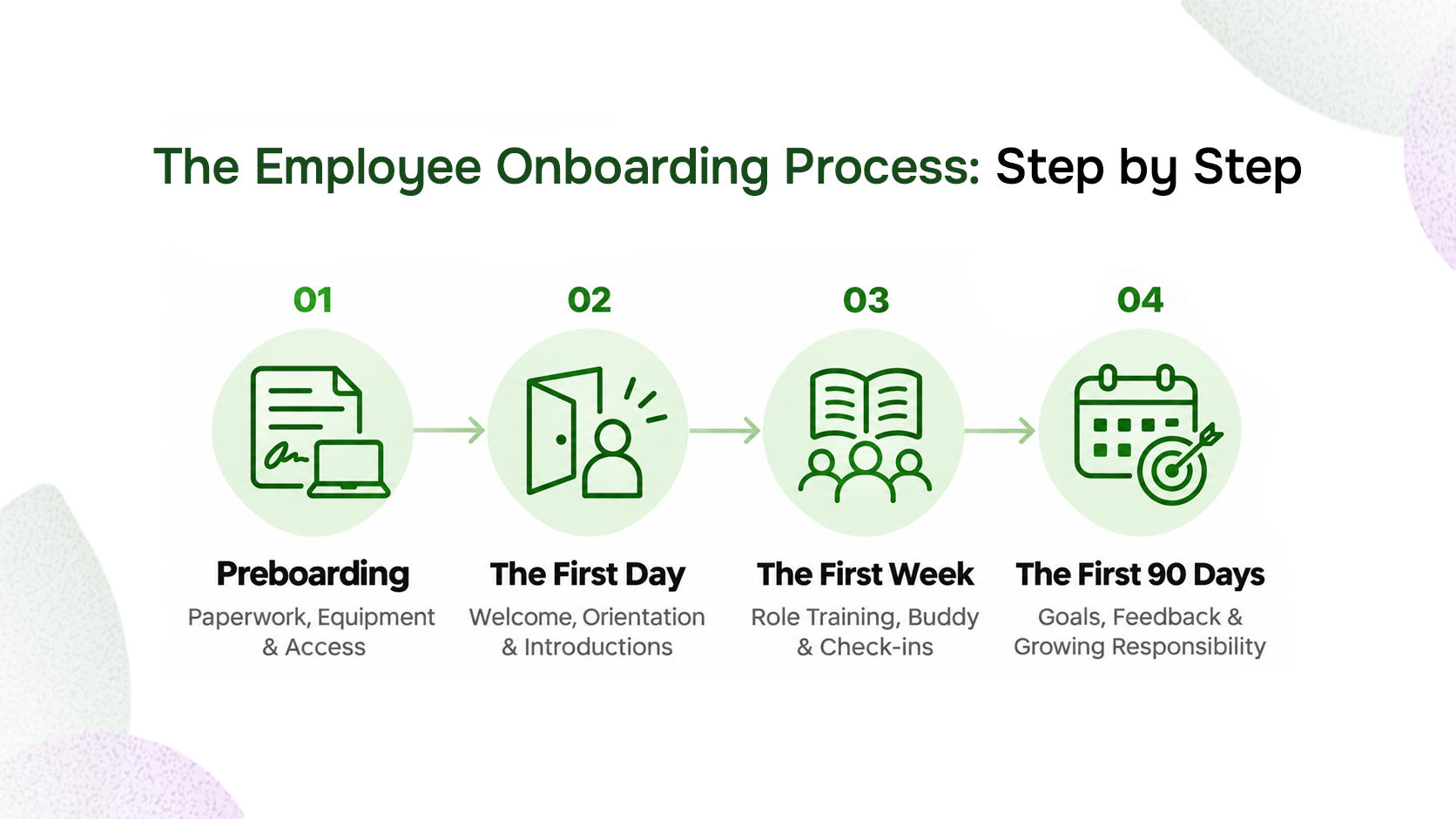
Stage 1: Preboarding (Offer Acceptance to Day One)
Preboarding starts the moment a candidate accepts the offer, not on their first day at work. Although the employee hasn't officially joined the organization yet, this stage gives employers the opportunity to remove administrative hurdles, prepare for the workplace, and make new hires feel welcomed before they walk in.
During this stage, organizations typically:
Send the offer letter and employment contract
Complete background checks and identity verification
Share compliance forms and policy documents
Prepare IT accounts, equipment, and system access
Set up the employee's workspace
Send a welcome email or onboarding schedule
“You never get a second chance to make a first impression.” — Will Rogers
Stage 2: The First Day
The first day marks a new hire’s official start with the organization. They meet their manager and teammates, gain access to the tools and systems they need, and learn about workplace policies and expectations.
Depending on the organization, the day may also include an orientation session, workplace tour, and an initial one-to-one meeting with the manager. A well-planned first day reduces uncertainty and creates a positive first impression.
Common first-day activities include:
Welcome and orientation session
Team introductions
Office or virtual workplace tour
IT and system access confirmation
Employee handbook and policy review
One-to-one meeting with the manager
“People who don't feel like they're able to actually make a contribution, even on Day One, will often feel restless or adrift and remember that feeling for a long time. While we don't want to overwhelm a new hire with too many meetings in their first weeks, I think it's a worse sin to leave them so underwhelmed they feel like their presence is a burden rather than a joy.”— Jill Santopietro Panall, SPHR, SHRM-SCP, Owner and Chief Consultant of 21 Oak HR Consulting
Stage 3: The First Week
The first week is where new hires move beyond introductions and start settling into their role. The focus shifts from learning about the organization to learning how to do the job with confidence.
During this time, employees begin role-specific training, get familiar with the tools and systems they'll use every day, and start working on small tasks or projects. They also meet their buddy or mentor, connect with other departments, and have regular check-ins with their manager to discuss progress, answer questions, and clarify expectations.
By the end of the first week, employees should feel more connected to their team and better prepared for the responsibilities and goals that follow in the coming months.
Stage 4: The First 90 Days
The first 90 days are about helping new hires move from learning the role to feeling confident and settled in. This stage matters for retention too, as 86% of new hires decide how long they will stay with a company within their first six months.
During this period, employees gradually take on more responsibility and become more involved in team goals. Managers should keep regular check-ins to see how things are going, answer questions, and provide feedback. A 90-day touchpoint is also a good time to ask whether the role matches the employee's expectations and what support they need going forward.
Culture and connection should continue to grow as well. At the end of the 90 days, recognize the employee's progress and shift the focus toward their longer-term development.
What Should an Employee Onboarding Checklist Include?
A successful onboarding experience does not happen by chance. It requires a structured approach where every task is completed at the right stage. Use the employee onboarding checklist below to organize key activities from preboarding to the first 90 days.
1. Preboarding Checklist
The goal of preboarding is to prepare everything before the employee's first day, allowing them to focus on settling into their role rather than administrative tasks.
Send the offer letter and employment contract.
Complete background and reference checks.
Collect tax forms, ID verification, and other compliance documents.
Create email accounts and grant system access.
Prepare the laptop, equipment, and workspace.
Share the first-day agenda, reporting details, and welcome email.
2. First-Day Checklist
The first day should make employees feel welcomed, informed, and ready to begin their role.
Welcome the new hire and conduct an orientation session.
Confirm all systems, software, and equipment are working properly.
All HR paperwork is completed.
Introduce the employee to their manager, teammates, and key stakeholders.
Conduct an office or virtual workplace tour.
Review company policies, benefits, and employee handbooks.
Discuss first-week priorities and immediate expectations.
Check-in with manager by the end of the day about the new hire
3. First-Week Checklist
The first week focuses on building confidence through learning, collaboration, and regular support.
Begin role-specific training.
Assign a buddy or mentor.
Introduce cross-functional teams and key stakeholders.
Provide training on internal tools and workflows.
Assign small tasks or shadowing opportunities.
Schedule regular one-to-one check-ins with the manager.
4. First 90 Days Checklist
The final stage helps employees become independent contributors while tracking progress and identifying areas for improvement.
Set clear 30-, 60-, and 90-day goals.
Hold regular feedback and coaching sessions.
Review progress against role expectations.
Increase responsibilities as confidence grows.
Conduct the first performance review or informal assessment.
Gather feedback on the onboarding experience to identify improvements.
The 30-60-90 Day Employee Onboarding Plan
A 30-60-90 day plan turns a new hire’s first three months into a clear path with milestones, so they always know what to focus on next and don’t lose momentum along the way.
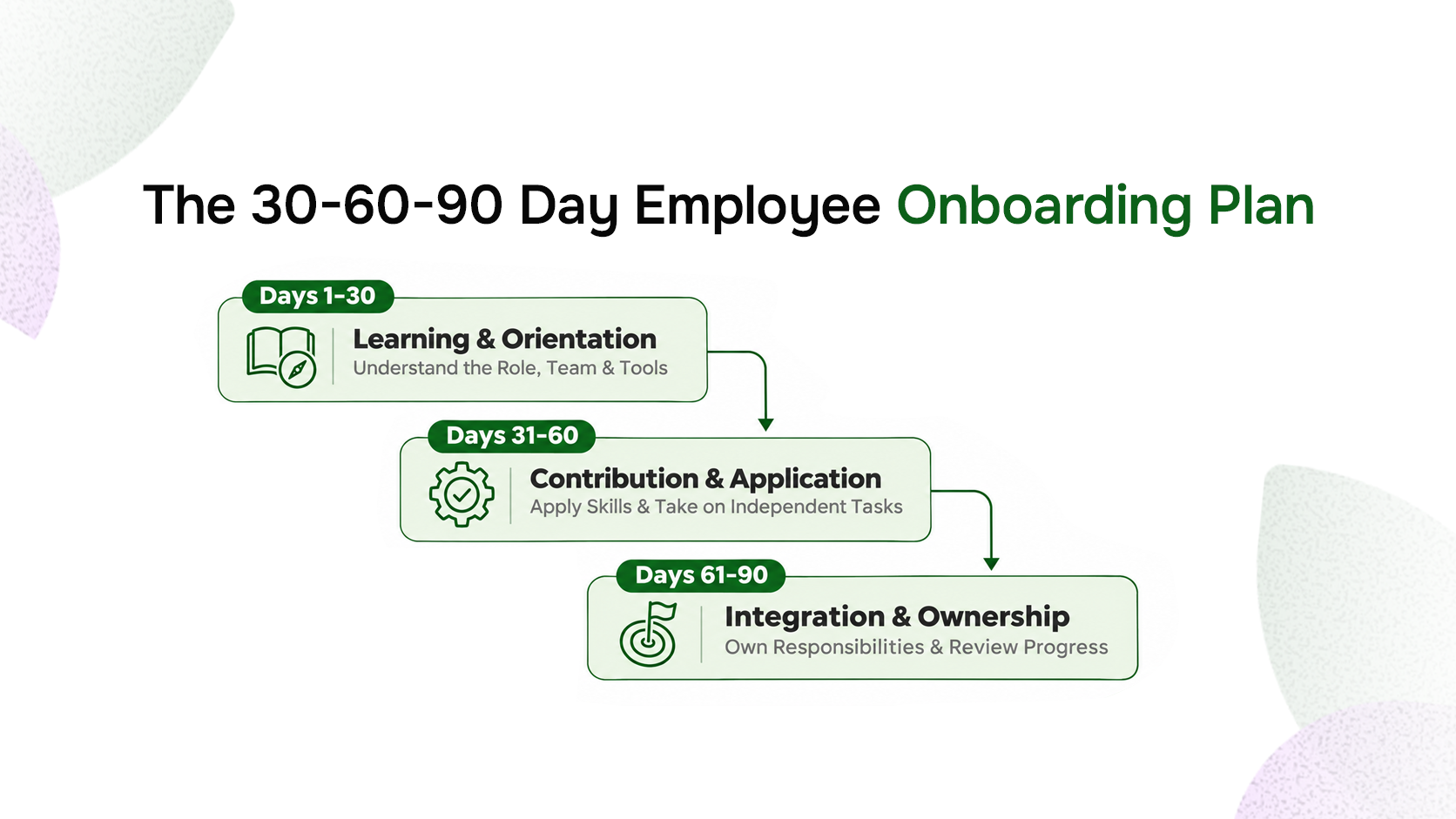
Days 1–30: Learning and Orientation
Primary focus
Understand the organization, role, team, tools, and company culture.
Weekly activities
Week 1
Complete HR paperwork.
Receive IT equipment and system access.
Attend orientation sessions.
Meet the manager and immediate team.
Connect with an assigned buddy or mentor.
Week 2
Begin role-specific training.
Shadow experienced team members.
Learn internal tools and workflows.
Hold the first one-to-one meeting with the manager to discuss expectations.
Week 3
Start working on small tasks with guidance.
Attend team meetings.
Meet colleagues from other departments.
Week 4
Complete initial training modules.
Review early progress with the manager.
Begin handling routine work with limited support.
Success marker
Understands key responsibilities.
Feels comfortable using daily tools and systems.
Completes basic tasks with minimal supervision.
Days 31–60: Contribution and Application
Primary focus
Move from learning to actively contributing.
Strengthen role-specific skills.
Build confidence through practical work.
Weekly activities
Week 5–6
Take ownership of the first independent task or project.
Contribute during team meetings and discussions.
Continue developing technical and role-specific skills.
Week 7
Participate in a structured feedback session with the manager.
Identify improvement areas.
Adjust goals and priorities where needed.
Week 8
Take on additional responsibilities.
Collaborate with cross-functional teams.
Contribute ideas and solutions proactively.
Success marker
Completes assigned work independently.
Produces measurable results.
Collaborates confidently with colleagues.
Days 61–90: Full Integration and Ownership
Primary focus
Work independently.
Meet initial performance expectations.
Become a fully integrated member of the team.
Weekly activities
Week 9–10
Manage daily responsibilities with minimal supervision.
Work toward achieving initial performance goals.
Week 11
Seek feedback proactively.
Identify learning and development opportunities.
Contribute to longer-term team initiatives.
Week 12
Complete the first performance review or formal check-in.
Evaluate progress against role expectations.
Set goals for the next quarter.
Success marker
Demonstrates ownership of the role.
Consistently meets performance expectations.
Is fully integrated into the team.
Common Employee Onboarding Mistakes
Even well-planned onboarding programs can fall short when common mistakes go unnoticed. These minor mistakes result in a chaotic first day for new hire.
Moreover, BambooHR found that 91% of employees who received an effective introduction to company culture felt connected to their workplace, compared with just 29% of those with poor onboarding and helping new hires become productive and engaged more quickly.
Avoid the given mistakes to create positive employee experience:
Treating onboarding as a one-day event: Many organizations focus all their efforts on the employee's first day and provide little support afterward. Without a structured plan for the following weeks and months, employees can lose momentum and struggle to adapt to their new role.
kipping or rushing preboarding: Leaving paperwork, IT setup, or workspace preparation until the employee arrives creates unnecessary delays. A poor start can leave new hires feeling unprepared and overlooked from day one.
Failing to assign a buddy or mentor: Without someone to turn to for everyday questions, new hires may hesitate to ask for help or take longer to settle into the team. A buddy or mentor makes the transition more comfortable and encourages early collaboration.
Setting unclear expectations: Employees perform better when they understand their responsibilities and how success will be measured. Vague goals or inconsistent guidance often lead to confusion, mistakes, and frustration.
Overloading employees with information: Trying to cover every policy, system, and process on the first day can overwhelm new hires. Spreading information across multiple stages makes it easier to absorb and apply.
Neglecting regular feedback and check-ins: Onboarding shouldn't end after the first week. Regular conversations with managers help identify challenges early, answer questions, and keep employees on track during their first few months.
Overlooking culture and relationship building: Technical training alone isn't enough. Employees also need opportunities to understand the company's values, build relationships with colleagues, and feel like part of the team.
“Common pitfalls include not providing clear expectations or direction, not introducing the new hire to their team or colleagues, and not making them feel welcomed or valued.”— Shri Ganeshram, CEO and Founder of Awning.com
Employee Onboarding Best Practices
Following the right onboarding plan is important, but how those steps are delivered has an even greater impact. The best practices mentioned below make the onboarding experience more engaging, consistent, and effective for every new hire.
Start onboarding before day one: Prepare new hires with essential information, paperwork, equipment, access, and first-day details before they start.
Assign an onboarding buddy or mentor: Give new hires someone they can approach for everyday questions while they learn team norms and build connections.
Create a structured first-week schedule: Balance orientation, role training, team introductions, manager meetings, and independent learning without overwhelming the employee.
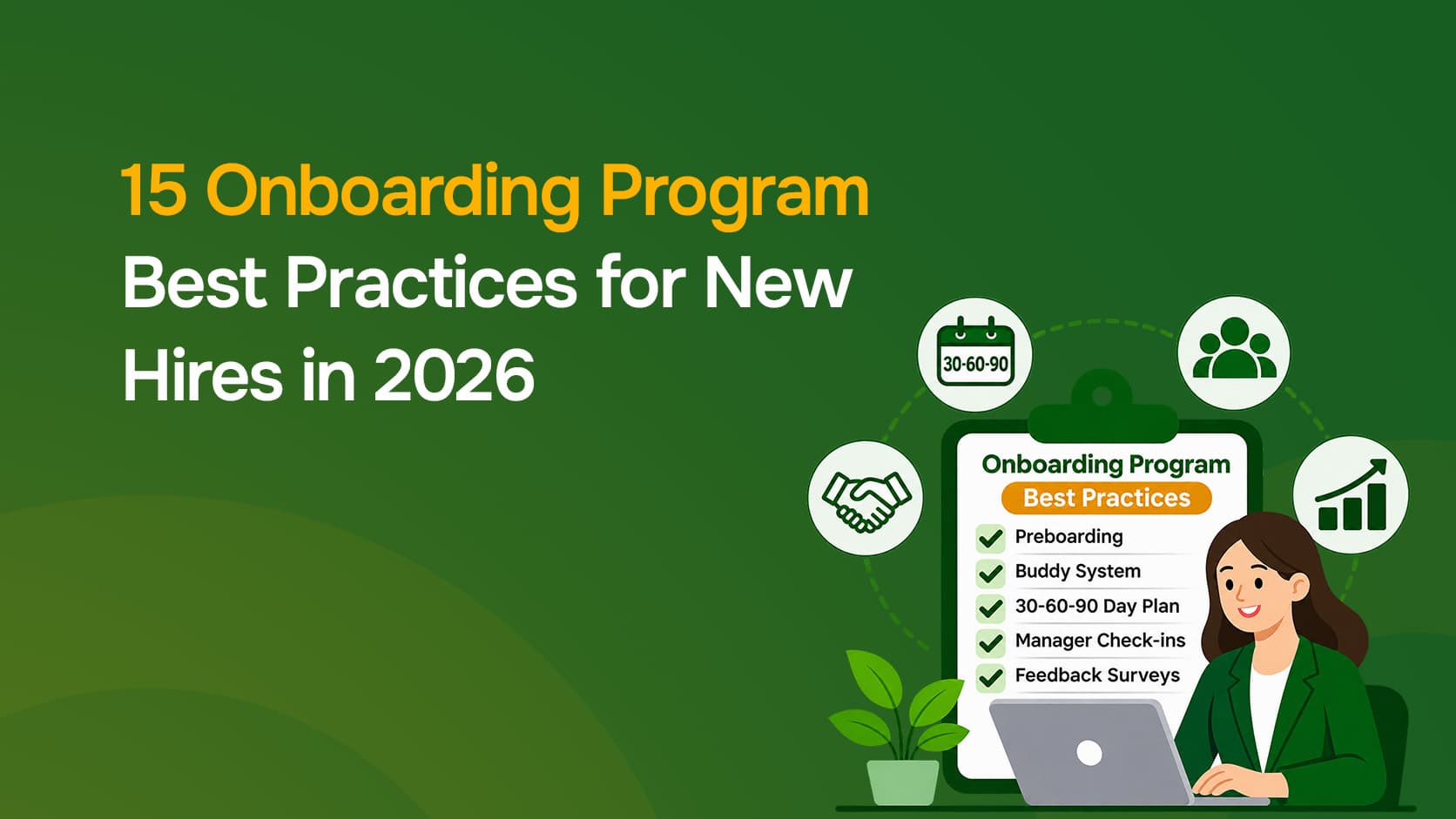
Use a 30-60-90 day onboarding plan: Set realistic milestones for learning, contribution, independence, and development across the first three months.
Keep managers actively involved: Managers should provide role-specific guidance, clarify expectations, conduct regular check-ins, and give timely feedback.
Collect feedback and continuously improve: Use employee surveys, conversations, and onboarding metrics to identify gaps and improve the process over time.
For a more detailed guide on implementing these strategies, explore our onboarding best practices guide.
Employee Onboarding Metrics to Track
Around 55% of organizations do not measure the effectiveness of their onboarding programs, according to Insight Global. Without clear metrics, it is difficult to know whether new hires are becoming productive, staying engaged, or receiving the support they need.
Time to productivity: A shorter time to productivity generally means new hires are getting the training, resources, and support they need to perform at the expected level. However, the target should vary depending on the complexity of the role.
New hire retention rate: Looking at how many employees remain after 90 days or one year gives you a clearer picture of whether the early employee experience is supporting long-term commitment.
Onboarding satisfaction score: Feedback from new hires can reveal what is working well and where they are facing challenges. Surveys at different stages can also show which parts of the process need improvement.
Training completion rate: It’s also useful to see whether employees complete compliance training, orientation, and role-specific learning on schedule. Delays may point to issues with accessibility, communication, or how the training is organized.
Manager check-in completion: Regular one-to-one meetings are an important part of early support, so tracking whether they actually happen can highlight gaps in manager involvement. These conversations also give employees a chance to raise questions and discuss their progress.
Early attrition rate: Beyond overall retention, pay attention to how many new hires leave within their first few months. A high rate can point to problems with role expectations, workplace culture, onboarding, or the broader employee experience.
Tools That Support Employee Onboarding
The right tools simplify every stage of the employee's onboarding process. It automates administrative tasks, improves communication, and keeps onboarding on track.
1. Applicant tracking system
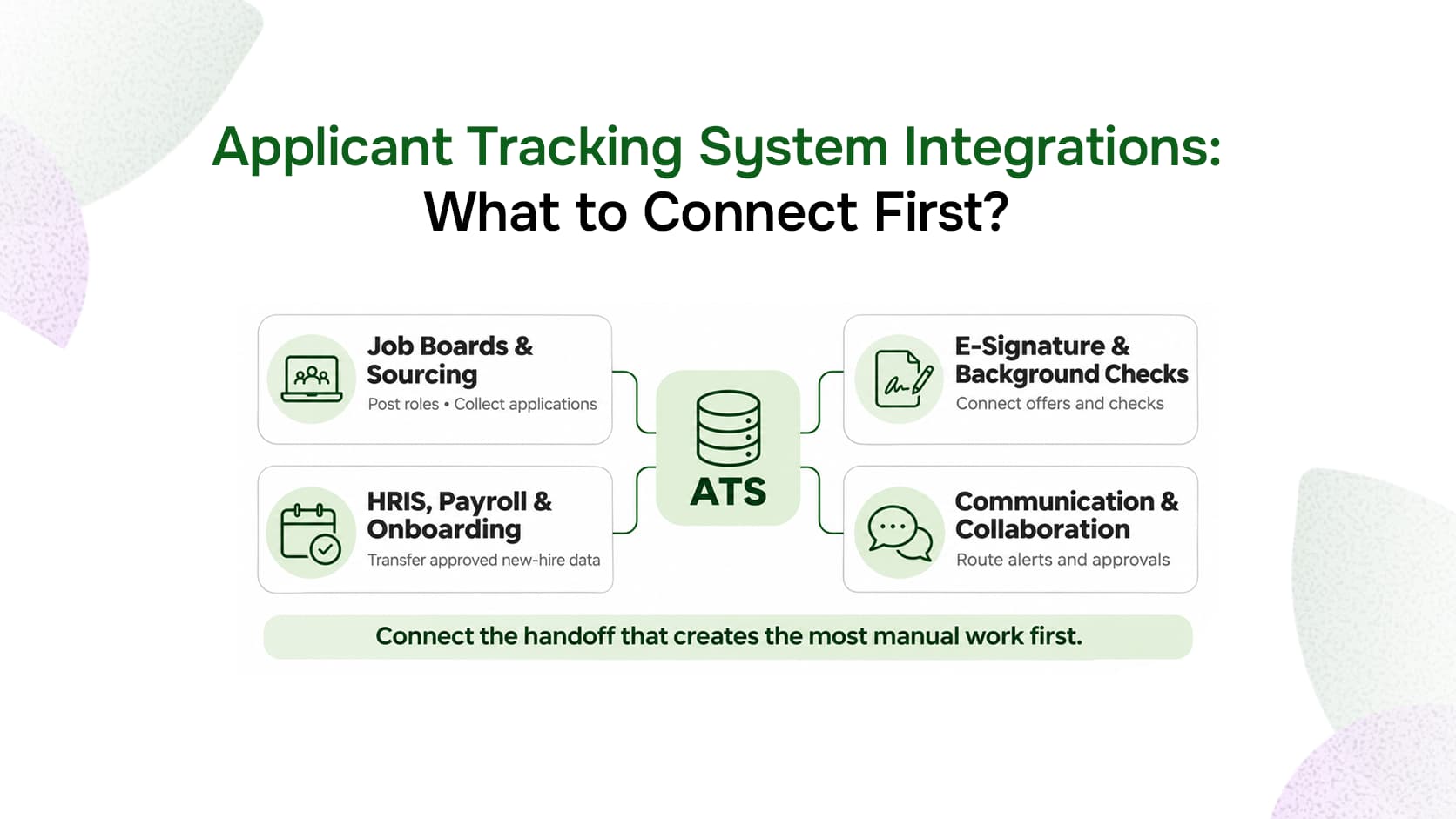
Modern ATS platforms are no longer limited to recruitment. They also support onboarding after a candidate accepts an offer. They automatically send offer letters, collect required documents, assign onboarding tasks, and keep candidates informed about the next steps.
Many ATS platforms also transfer candidate information into employee records or sync it with an HRIS, eliminating the need for data entry. As a result, the transition from recruitment to onboarding becomes faster and more seamless.
For example: Mercury Recruit, Greenhouse
Simplify Onboarding with Mercury Recruit
Move new hires from hiring to onboarding without re-entering data.
Explore Mercury Recruit2. Human Resource Information System (HRIS/HRMS)
HRIS and HRMS platforms centralize employee records and automate administrative tasks such as onboarding forms, employee profiles, payroll setup, benefits enrollment, and policy acknowledgements.
Once a candidate is hired, HR can use the system to create their employee record and complete the administrative steps required to officially bring them into the organization.
Examples: BambooHR, Workday, Rippling
3. Learning Management Systems (LMS)
A learning management system (LMS) is software used to create, manage, deliver, and track employee training in one place. During onboarding, an LMS can host orientation materials, compliance courses, product training, and role-specific learning, giving new hires access to the training they need throughout their first weeks.
It also tracks course completion, assessment results, and overall training progress, making it easier for HR teams and managers to monitor learning.
Examples: TalentLMS, Docebo, LearnUpon
4. E-signature and Document Management Tools
E-signature tools let new hires review and sign employment contracts, policy acknowledgements, tax forms, and other onboarding documents online. They reduce manual paperwork and give HR a central way to manage required documents before the employee's first day.
These tools can work as standalone platforms or integrate with an ATS, HRIS, or onboarding system. With an integration, HR can send documents through the existing onboarding workflow, while signed copies are automatically returned and stored in the relevant employee record.
Examples: DocuSign, Adobe Acrobat Sign
5. Communication and collaboration platforms
Communication and collaboration platforms keep new hires connected with managers, teammates, and buddies throughout onboarding. They support team introductions, one-to-one conversations, group discussions, and quick questions, making it easier for new hires to build relationships and understand team workflows.
Examples: Slack, Microsoft Teams, Google Chat
6. Feedback and survey tools
Feedback and survey tools collect new hire feedback at key onboarding milestones, such as 30, 60, and 90 days. They help HR measure onboarding satisfaction, identify gaps, and improve the process based on employee feedback.
Examples: SurveyMonkey, Qualtrics, Culture Amp
Connect Hiring and Onboarding in One Platform
Keep every new hire’s details organized from offer to first day.
Book A DemoConclusion
A well-structured employee onboarding process goes beyond paperwork and orientation. It combines clear stages, role-specific training, regular feedback, and meaningful connections to help new hires become confident and productive. Using a structured checklist, a 30-60-90-day plan, and the right onboarding tools creates a consistent experience that improves engagement, retention, and long-term success.
FAQs
Frequently Asked Questions
The four phases of employee onboarding are preboarding, the first day, the first week, and the first 90 days. Each phase has a different purpose, from completing administrative tasks and introducing company policies to developing role-specific skills, building relationships, and helping employees become confident contributors.