
Best ATS for Startups: 10 Applicant Tracking Systems Compared
Recruit
ATS for Startups
14 min read
Key Highlights
The best ATS for a startup fits your hiring stage and budget, not the longest feature list.
Startups need fast setup, simple pricing, collaboration, and room to scale.
Free and freemium plans suit occasional hiring; paid tools fit teams scaling fast.
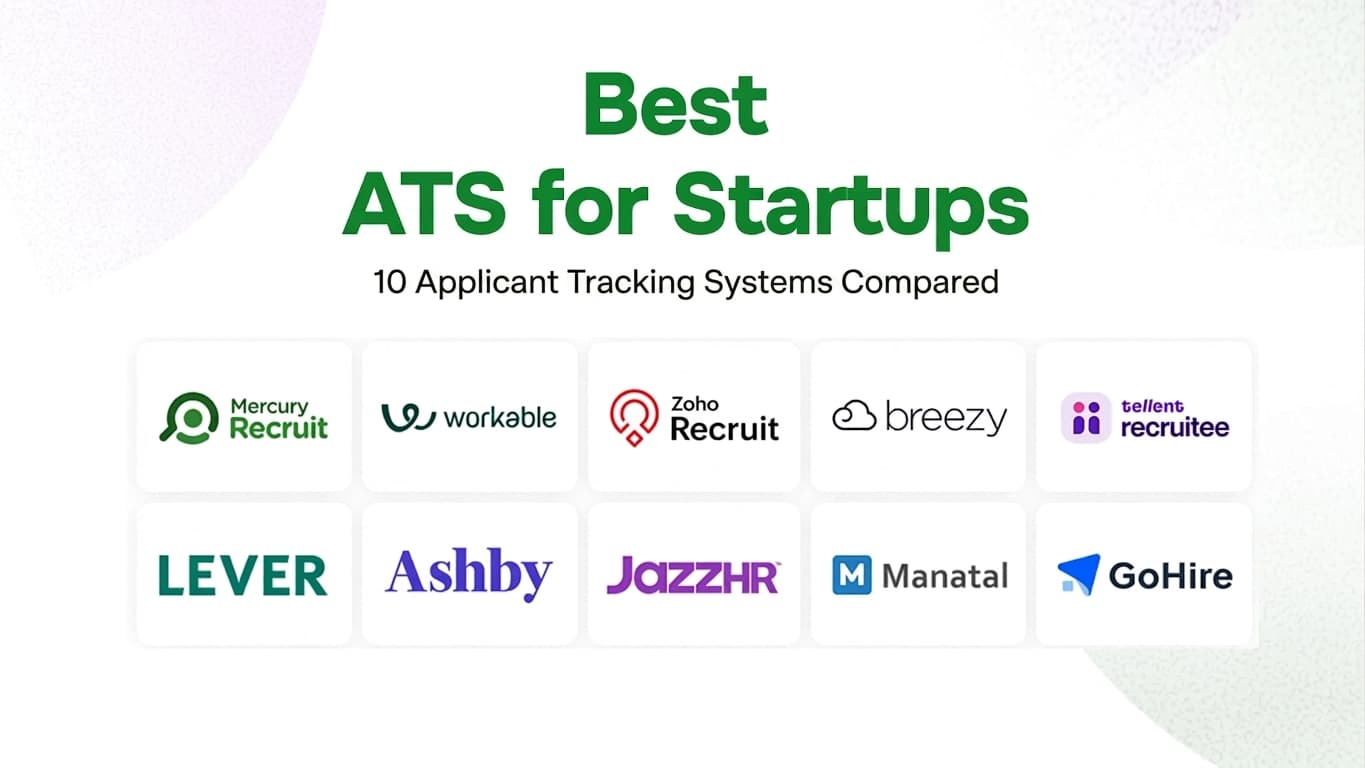
This guide compares 10 startup ATS platforms by price, features, and stage fit.
Mercury Recruit offers flexible, transparent pricing built to grow with your team.
Introduction
Hiring at startups starts simple, but it rarely stays that way. What begins with a few resumes, and informal interviews quickly turn into scattered emails, spreadsheets, and missed candidate follow-ups as the team grows.
For startups, this disorganization is costly. Working on limited time and budget, and often without a dedicated recruiter, teams lose promising candidates to competitors with faster, more structured hiring, usually just as funding round or new contract means headcount needs to grow.
An applicant tracking system solves this by organizing the entire hiring process in one place, helping startups track candidates, manage open roles, and collaborate without manual work. But not all ATS platforms are built for startups, so this guide breaks down the best options for ATS that suit startups for 2026.
How We Chose the Best ATS for Startups
To create this list, we evaluated leading ATS platforms based on publicly available product information, pricing details, feature sets, and user feedback.
We also reviewed customer ratings and experiences from trusted software review platforms such as G2, Capterra, and Trustpilot, along with official vendor websites to compare usability, pricing, startup-friendly features, integrations, and scalability.
Our evaluation focused on factors that matter most to startups, including affordability, ease of use, hiring workflow, collaboration features, integrations, and the ability to support business growth. The platforms included in this guide consistently performed well across these criteria and are suitable for different startup stages and hiring needs.
See Why Mercury Recruit Tops This List
Transparent pricing, built-in automation, and room to grow.
Explore Mercury RecruitBest ATS for Startups at a Glance
Below is a quick comparison of the top ATS platforms for startups to help you understand key differences at a glance.
ATS Platform | Best For | Pricing | G2 Rating |
Mercury Recruit | Scalable hiring | $150 to $419 per month | Not rated* |
Workable | Fast hiring and simplicity | $360 to $719 per month | 4.4 |
Zoho Recruit | Budget-friendly hiring | 0 to $90 per user/ month | 4.4 |
Breezy HR | Visual pipeline management | $0 to $529 per month | 4.4 |
Recruitee | Team collaboration hiring | Custom pricing | 4.5 |
Lever | CRM + ATS combined hiring | Custom pricing | 4.3 |
Ashby | All-in-one scaling toolkit | Custom pricing | 4.4 |
JazzHR | Simple recruiting workflows | $350 to $549 per month | 4.4 |
Manatal | AI-assisted hiring | $19 to $50 per month | 4.8 |
GoHire | Simple, affordable hiring for small teams | £89 to £249 per month | 3.7 |
What Makes an ATS Right Fit for Startups
A startup-friendly applicant tracking system is not defined by the number of features it offers, but by how well it fits the way early-stage teams actually hire. Startups need speed, simplicity, and flexibility more than complex enterprise functionality.
When you are weighing options, the traits that matter most for a fast-growing startup are:
Fast, low-friction setup: You should be able to launch a job and start collecting applications without onboarding calls or a long implementation.
Transparent, flexible pricing: Look for affordable tiers or a free plan, with the ability to add users and roles only as you need them.
A clear candidate pipeline: Visual, drag-and-drop stages make it easy to see where every candidate stands without digging through email.
Built-in collaboration: Hiring manager collaboration tools, shared scorecards, and comments keep decisions fast and aligned across the team.
Automation that saves time: Automated interview scheduling, templated emails, and simple triggers remove the busy work that slows small teams down.
Integrations and sourcing: Connections to Human Resources Information System (HRIS) software, job boards, and Chrome extension sourcing tools help you find and manage talent in one flow.
Top 10 ATS for Startups
1. Mercury Recruit (Best for scalable startup hiring)
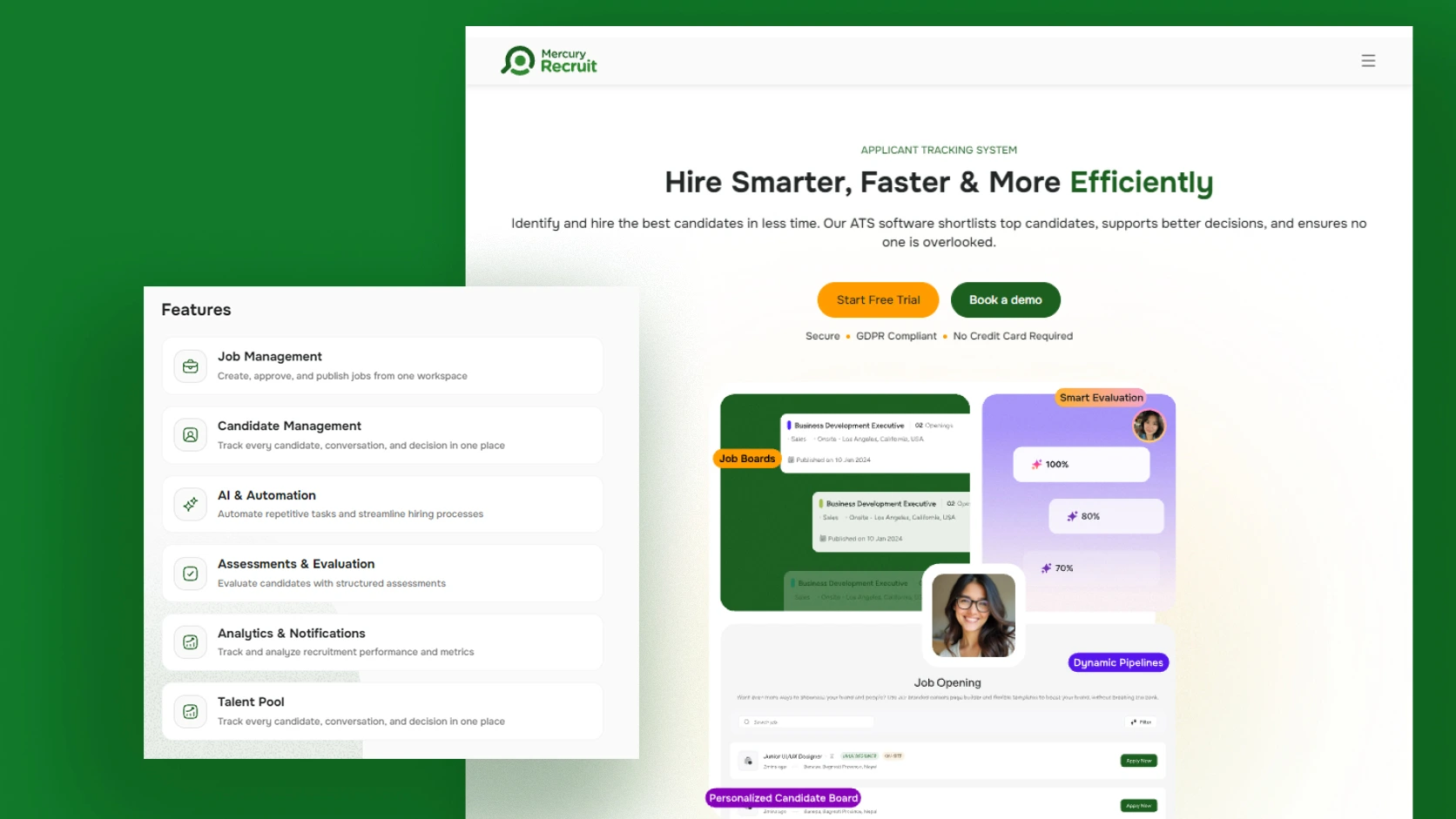
Mercury Recruit is a cloud-based applicant tracking system built for startups and growing teams that want structure without enterprise-level complexity. It combines a flexible hiring pipeline with automation and collaboration tools, with pricing designed to scale as your headcount grows.
Key features
Applicant tracking with customizable hiring pipelines
Automated interview scheduling and candidate communication
Hiring manager collaboration and approval workflows
HRIS integrations and recruitment analytics
Flexible plans designed for growing startups
Pricing
Starter: $150/month
Standard Plan: $209/month
Premium: $419/month
Free Trial: 15-day free trial available
Pros and Cons
Pros | Cons |
Transparent pricing with no custom quotes | Fewer third-party integrations than some established global platforms. |
Easy to scale as hiring grows | Advanced enterprise features are available only on higher plans. |
Strong collaboration and workflow automation |
Our Evaluation
Mercury Recruit is a practical choice for startups that want an ATS they will not outgrow after their first few hires. It combines an easy-to-use hiring workflow with automation, collaboration, and scalable pricing, making it suitable for businesses moving from early-stage recruitment to larger hiring operations without switching platforms.
2. Workable (Best for fast hiring and simplicity)
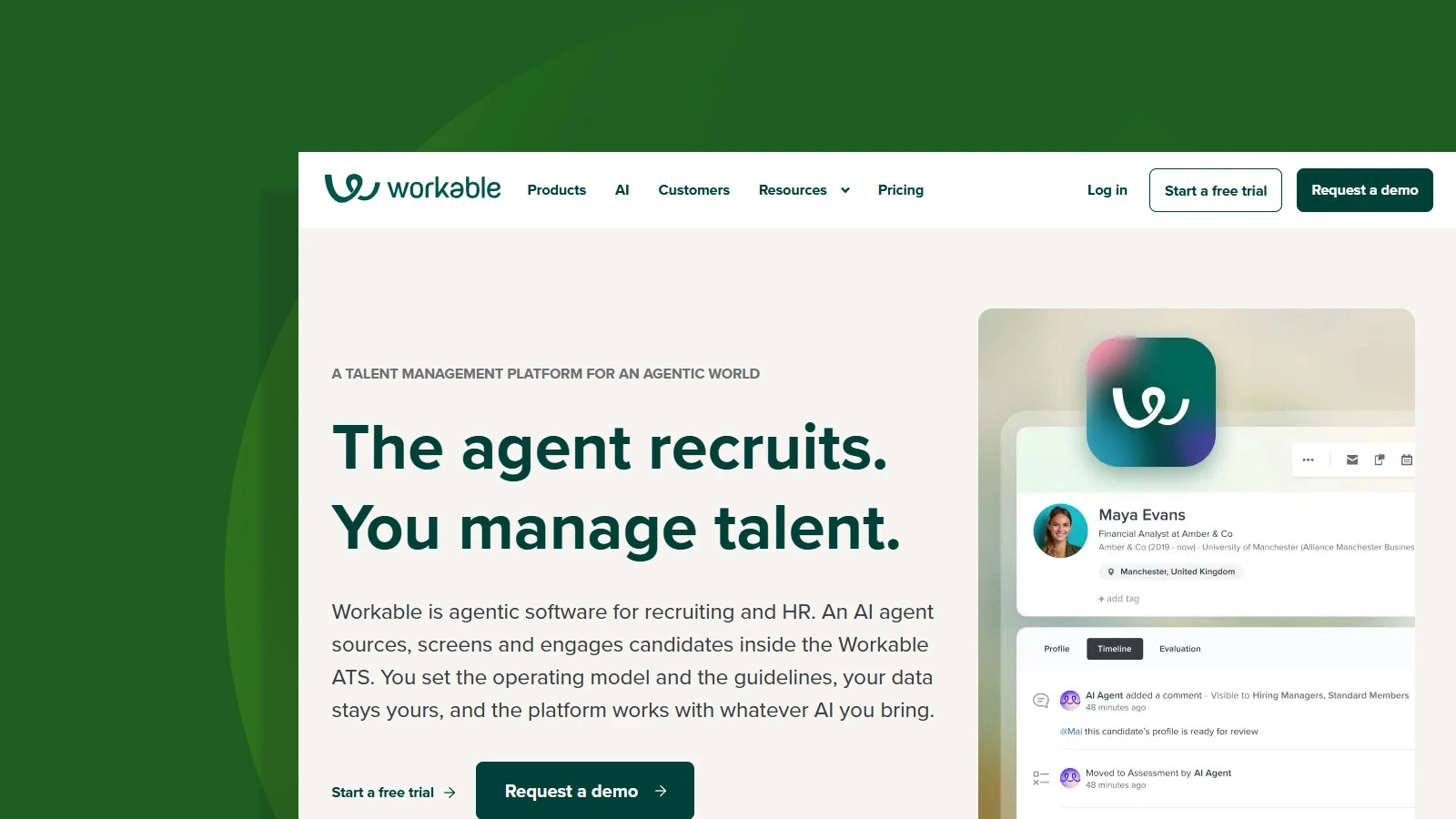
Workable is one of the most widely used recruiting platforms for small and mid-sized companies, known for its speed and AI-assisted sourcing. It’s built for startups that need to post jobs, source candidates, and move through interviews quickly without a steep learning curve.
Key features
One-click posting to multiple job boards
AI-powered candidate sourcing and recommendations
Ready-to-use job description templates
Built-in interview scheduling and messaging
Scalable hiring workflows for growing startups
Pricing
Standard: Starts at $360/month
Premier: Starts at $599/month
Enterprise: Starts at $719/month
Free Trial: 15-day free trial available
Pros and Cons
Pros | Cons |
Easy to set up and use | Pricing increases as hiring expands |
Strong AI sourcing capabilities | Advanced features require higher-tier plans |
Suitable for growing startup teams |
Our Evaluation
Workable is an excellent choice for startups that want to hire quickly without spending weeks learning new software. Its intuitive interface and automation features make it well suited for startups moving from their first hires to rapid team expansion.
3. Zoho Recruit (Best for budget-friendly hiring)
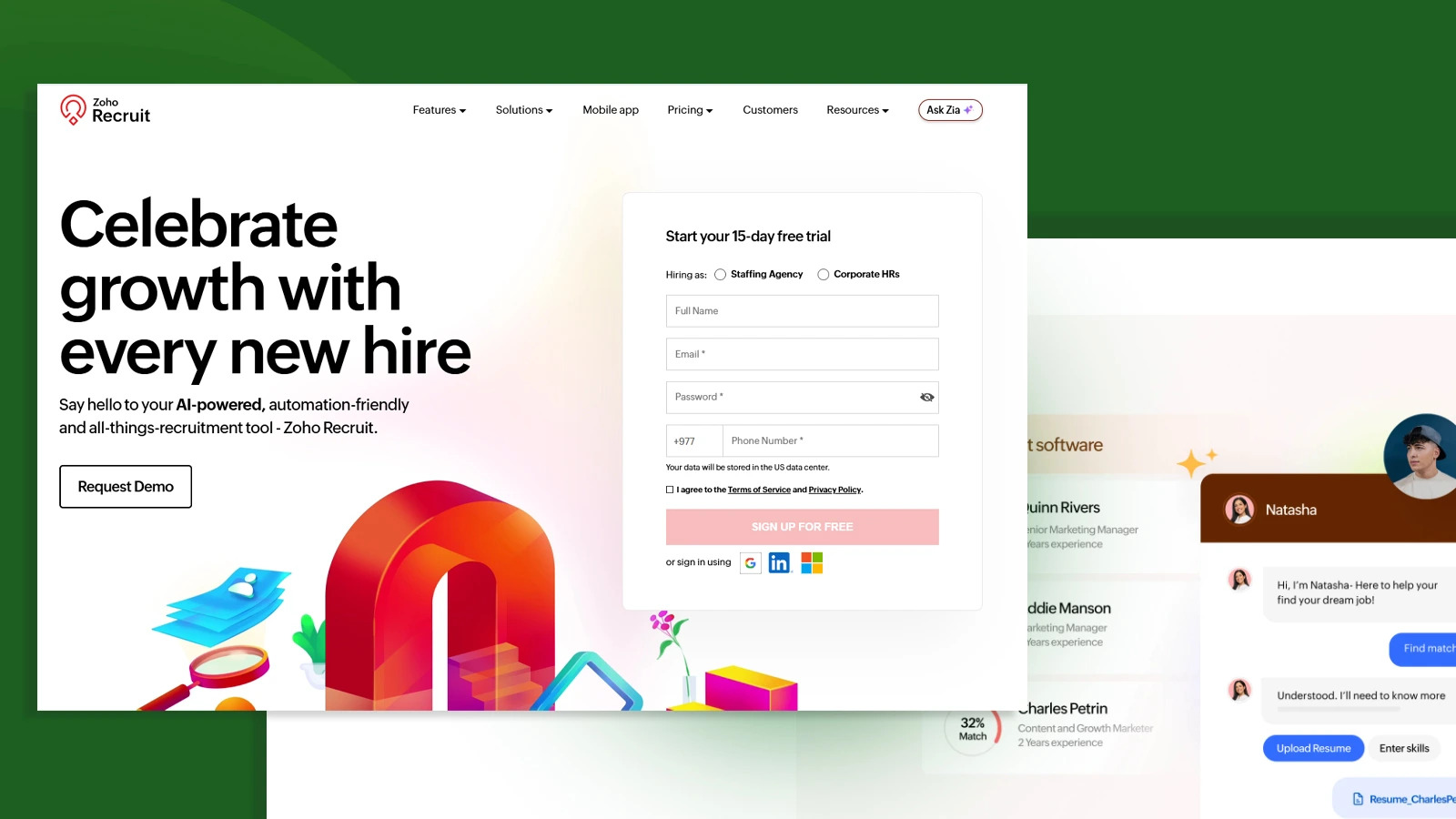
Zoho Recruit is a budget-conscious ATS from the Zoho software suite, offering a free tier and low-cost paid plans. It suits early-stage and bootstrapped startups that want core recruiting functionality without a large software spend, especially if they already use other Zoho products.
Key Features
Customizable recruitment workflows
Resume parsing and candidate management
Integration with Zoho ecosystem
Affordable plans for growing businesses
Pricing
Free: $0 (limited features)
Standard: From $30/user/month
Professional: From $60/user/month
Enterprise: From $90/user/month
Pros and Cons
Pros | Cons |
Cost-effective for startups | Interface can feel overwhelming initially |
Highly customizable | Some features require additional configuration |
Works well with other Zoho products |
Our Evaluation
Zoho Recruit is a practical option for bootstrapped startups looking for an affordable ATS. It offers enough flexibility for early growth while keeping costs manageable.
4. Breezy HR (Best for Visual Hiring Pipelines)
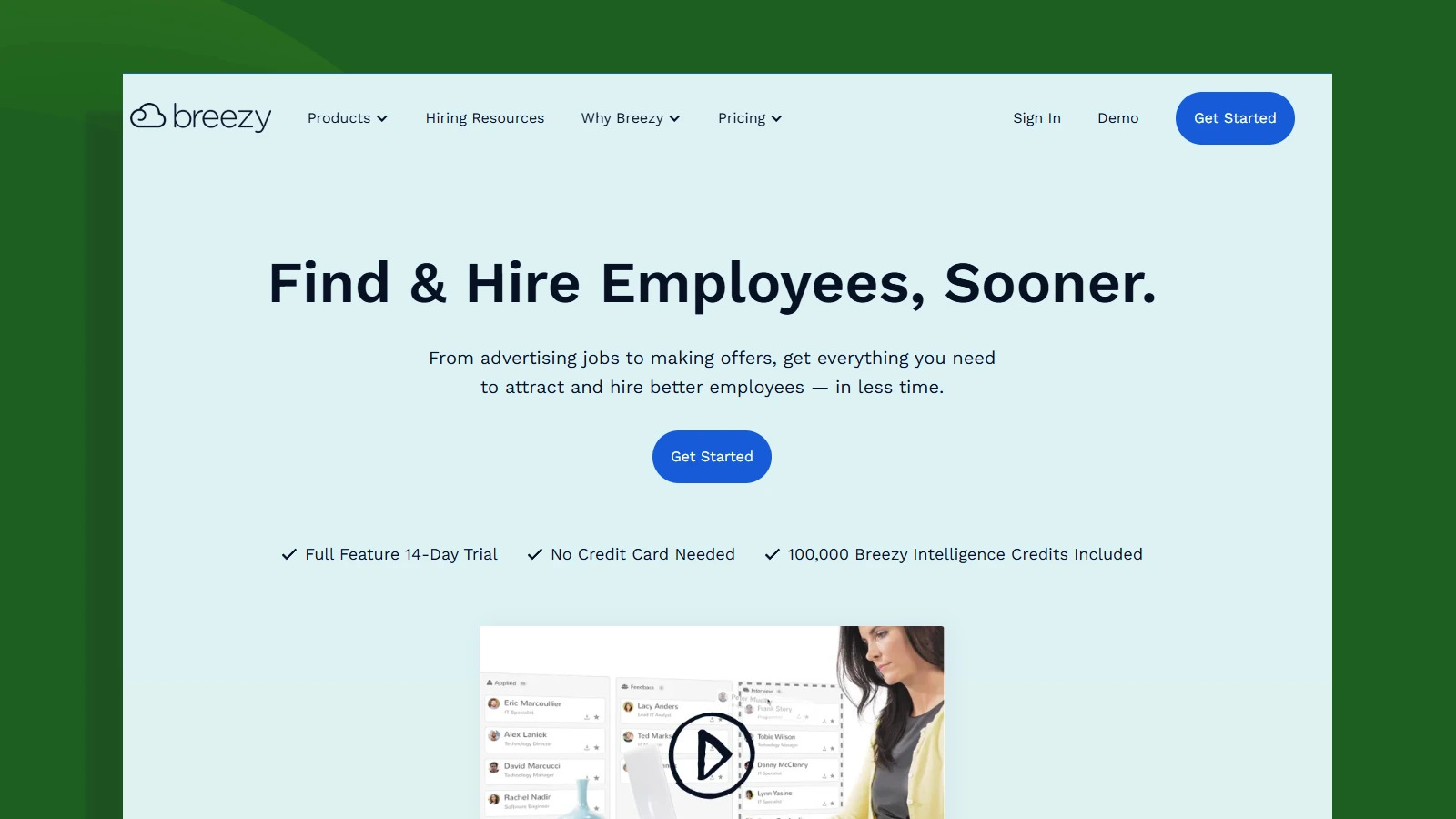
Breezy HR is a visual, drag-and-drop ATS designed to make hiring approachable for teams with no dedicated recruiter. Its free-forever plan and simple pipeline view make it a common first ATS for startups making their earliest hires.
Key Features
Visual drag-and-drop recruitment pipeline
Automated interview scheduling
Built-in candidate scorecards
Career site builder
Free-forever plan for startups
Pricing
Bootstrap: Free (1 active position)
Startup: From $189/month
Growth: From $329/month
Business: $520/month
Pros and Cons
Pros | Cons |
Easy for first-time ATS users | Free plan supports only one active job |
Clean visual interface | Limited advanced reporting |
Free plan available |
Our Evaluation
Breezy HR is well-suited for startups making their first hires. Its visual hiring pipeline makes candidate tracking simple without requiring recruiting experience.
5. Recruitee (Best for Team Collaboration)
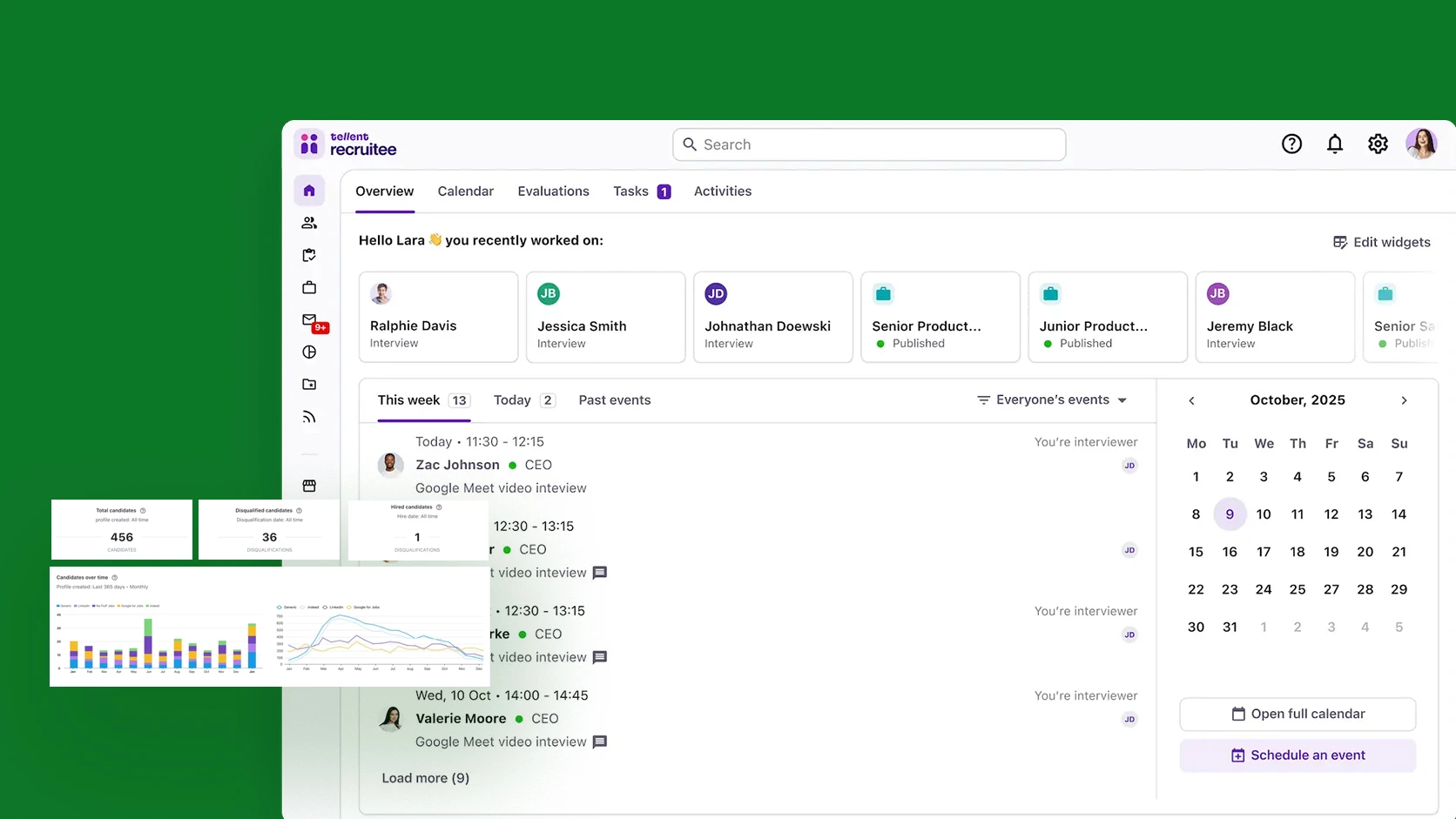
Recruitee is a collaborative hiring platform built around shared evaluations and team input, making it a strong fit for startups where founders and hiring managers are jointly involved in decisions. Pricing is custom, which suits companies with consistent, ongoing hiring needs.
Key Features
Collaborative hiring and shared evaluations
Custom hiring workflows
Automated recruitment tasks
Hiring performance analytics
Interview feedback management
Pricing
Custom Pricing: Available on request based on company size, hiring volume, and feature requirements.
Free Trial: 18-day free trial available.
Pros and Cons
Pros | Cons |
Strong collaboration features | Better value for frequent hiring |
Modern and intuitive interface | Less suitable for occasional recruitment |
Flexible recruitment workflows |
Our Evaluation
Recruitee is ideal for startups where founders, hiring managers, and team leads all participate in hiring. Its collaboration tools help teams make faster and more consistent decisions.
6. Lever (Best for ATS and Candidate Relationship Management)
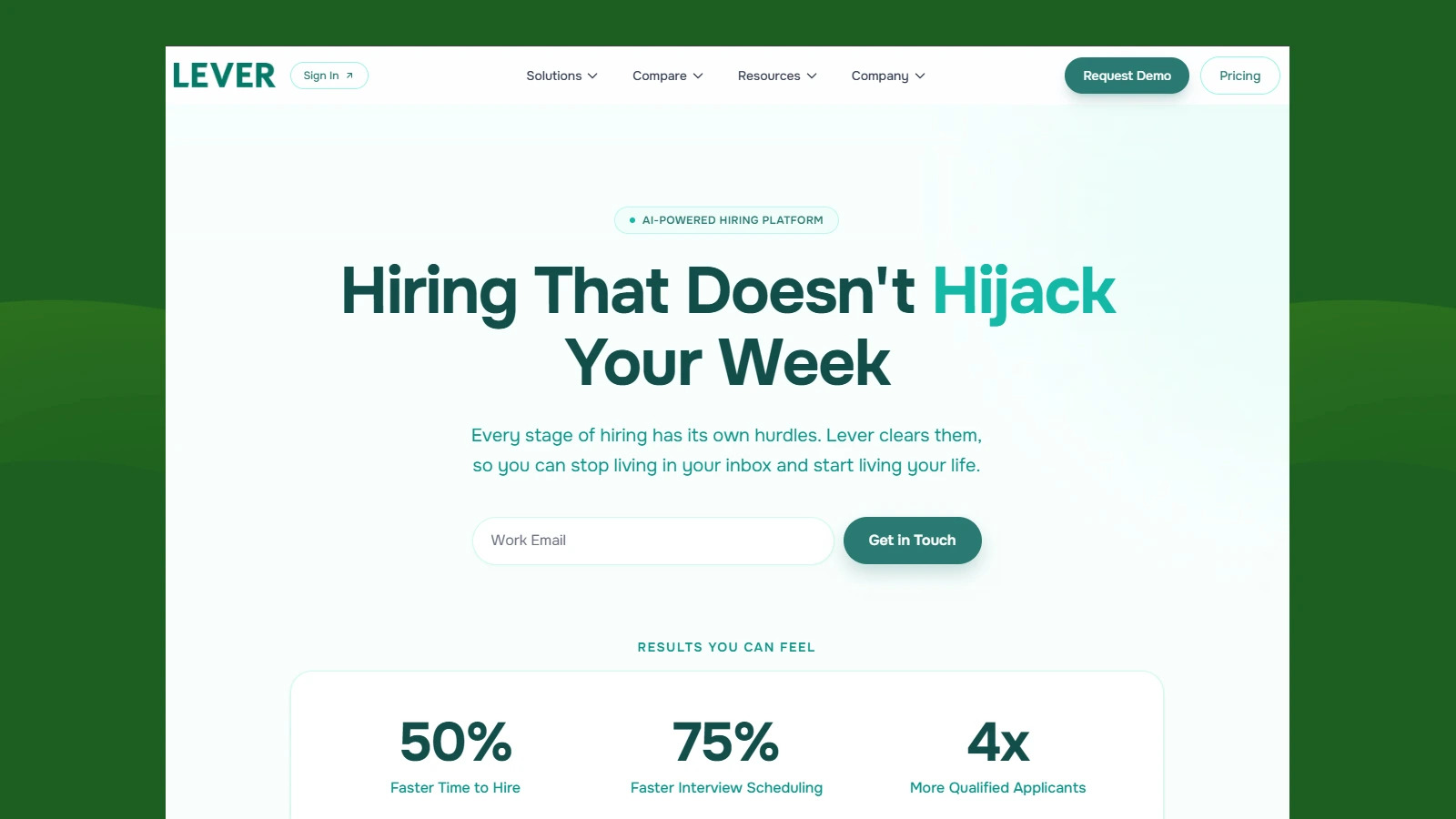
Lever pairs applicant tracking with candidate relationship management (CRM), letting startups manage active pipelines while nurturing long-term talent pools. It’s popular with tech startups that recruit continuously rather than occasionally and want to build a lasting talent network.
Key Features
Combined ATS and CRM platform
Candidate nurturing and talent pools
Automated recruiting workflows
Advanced recruitment analytics
HR software integrations
Pricing
Custom Pricing: Available on request based on company size, hiring volume, and feature requirements.
Demo: Available upon request.
Pros and Cons
Pros | Cons |
Excellent long-term talent management | Higher cost than many startup ATS tools |
Strong automation features | Best suited for continuous hiring |
Powerful reporting capabilities |
Our Evaluation
Lever is particularly popular among tech startups because it combines applicant tracking with candidate relationship management in a single platform. It is best for scaling startups that recruit continuously and want to build long-term talent pipelines.
7. Ashby (Best for data-driven Startup Hiring)
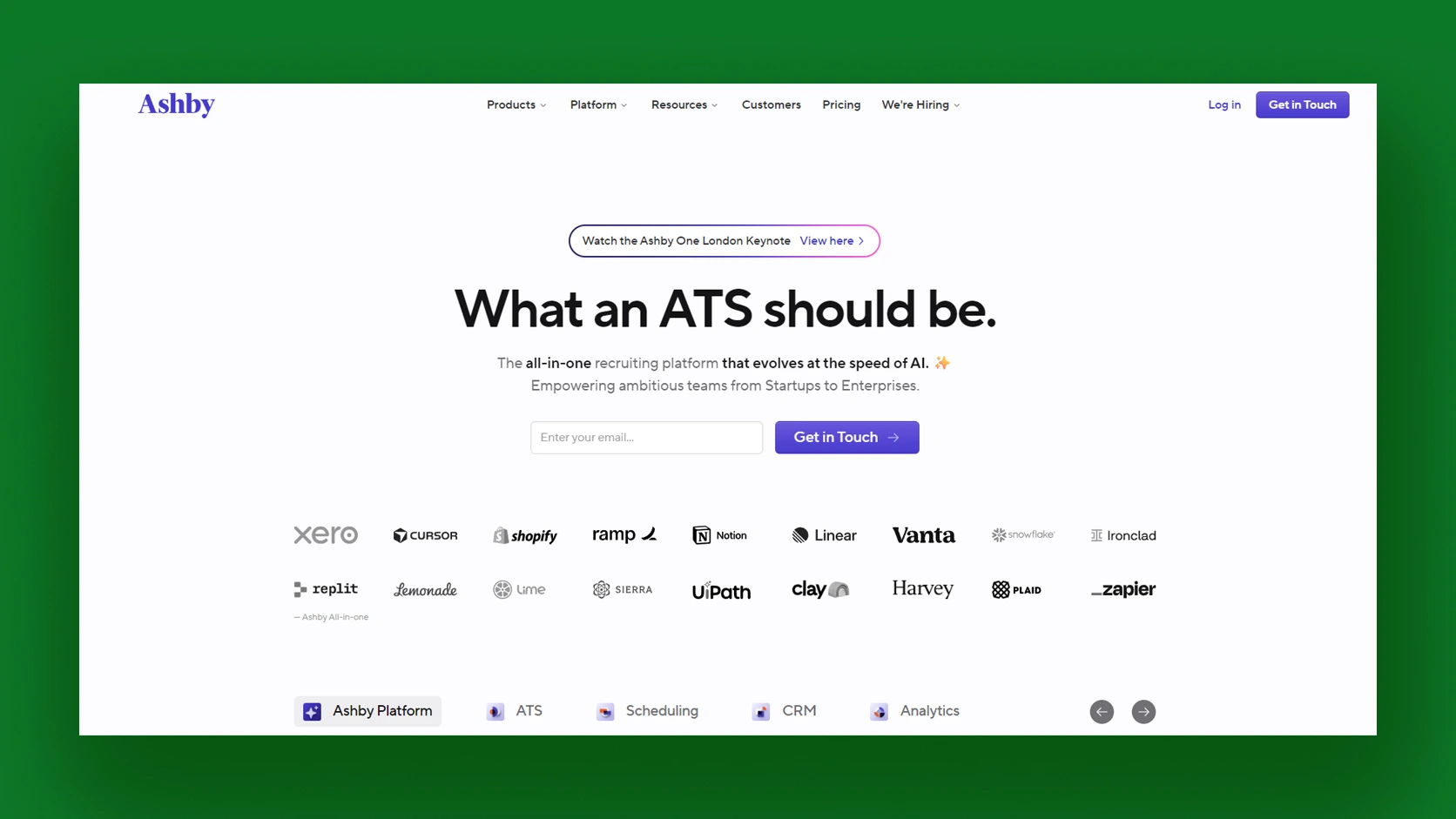
Ashby is a data-heavy recruiting platform built for startups that treat hiring as a measurable, strategic function. It offers deep analytics and workflow customization, making it best suited to fast-scaling tech startups rather than very early-stage teams.
Key Features
Advanced recruiting analytics
Custom hiring workflows
Integrated sourcing and pipeline management
Automated interview coordination
Scalable hiring infrastructure for growing startups
Pricing
Foundations Plan (1-100 employees):
1-10 employees: $300/month
11-25 employees: $400/month
26-50 employees: $500/month
51-75 employees: $700/month
76-100 employees: $900/month
Plus Plan: Custom pricing available on request.
Enterprise Plan: Custom pricing available on request.
Ashby Analytics (for existing ATS): Custom pricing based on usage and business requirements.
Pros and Cons
Pros | Cons |
Excellent recruiting analytics | Higher cost than entry-level ATS tools |
Strong workflow customization | More features than very early-stage startups may need |
Built for scaling startup teems |
Our Evaluation
Ashby is a strong fit for startups that treat recruiting as a strategic function and want deeper visibility into hiring performance. It is particularly valuable for tech startups that are scaling quickly and need both automation and detailed recruitment analytics.
8. JazzHR (Best for First-Time Hiring)
JazzHR is a straightforward, flat-rate ATS designed for startups hiring for the first time. It covers the essentials — job postings, candidate tracking, and offer management — without the cost or complexity of more advanced platforms.
Key Features
Flat-rate subscription pricing
Customizable hiring workflows
Easy job posting management
Offer letter management
Simple candidate tracking
Pricing
Plus: From $350/month
Pro: From $549/month
Free Trial: Available
Pros and Cons
Pros | Cons |
Affordable pricing | Limited advanced automation |
Easy implementation | Basic reporting features |
Beginner-friendly interface |
Our Evaluation
JazzHR is a strong option for startups hiring for the first time. It provides essential recruiting features without the complexity or cost of enterprise platforms.
9. Manatal (Best for Affordable AI Hiring)
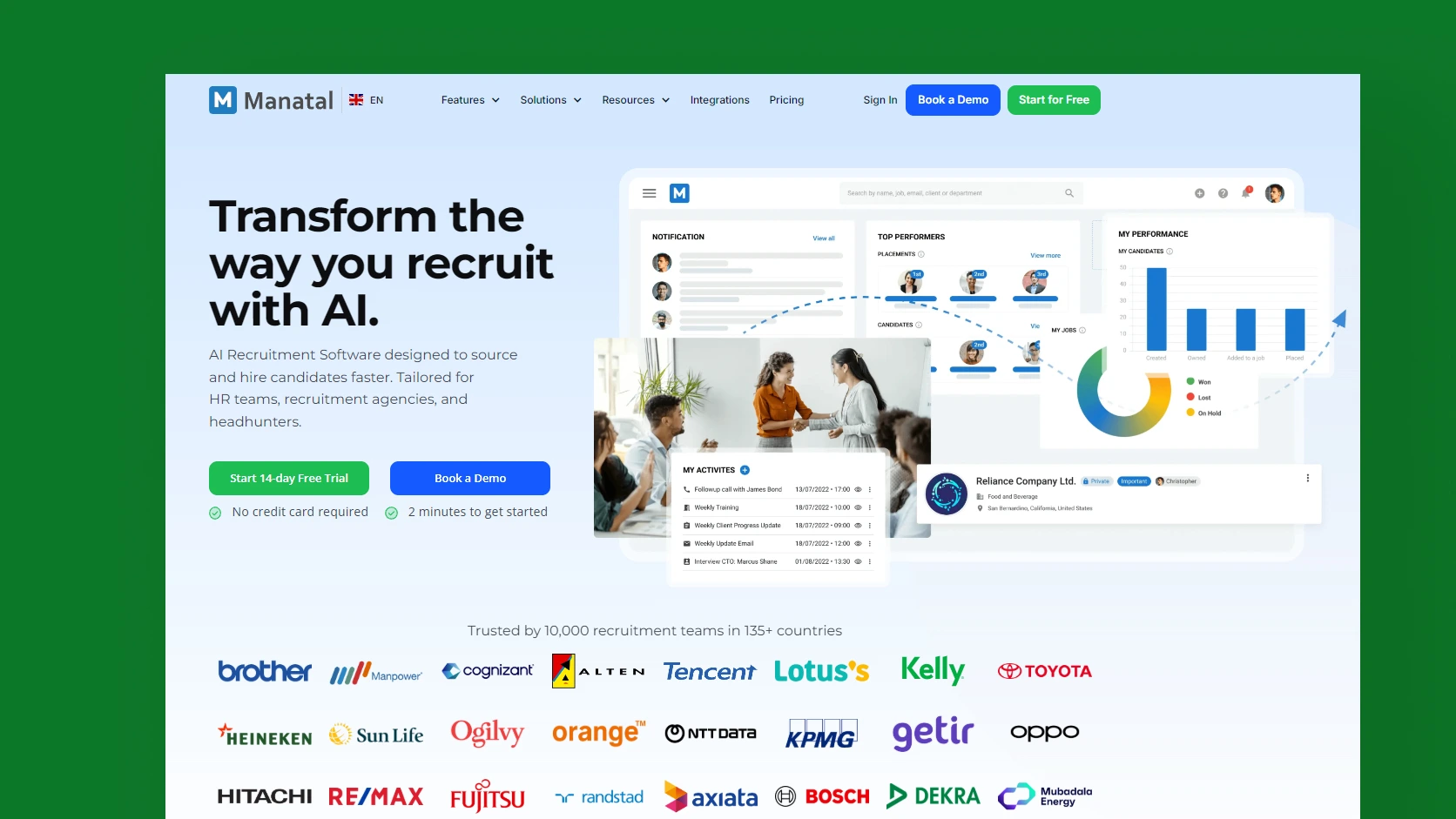
Manatal is an AI-assisted ATS priced per user, built to help lean hiring teams screen and rank candidates faster. Its low entry cost makes it attractive to startups that want AI-powered sourcing and screening without enterprise pricing.
Key Features
AI-powered candidate recommendations
Candidate profile enrichment
Built-in recruitment CRM
Easy resume management
Affordable per-user pricing
Pricing
Professional: $15/user/month
Enterprise: $35/user/month
Enterprise Plus: $55/user/month
Free Trial: 14-day free trial available.
Pros and Cons
Pros | Cons |
AI features at a competitive price | Smaller integration ecosystem |
Easy to use | Some advanced integrations are still evolving |
Good value for growing startups |
Our Evaluation
Manatal is a great choice for startups that want AI-assisted recruitment without investing in premium enterprise software. It helps lean hiring teams reduce manual screening.
10. GoHire (Best for early-stage startup recruitment)
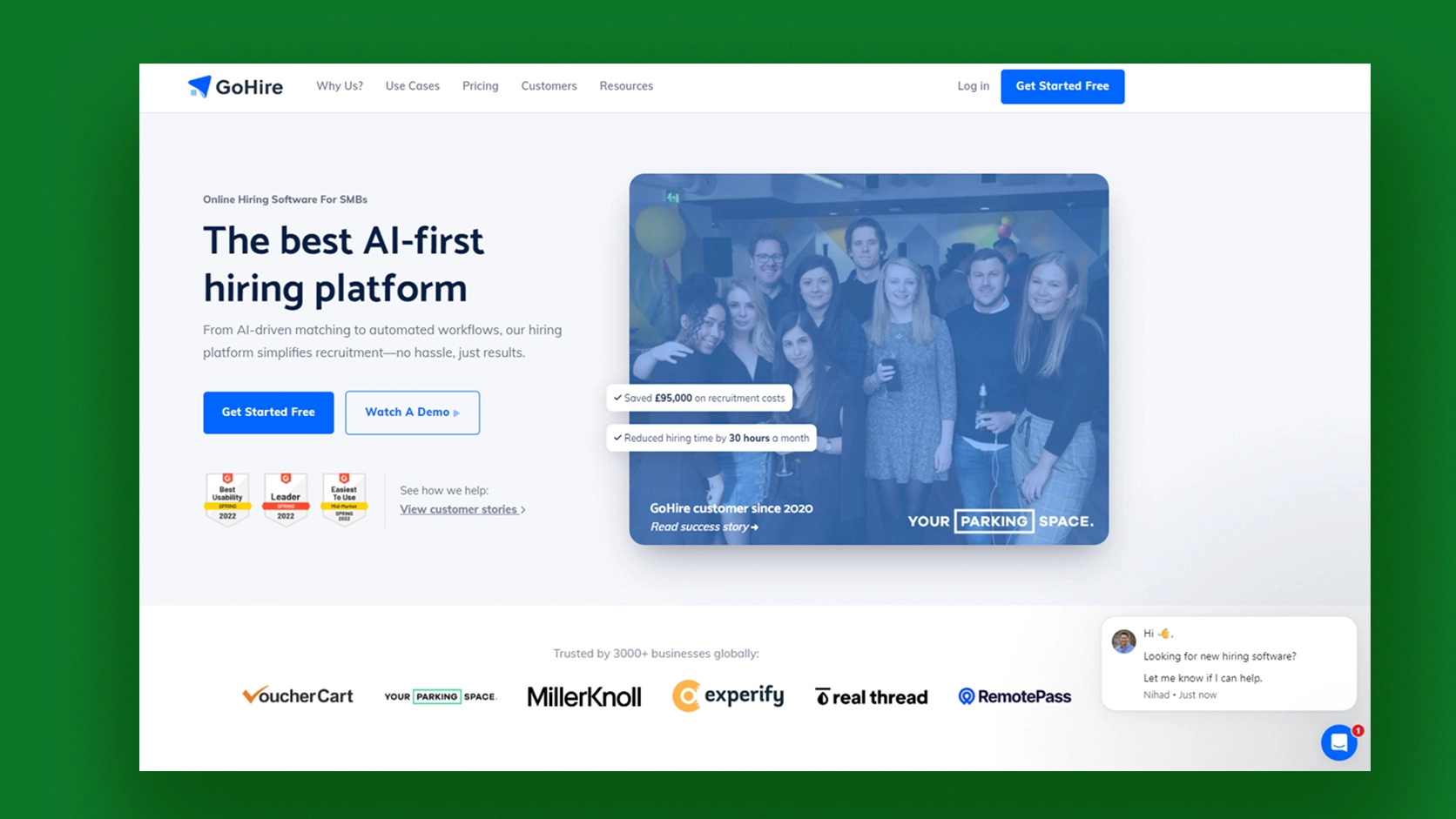
GoHire is a simple, affordable ATS aimed at very early-stage startups making their first few hires. It covers core functionality like pipeline management and job posting without the depth (or cost) of larger recruiting platforms.
Key Features
Simple candidate pipeline management
One-click job board posting
Automated candidate communication
Branded careers page builder
Affordable startup-friendly pricing
Pricing
Starter: £89/month
Growth: £149/month
Pro: £249/month
Free Trial: Available
Pros and Cons
Pros | Cons |
Easy to learn and implement | Fewer advanced analytics features |
Affordable for early-stage startups | Less suited for large-scale enterprise hiring |
Strong job posting capabilities |
Our Evaluation
GoHire is ideal for startups that need a straightforward ATS without the complexity of larger recruitment platforms. It offers the core functionality required to manage hiring efficiently while keeping costs manageable for small and growing teams.
Free vs Paid ATS for Startups
Feature | Free ATS | Paid ATS |
Cost | No cost or free-forever plan | Monthly or annual subscription |
Best For | Early-stage startups with occasional hiring | Startups hiring regularly or planning to scale |
Job Postings | Limited number of active jobs | More or unlimited job postings |
Users | Restricted user access | Multiple users with role-based permissions |
Automation | Basic or limited automation | Advanced workflow automation and interview scheduling |
Integrations | Limited integrations | |
Reporting | Basic hiring reports | Advanced analytics and recruitment insights |
Scalability | Suitable for small hiring volumes | Built to support growing hiring needs |
Support | Community or basic support | Priority support and onboarding assistance |
Test Mercury Recruit Free for 15 Days
See if it fits your hiring process before you commit to a paid plan.
How to Choose the Right ATS for Your Startups
When evaluating ATS platforms, focus on the factors that have the biggest impact on your hiring process and future growth.
Assess your hiring volume: Consider how many roles you typically fill each year. Startups with occasional hiring may only need basic functionality, while fast-growing companies often benefit from a more scalable talent acquisition system.
Set a realistic budget: Compare not only the subscription cost but also potential expenses for additional users, integrations, or premium features. The cheapest option is not always the most cost-effective long term.
Prioritize ease of use: Choose an ATS that is easy for your recruiters and hiring managers to learn and use. A simple interface helps your team adopt the system faster and keeps hiring moving efficiently.
Look for collaboration features: Hiring manager collaboration tools can improve communication, speed up feedback collection, and reduce delays in the hiring process.
Check integration capabilities: Ensure the ATS can connect with job boards, email platforms, calendars, and HRIS software to reduce manual work and improve efficiency.
Consider future growth: Choose an ATS that fits your current hiring needs but can also support more users, higher hiring volumes, and additional workflows as your business grows.
Choosing an ATS based on both current requirements and long-term goals will help ensure you invest in a system that continues to deliver value as your business grows.
An ATS That Grows with Your Startup
Flexible, transparent pricing and the workflow automation to go from first hire to scaling team.
Book A DemoConclusion
Choosing the best ATS for your startup is about finding a platform that fits your hiring process today while supporting your growth over time. The right applicant tracking system should help you stay organized, improve collaboration, automate repetitive tasks, and make hiring more efficient without adding unnecessary complexity.
Use the comparison above to match your current hiring volume, budget, and team structure against the platform best suited for it, then test your shortlist with a free trial or demo before committing. The right fit today is the one that still works when your headcount doubles.
FAQs
Frequently Asked Questions
Some of the most popular ATS platforms for small businesses include Workable, Zoho Recruit, Breezy HR, JazzHR, and Manatal. These systems offer a balance of affordability, ease of use, and essential recruitment features that help small teams manage hiring more efficiently.