
10 Best Talent Pool Management Software for Recruiters in 2026
Recruit
Talent Pool
16 min read
Key Highlights
Talent pool software helps you organize, search and re-engage candidates instead of restarting every search.
Each platform was evaluated based on talent pool management, search, candidate engagement, ATS integration, analytics, privacy, pricing, and scalability.
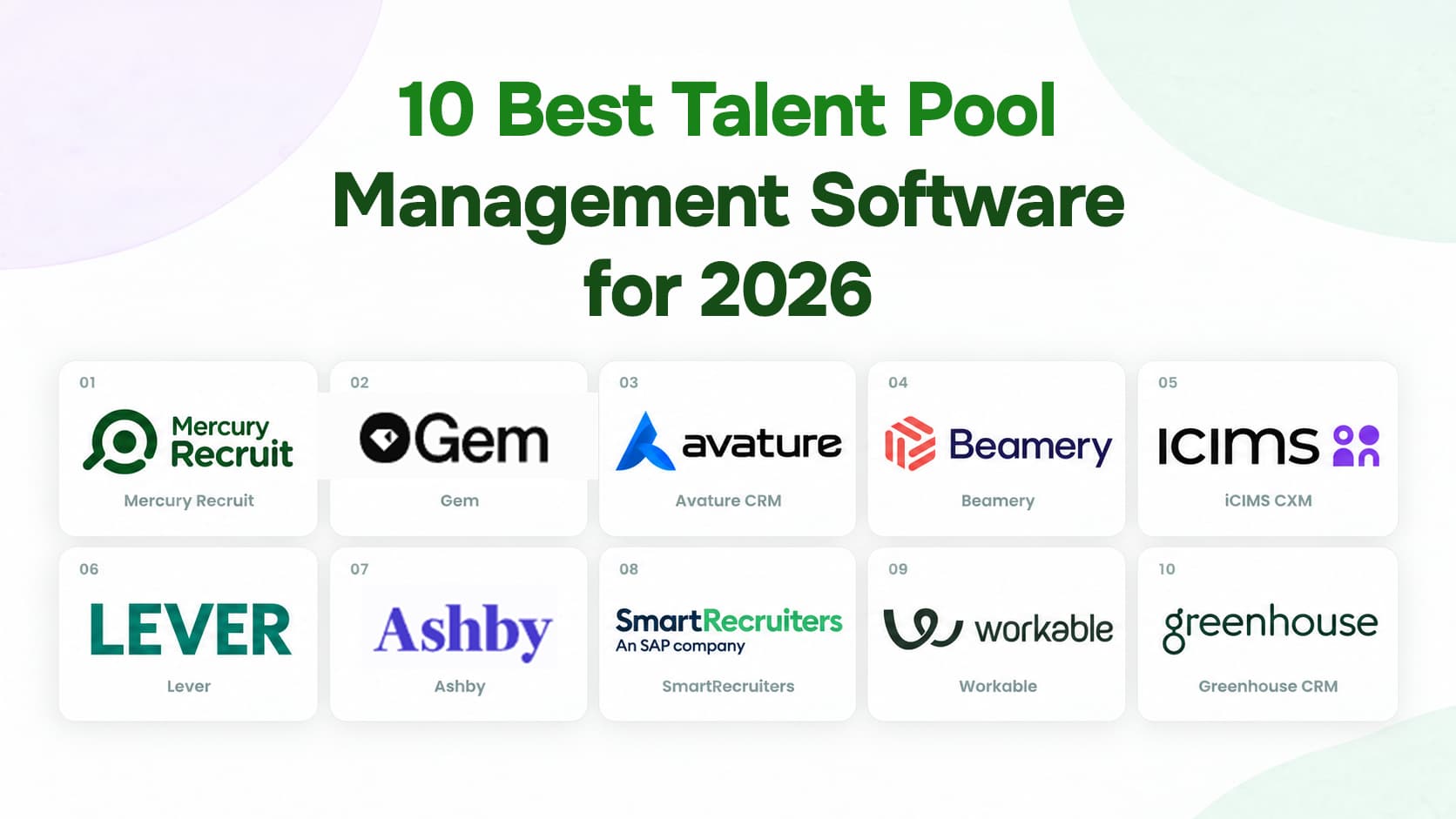
Mercury Recruit, Gem, Lever, Workable, Ashby, Greenhouse CRM, SmartRecruiters, Avature, Beamery, and iCIMS are among the top talent pool management software.
The best talent CRM software depends on your hiring priorities, required features, ATS integration, budget, and future growth plans.
Introduction
A candidate database is only valuable when recruiters can quickly find and use the right talent. Without proper organization, candidate records become difficult to manage, and valuable profiles can be overlooked.
Talent pool management software helps solve this challenge by organizing candidate data, improving search and rediscovery, automating engagement, and keeping qualified candidates ready for future opportunities.
Moreover, with the abundance of these platforms, choosing the right solution can be challenging.
So, let's compare the 10 best talent pool management software options to help you select the right platform by comparing their features, pricing, integrations, and recruitment needs.
What is Talent Pool Management Software?
Talent pool management software is a system where employers store, organize, and re-engage candidates who could be fit for current or future roles.
It's often called talent CRM software or candidate relationship management software because it focuses on managing candidate relationships alongside their information. With talent pool management software, recruiters keep every profile, interaction, and hiring history in one searchable place.
Most platforms let you segment talent pool by skill, location, or experience, then group them into pools you can search the moment a new role opens.
Unlike a basic spreadsheet or résumé folder, dedicated software adds functions such as:
Automated nurture campaigns
Pipeline management
Store candidate profiles in one place.
Search and rediscover past applicants quickly.
Send automated email campaigns.
Track candidate engagement.
Integrate with an Applicant Tracking System (ATS).
If you haven't built a talent pool yet, see our guide on how to build a talent pool for the groundwork before you evaluate software.
How We Selected the Best Talent Pool Software
We evaluated each platform based on how effectively it turns candidate records into a searchable, organized, and reusable talent pool instead of another forgotten database.
The following criteria guided the evaluation:
Talent-pool organization: Support for folders, communities, tags and candidate segments
Search and rediscovery: Ability to find previous applicants and qualified sourced candidates
Candidate engagement: Email campaigns, sequences, reminders and communication history
Applicant Tracking System (ATS) integration: Movement between long-term pools and active recruitment pipelines
Recruiter control: Clear records and human control over candidate movement and outreach
Analytics: Engagement, pipeline, source and conversion reporting
Privacy controls: Consent, communication preferences, retention and deletion workflows
Pricing and scalability: Suitability for startups, growing businesses and enterprises
Use-case fit: The hiring environment each platform serves most effectively
We used current official product and pricing pages where public information was available. Vendors with custom pricing should be contacted directly before making a final comparison.
Talent Pool Management Software at a Glance
The following table compares each platform by its strongest use case, core capability and public pricing model.
SN | Software | Best For | Pricing | Public Review |
1 | ATS-based talent pools | From $150/month | New to the Market | |
2 | Combined ATS and CRM workflows | Custom pricing | 4.6/5 (Capterra) | |
3 | Sourcing and talent rediscovery | Custom pricing | 4.6/5 (Capterra) | |
4 | Existing Greenhouse users | Custom pricing | 4.5/5 (Capterra) | |
5 | Sourcing-focused talent communities | Starts at $400/month | 4.5/5 (Capterra) | |
6 | Growing hiring teams | From $360/month | 4.4/5 (Capterra) | |
7 | Enterprise talent marketing | Custom pricing | 4.3/5 (Gartner) | |
8 | Enterprise customization | Custom pricing | 4.2/5 (Gartner) | |
9 | Integrated talent communities | Starts at $14,995 | 4.2/5 (Capterra) | |
10 | Automated candidate nurturing | Custom pricing | 4.1/5 (Gartner) |
Note: Listed pricing is subject to change and may vary by team size, features, and contract length. Always check the vendor's website for the latest details.
Compare Mercury Recruit Against Your Talent Pool Requirements
See how it handles candidate organization, search, and engagement.
10 Best Talent Pool Management Software
The following products serve different budgets, hiring volumes and candidate-engagement requirements, so the best option depends on your team’s main recruitment problem.
1. Mercury Recruit [Best for ATS-Based Talent Pools]
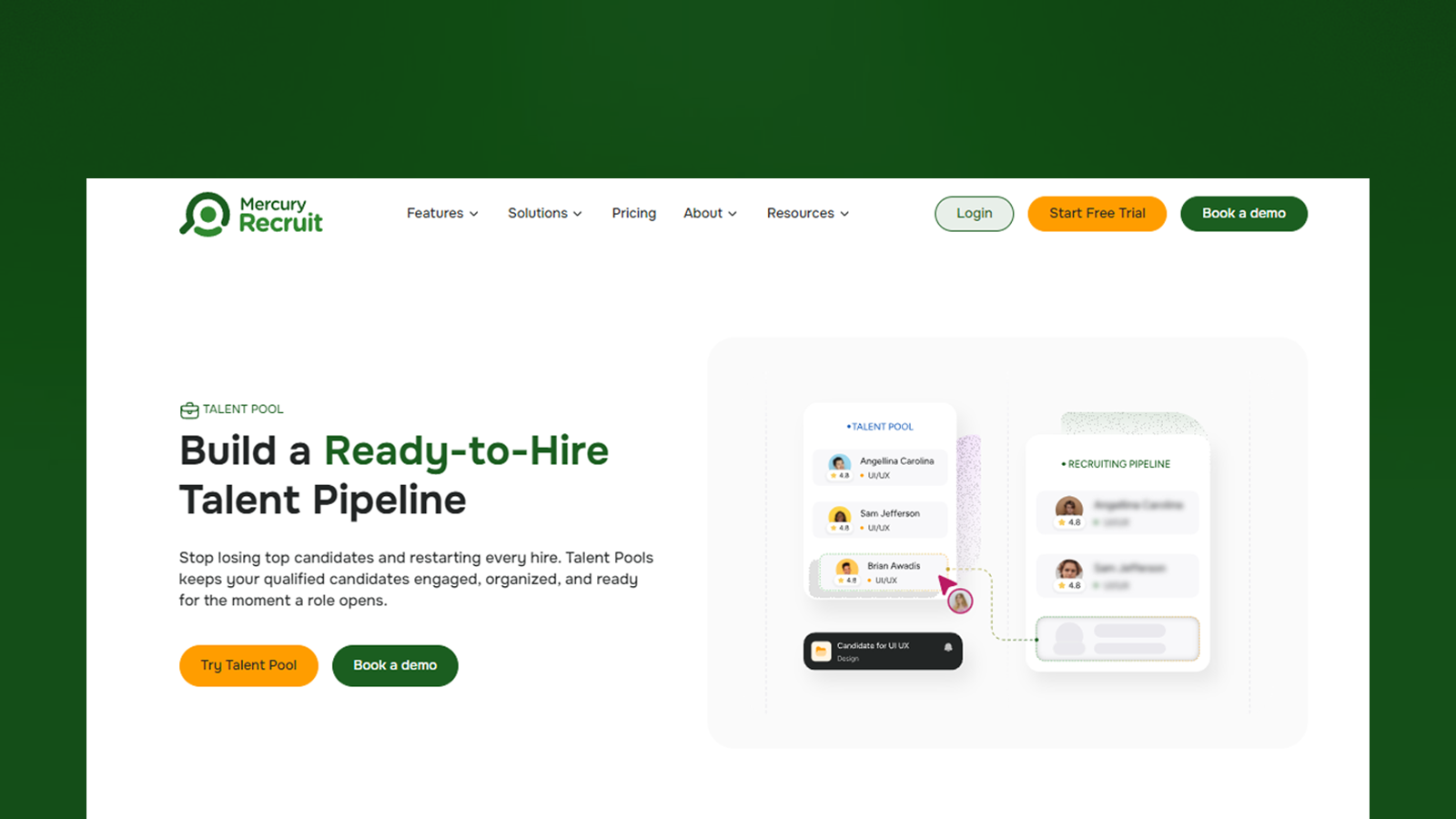
Mercury Recruit is an AI-powered ATS with built-in talent pool management features. It includes a Talent Pool feature that provides a centralized place to build, organize, and nurture potential candidates for future hiring.
You can create talent communities, send targeted email campaigns, schedule follow-ups, and track candidate engagement. Plus, it allows you to move candidates between talent pools and active job openings without losing profiles, notes, evaluations, or hiring history, through the single platform.
Key Features
Centralized talent pools
Candidate folders and communities
Targeted emails and scheduled follow-ups
Candidate engagement tracking
Previous evaluations, scores and notes
Movement into active jobs
Shared talent database
Custom hiring pipelines
Pricing
Starter Plan: $150/month
Standard Plan: $209/month
Premium: $419/month
*Free trial and demo available.
Visit the pricing page for a detailed breakdown of plans, features, and pricing to find the right option for your organization.
Pros and Cons
Pros | Cons |
|
|
Our Evaluation
Mercury Recruit is a strong fit for teams that want talent pools directly connected to candidate records, communication, evaluation and hiring pipelines.
"Mercury Recruit was easy to set up, and we started reviewing candidates on the same day. It has made our hiring process much faster and more organized."— Mahima HR Generalist, AITC International, User of Mercury Recruit
2. Gem [Best for Sourcing and Talent Rediscovery]
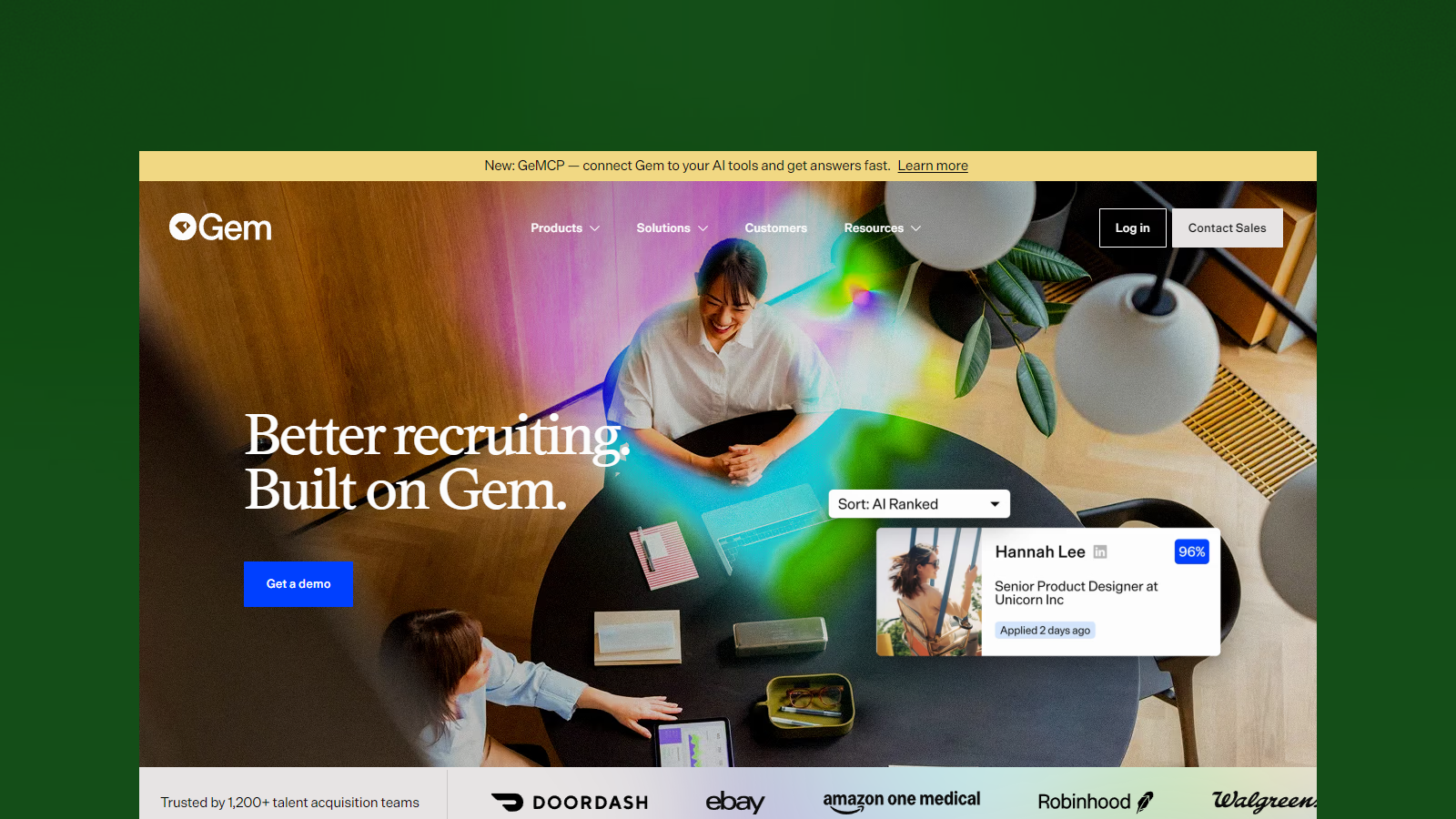
Gem is another strong solution for talent pool management, especially for teams that want built-in protection against fraudulent applications. It includes an AI fraud detection agent and offers AI sourcing agent to build your talent pool faster, searching through 800M+ profiles and automatically surfaces the best fit.
Moreover, organizations can use Gem alongside existing ATS or adopt its all-in-one hiring platform, as per the recruitment needs. Also, AI rediscovery and bi-directional ATS synchronization ensure talent stays current and easy to find.
Key Features
Talent pools and advanced search
AI talent rediscovery
Multichannel outreach sequences
Candidate sourcing across external sites
Saved-search automation
Applicant Tracking
Interview Scheduling
Pricing
For company size of 1-10 full-time employees,
Custom pricing for Growth and Enterprise plans based on company size (FTE) and requirements.
Startup Program: Companies with under 30 employees receive Gem All-in-One free for six months, followed by 50% off the first paid year.
Companies with 30–100 employees receive discounted pricing from day one.
Note: Pricing varies based on company size (FTE), selected workflows, modules, and contract terms. Verify the latest pricing with Gem before purchasing
Pros and Cons
Pros | Cons |
|
|
Our Evaluation
Gem is best for sourcing-led teams that need to find passive candidates, rediscover past profiles and run structured outreach.
3. Avature CRM [Best for Enterprise Customization]
Avature CRM is a candidate relationship management platform built for enterprises that need to manage large-scale recruiting efforts. Beyond creating talent pools, it helps recruiters source candidates, segment talent communities, run personalized engagement campaigns, and rediscover qualified candidates when new roles open.
Recruiters can centralize candidate data from multiple sources, segment profiles by skills or hiring needs, and maintain engagement through automated campaigns. Its AI-powered search and matching capabilities also help teams identify suitable candidates already present in their database instead of starting every search from scratch.
Key Features
Configurable candidate CRM
Automated sourcing
Mass resume importer
Multichannel campaigns
Daily automated searches
LinkedIn CRM Connect
Privacy and consent workflows
Recruitment analytics
Pricing
Avature provides custom pricing based on modules, configuration, implementation, and organizational scale.
Pros and Cons
Pros | Cons |
|
|
Our Evaluation
Avature is well suited to global employers that need detailed workflows, multiple talent communities and branded engagement.
4. Beamery [Best for Enterprise Talent Marketing]
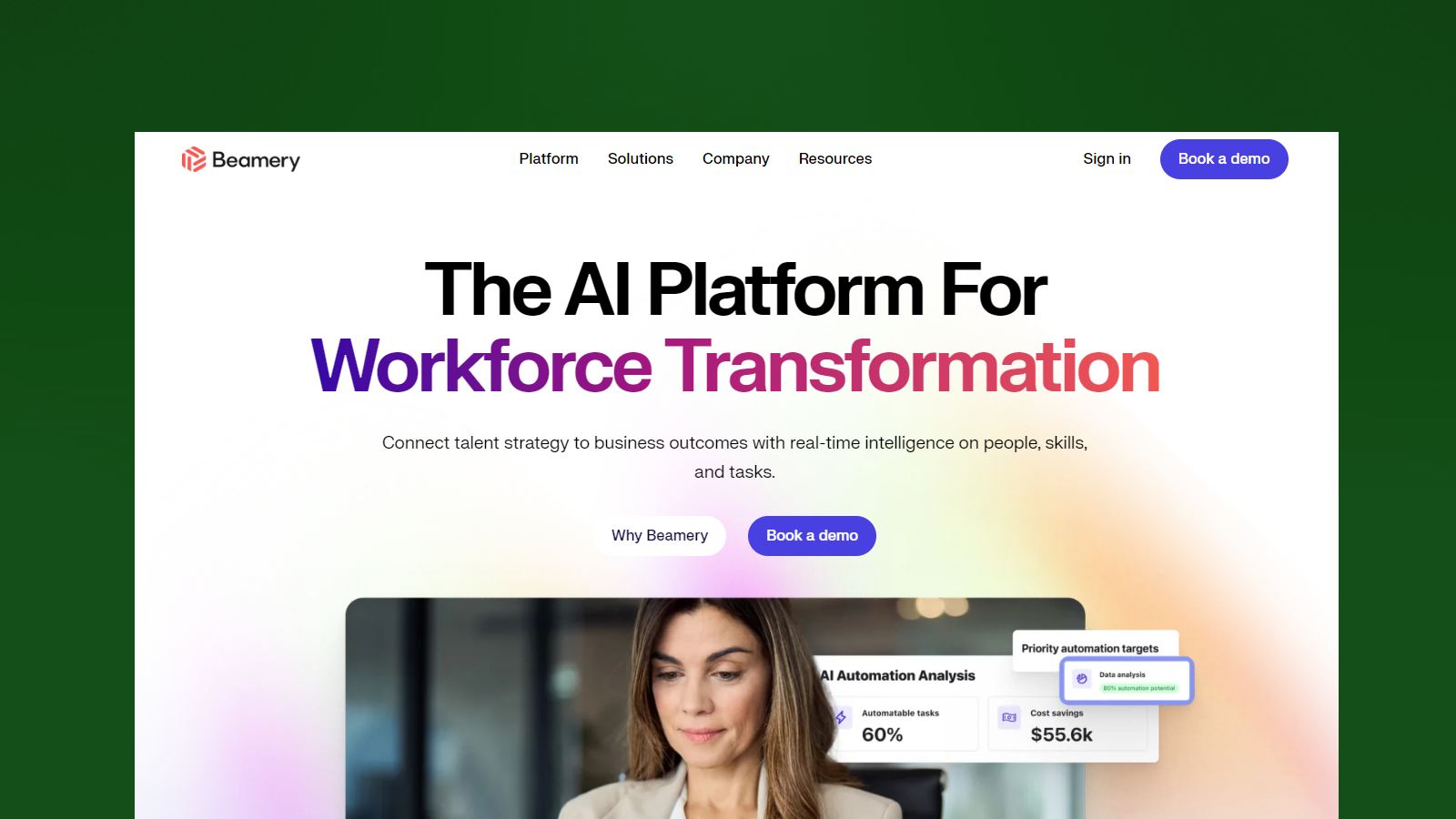
Beamery is one of the leading Talent Lifecycle Management platforms for enterprise hiring. Instead of organizing candidates only by resumes or job titles, it builds a dynamic skills profile for every candidate using its AI-powered Skills Graph.
Moreover, it's easy to identify transferable skills, discover talent across both internal and external workforces, and create skills-based talent pools that stay relevant as hiring needs to change.
Key Features
Enterprise talent CRM
Silver-medalist management
Candidate segmentation
Email campaigns
Talent marketing
Skills-based sourcing
Career sites and forms
Talent analytics
Pricing
Contact Beamery sales team for detailed pricing.
Pros and Cons
Pros | Cons |
|
|
Our Evaluation
It is an ideal platform for global enterprise with high volume hiring, multi-region talent programs, and focus on skills-based internal mobility.
5. iCIMS CXM [Best for Automated Candidate Nurturing]
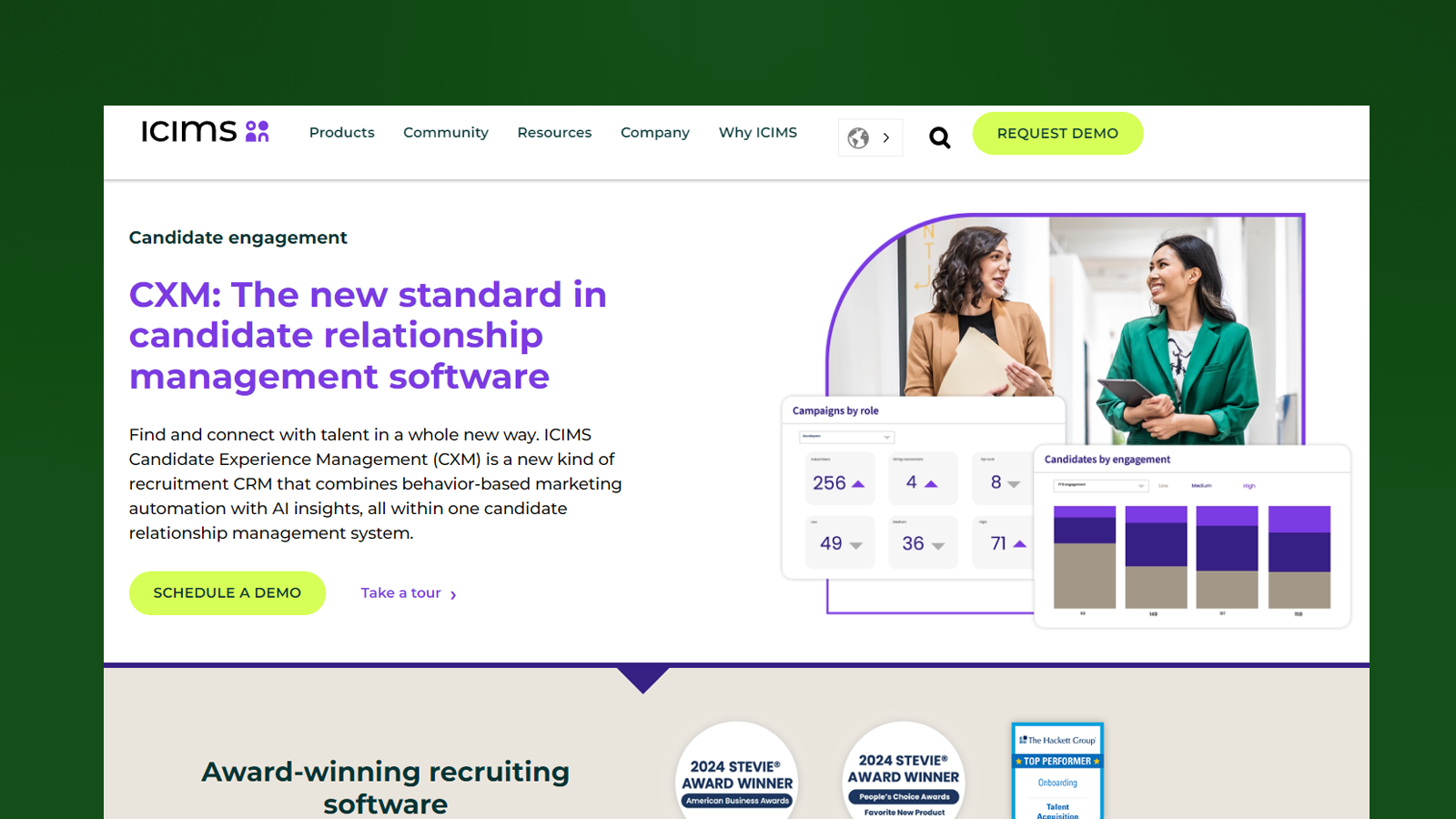
iCIMS Candidate Experience Management (CXM) is another leading candidate relationship management (CRM) software built for enterprise hiring. It helps recruiters build, organize, and nurture talent pools by turning previous applicants, silver medalists, and talent community members into a reusable pipeline for future roles.
Furthermore, the platform combines AI-powered candidate matching, engagement scoring, automated email and SMS campaigns, and recruiting event management to keep candidates engaged throughout the hiring journey. It also supports advanced segmentation and multilingual communication.
Key Features
Manual and dynamic talent pools
Candidate tags and segmentation
Engagement scoring
Automated nurture campaigns
Email templates and sequences
Talent rediscovery
Candidate experience tools
GDPR-ready controls
Pricing
iCIMS uses customized pricing based on company requirements and selected products.
Pros and Cons
Pros | Cons |
|
|
Our Evaluation
We liked how iCIMS CXM combines talent pools with candidate engagement instead of treating them as separate workflows. Its CRM and automation features stand out, though the platform may be more complex than necessary for organizations with straightforward hiring needs.
6. Lever [Best for Combined ATS and CRM Workflows]
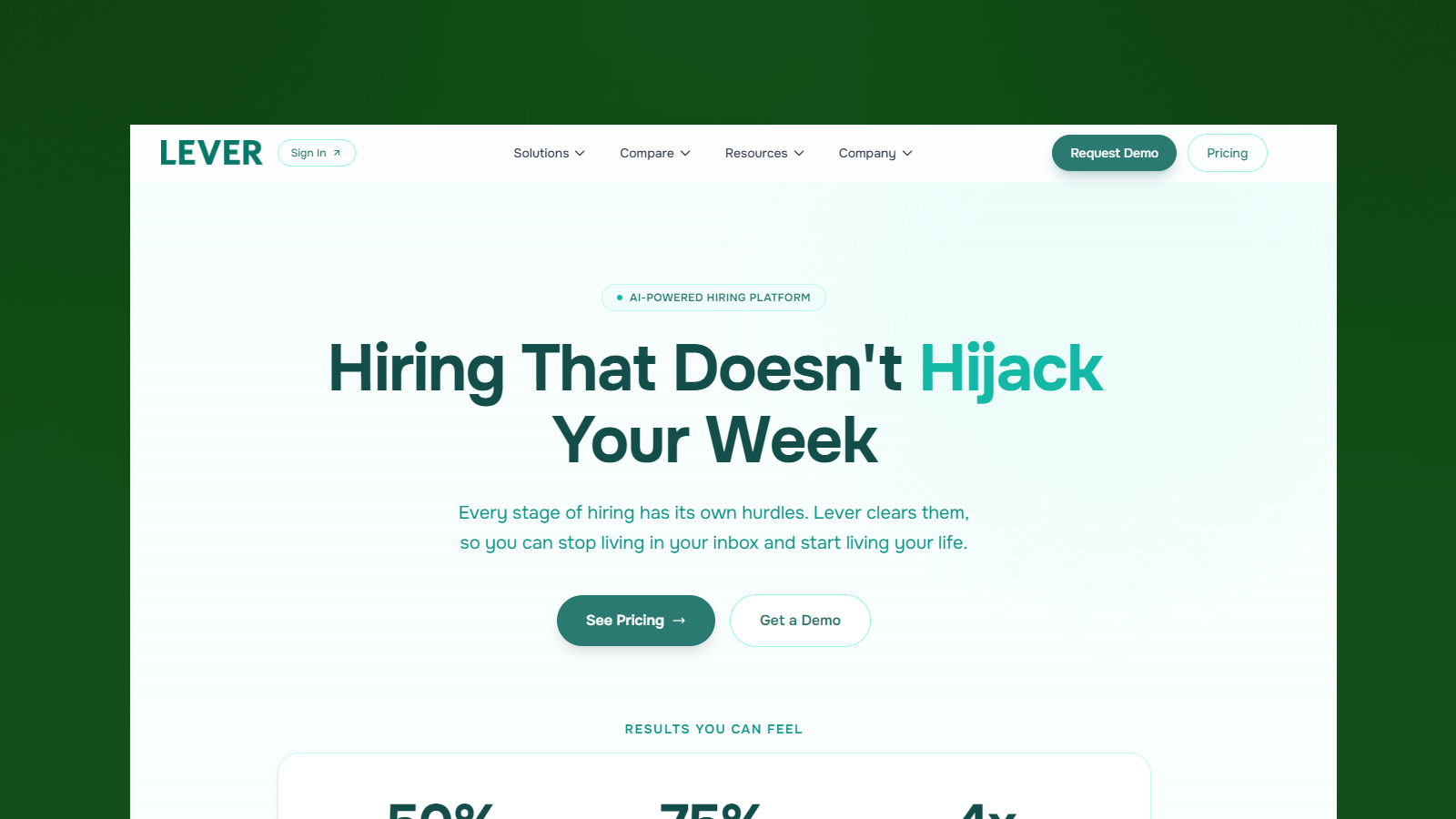
Lever is one of the few platforms that combines full ATS, CRM, and recruiting analytics in a single solution. Recruiters can launch personalized nurture campaigns directly from the built-in CRM, rediscover qualified candidates from their existing database using AI-powered recommendations, and automate interview scheduling, follow-ups, and candidate workflows.
Key Features
Unified ATS and CRM
Personalized nurture campaigns
AI-ranked candidate recommendations
Talent rediscovery
Automated interview scheduling and follow-ups
Smart recruiting workflows
Visual pipeline analytics
Custom dashboards and reporting
Pricing
Lever provides custom quotes based on organizational size and hiring needs.
Pros and Cons
Pros | Cons |
|
|
Our Evaluation
Lever works best for structured recruitment teams that want active applicants and long-term prospects in one system.
7. Ashby [Best for Sourcing-Focused Talent Communities]
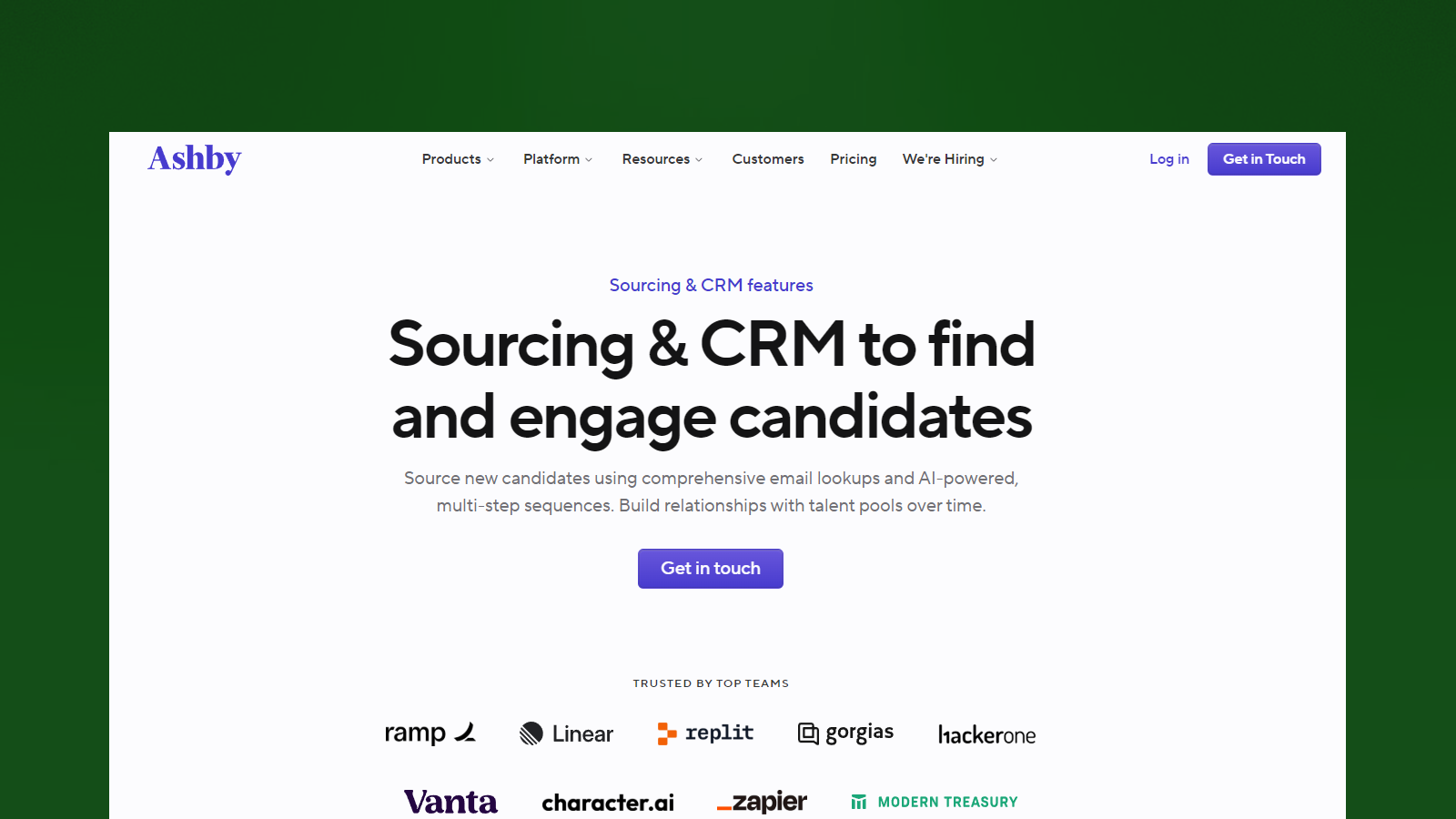
Ashby stands out for helping recruiting teams turn passive candidates and previous applicants into reusable talent pools. Its Sourcing Projects feature allows recruiters to organize prospects outside active hiring pipelines, while AI Talent Rediscovery helps surface relevant candidates from existing databases when new roles open.
Recruiters can further engage prospects through automated sequences, newsletters, and personalized outreach without moving candidates into active hiring pipelines.
Key Features
Sourcing projects
AI talent rediscovery
Advanced candidate search
Automated sequences
Ai outreach personalization
Candidate data enrichment
Pricing
Ashby All-In-One Pricing:
Foundations Plan: Starts at $400/month for companies with up to 100 employees
Plus Plan: Custom pricing
Enterprise Plan: Custom pricing
Pros and Cons
Pros | Cons |
|
|
Our Evaluation
We found Ashby better suited for mature recruiting teams that already invest heavily in sourcing. Its talent pool capabilities are powerful, but the platform feels more valuable when teams need advanced workflows rather than simple candidate organizations.
“If you’re a recruiter nowadays and you don’t see yourself as a marketer, you’re in the wrong profession.”— Matthew Jeffrey, former Global, Head of Sourcing & Employment Brand, SAP
Talent Pools Built Into Your ATS
No separate CRM license. Pools, notes, and pipelines stay connected.
Explore Talent Pool8. SmartRecruiters [Best for Integrated Talent Communities]
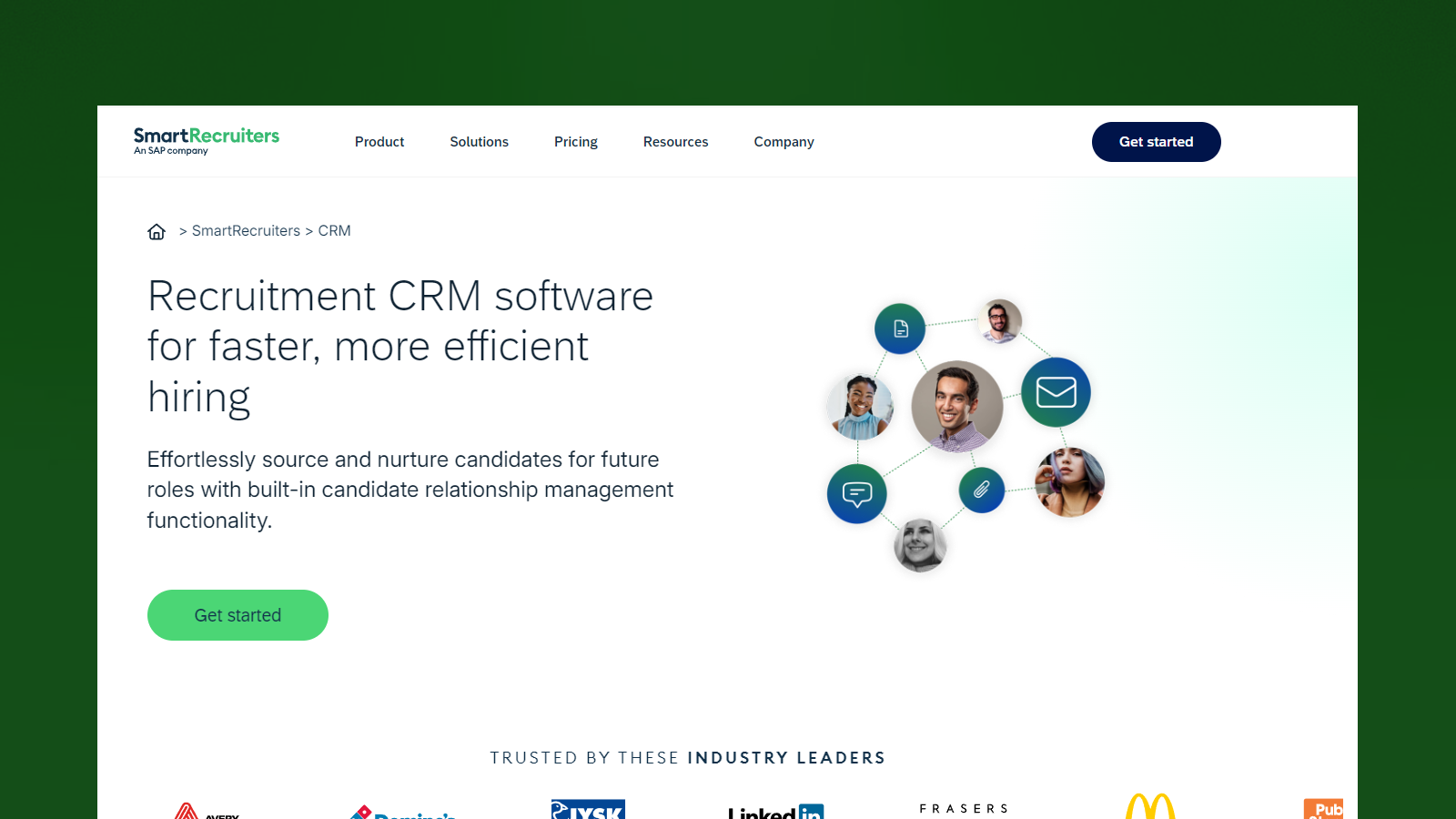
SmartRecruiters is an AI-powered applicant tracking system (ATS) built on SmartOS, its end-to-end recruiting platform. Through its built-in candidate relationship management (CRM), recruiters can source candidates, organize talent pools, and move qualified prospects into active hiring workflows from a single platform.
Additionally, AI-powered talent matching, integrated candidate messaging (SMS, WhatsApp, and web), dynamic interview scheduling, and AI-powered candidate screening help recruiters identify, engage, and move qualified talent through the recruitment process more efficiently.
Key Features
Candidate Messaging
Applicant tracking
Dynamic scheduling
Job distribution
Conversational AI Chat
AI-powered hiring agent
AI talent matching engine
Pricing
The Essential plan starts at $14,995, although the public page does not clearly state the billing period. Professional and higher plans require a custom quote.
Pros and Cons
Pros | Cons |
|
|
Our Evaluation
SmartRecruiters stands out for its unified SmartOS platform, which connects talent CRM, applicant tracking, and candidate communication in one place. Its premium pricing and occasional integration sync issues make it a better fit for larger organizations than smaller teams.
9. Workable [Best for Growing Hiring Teams]
Workable is another strong recruitment platform that helps teams discover, screen, and manage qualified candidates more efficiently. Its AI-powered candidate sourcing searches over 400 million candidate profiles to recommend qualified candidates.
Furthermore, it resurfaces previously considered candidates, helping recruiters reconnect with qualified talent from their existing database. Recruiters can save these candidates to the Talent Pool, organize them with tags and filters, and move them into active hiring pipelines when suitable roles become available.
Key Features
Candidate sourcing suite
Searchable candidate records
Careers-page builder
Recruitment reports
Self-service interview scheduling
Candidate assessments
Workflow permissions
Pricing
Standard: $360/month
Premier: $599/month
Enterprise: $719/month
Pros and Cons
Pros | Cons |
|
|
Our Evaluation
We found Workable strong for its AI-powered sourcing, candidate rediscovery, and smooth ATS integration. However, reporting and workflow customization are less flexible and could be better for teams that need advanced analytics or highly complex recruitment processes.
10. Greenhouse CRM [Best for Existing Greenhouse Users]
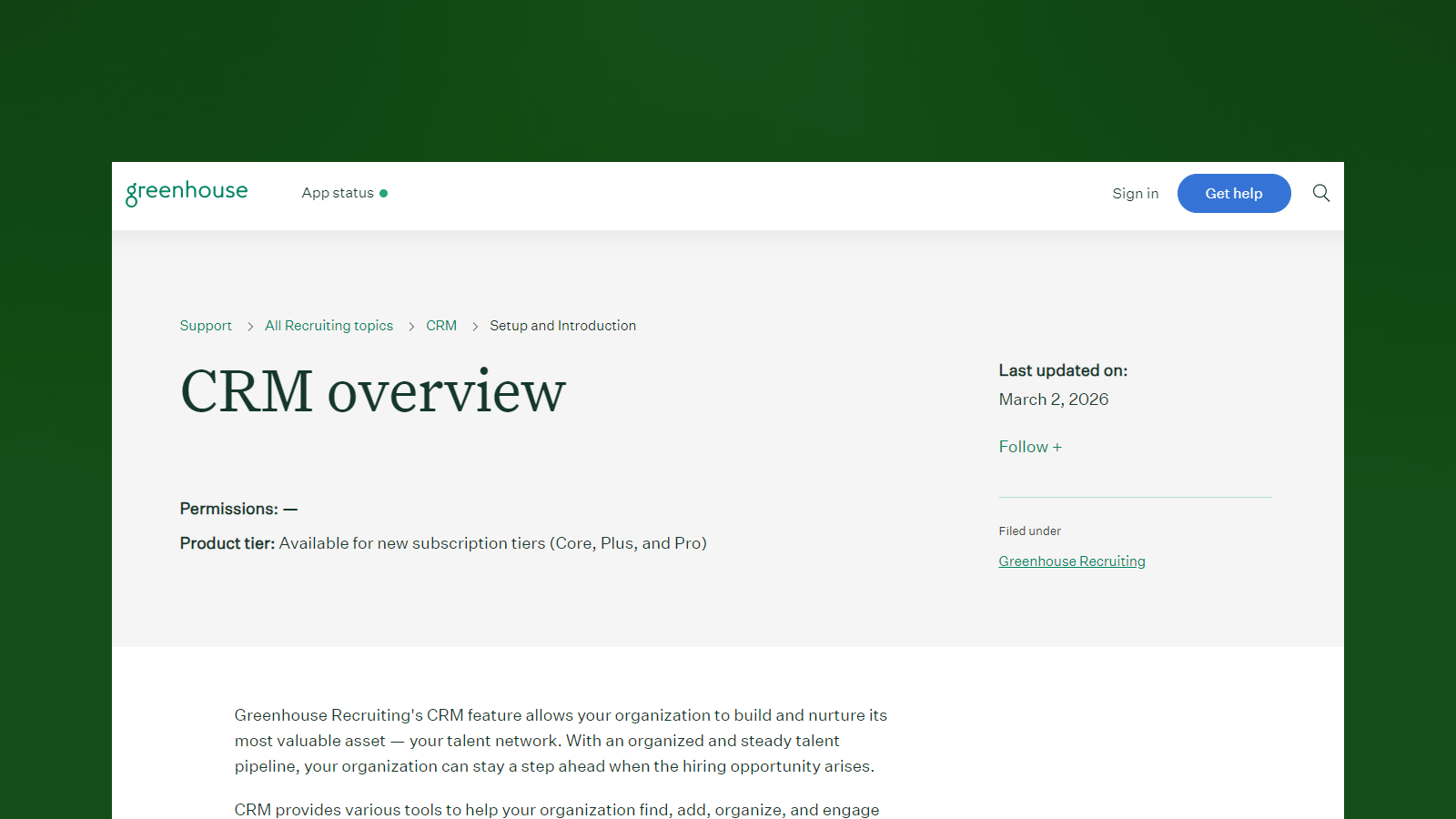
Greenhouse CRM is another top choice for talent pool management for the organizations already using Greenhouse Recruiting. Instead of creating a separate candidate database, it extends your ATS with dedicated CRM capabilities such as Prospect Pools, Campaign Pools, and Talent Rediscovery.
Moreover, it includes a Real Talent feature that identifies resume fraud and identity deception. With this integrated fraud detection, identity verification, and powered candidate matching you built a reliable candidate pool for your hiring needs.
Key Features
Candidate database
Candidate sourcing
Resume management
Hiring pipelines
Employee referrals
Candidate matching
Automation
Reports and dashboards
Pricing
It includes core, plus, and pro plan, but you need to contact their team for custom pricing based on your hiring needs.
Pros and Cons
Pros | Cons |
|
|
Our Evaluation
Greenhouse CRM works particularly well for organizations already using Greenhouse Recruiting and makes it easy to keep qualified candidates engaged within the same ecosystem. However, the platform delivers the most value inside the Greenhouse ecosystem, so organizations using another ATS may find it less flexible.
“Regardless of the economic ebbs and flows, businesses always have a consistent need to nurture quality talent and convert them to new hires.”— Eric Connors, Chief Product Officer, iCIMS
How to Choose the Right Talent CRM Software?
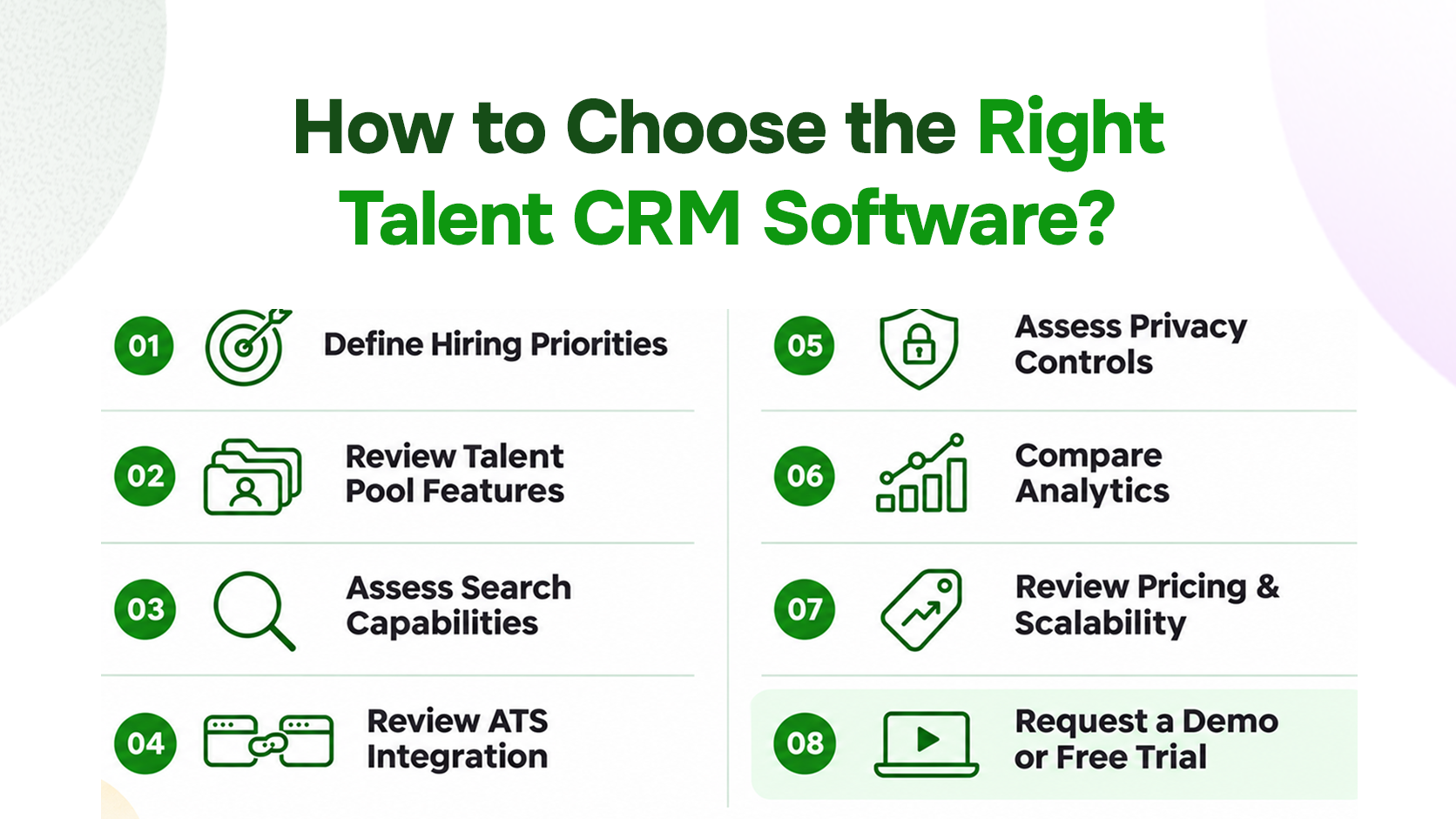
Choose talent CRM software based on the hiring problem your team needs to solve rather than the platform with the longest feature list.
The following steps help you make a focused comparison:
Define your hiring priorities: Decide whether you need candidate storage, sourcing, nurturing, rediscovery or full applicant tracking.
Review talent pool features: Confirm that platform has the essential features. Look for segmentation, tagging, advanced search, and talent rediscovery capabilities.
Assess search capabilities: Check whether the software supports features such as Boolean search, advanced filters, AI matching, and skills-based search.
Review ATS integration: Ensure candidate profiles move seamlessly between talent pools and active hiring pipelines without creating duplicate records.
Assess privacy controls: Confirm the platform includes consent management, data retention controls, and General Data Protection Regulation (GDPR) or other relevant compliance.
Compare analytics: Look for reporting on talent pool growth, candidate engagement, talent rediscovery, pipeline progression, and hires generated from your pools. Choose software that provides clear insights into how effectively your talent pools support hiring goals.
Review pricing and scalability. Check user limits, feature availability, integrations, and additional costs. Choose software that fits your current needs and future hiring growth.
Request a demo or free trial: Test the platform with your own recruitment workflows before making a long-term commitment.
Talent CRM software works best as part of a wider recruitment process. You can also explore candidate sourcing tools for finding new prospects and candidate screening tools for evaluating active applicants.
Conclusion
A talent pool is only valuable when recruiters can easily find, engage, and move candidates into hiring workflows. The right talent pool management software offers strong search, segmentation, automation, reporting, and integrations to turn candidate data into a reusable hiring pipeline.
However, the best platform depends on your recruitment needs. Mercury Recruit and Workable are strong choices for teams looking for ATS-based talent pools, while Gem and Ashby support sourcing-focused workflows. Enterprise teams may benefit from solutions like Avature, Beamery, or iCIMS for advanced talent CRM capabilities.
Test It with Your Own Hiring Workflow
Start a free trial and build your first talent pool today.
Try Mercury Recruit FreeFAQs
Frequently Asked Questions
A talent pool is a group of potential candidates that recruiters collect, organize, and maintain current or future hiring needs.