
What Is Candidate Experience? Why It Matters & How to Improve It
Recruit
Candidate Experience
10 min read
Key Highlights
Candidate experience shapes how applicants judge your employer brand and workplace culture.
Clear communication keeps qualified candidates engaged throughout the recruitment process.
Positive experiences improve offer acceptance, reapplication, and candidate referrals.
Poor experiences lead to withdrawals, negative reviews, and weaker talent attraction.
Candidate feedback and cNPS reveal where the hiring process needs improvement.
Introduction
According to Boston Consulting Group and The Network, 52% of job seekers said they would refuse an attractive offer after a strongly negative recruitment experience.
This shows that hiring decisions are shaped by more than salary, role, or benefits. Slow communication, unclear expectations, poor interviews, and weak follow-up can all reduce a candidate’s confidence in the employer.
Candidate experience should therefore be managed across the entire recruitment process, from the first application to the final decision.
In this blog, you will learn what shapes a candidate experience, how positive and negative experiences affect hiring, why candidate experience matters, and what a poor process can cost your business.
What is Candidate Experience
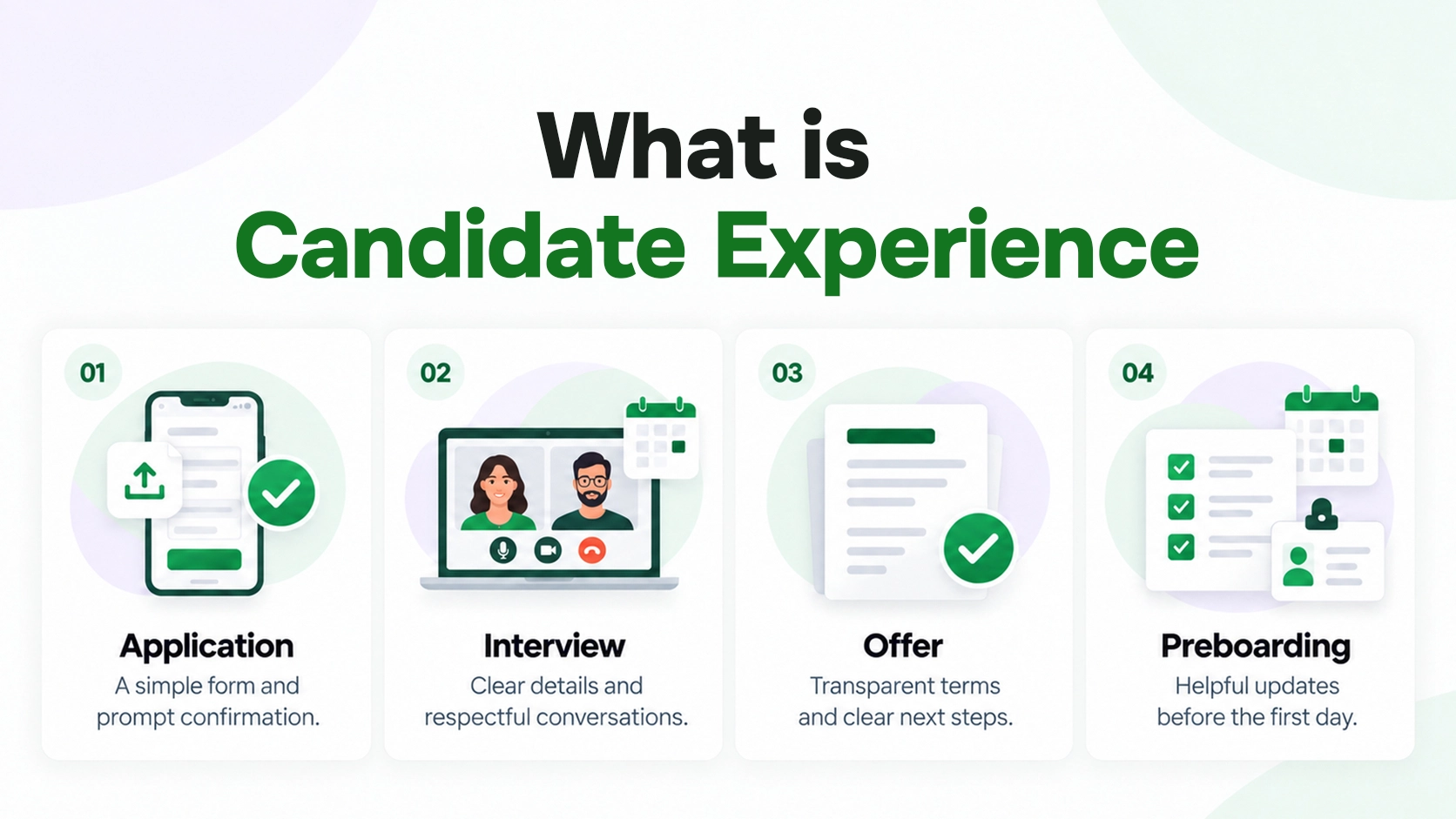
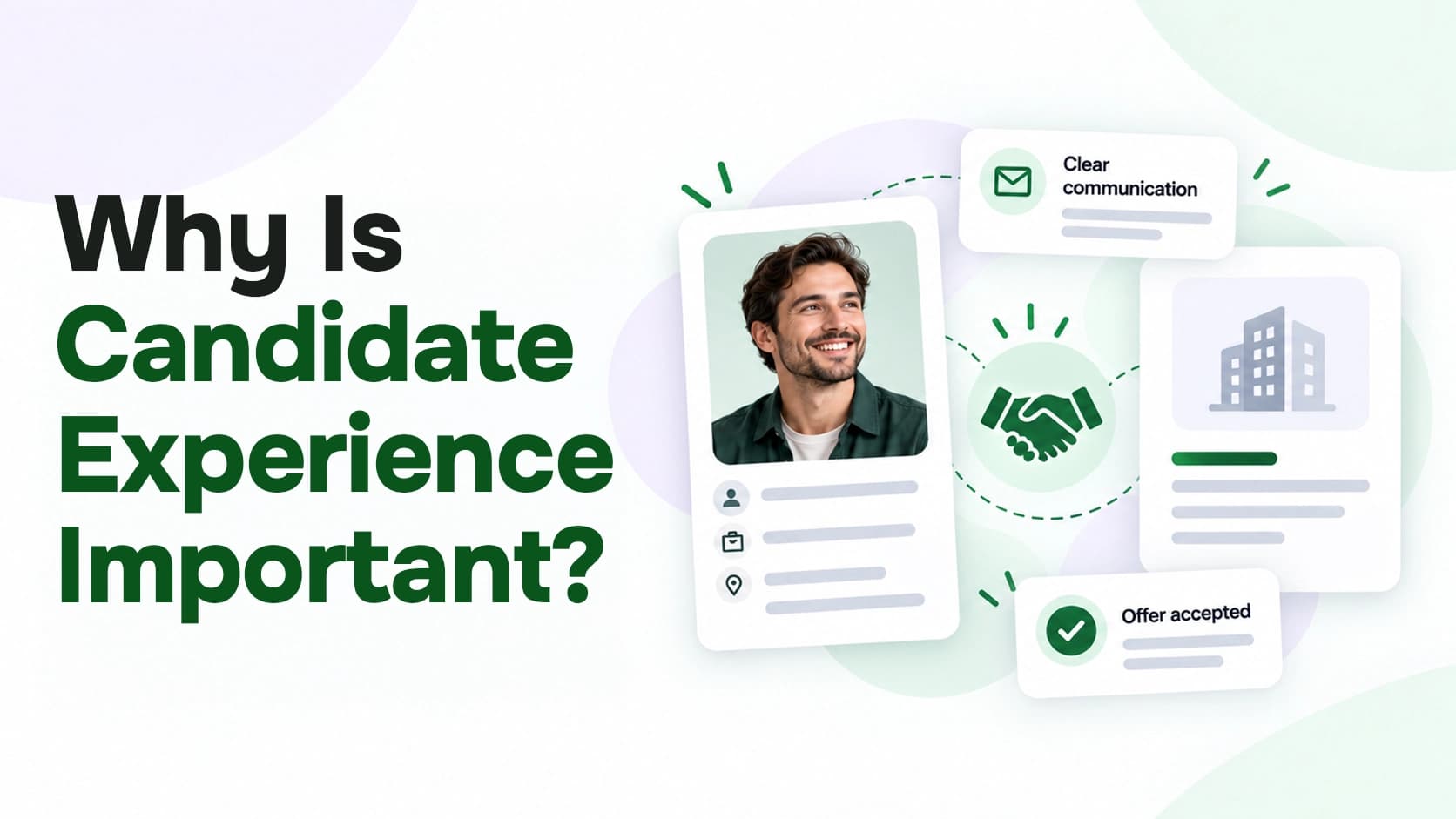
Candidate experience is the overall impression a job seeker forms throughout the entire hiring journey, from the first application to the final decision.
It covers every touchpoint, job posting, application form, interview communication, and how you handle the rejection.
The candidate evaluates the company throughout these stages, just as the company evaluates the applicant.
Each stage leaves an impression, and candidates carry that impression forward whether they get the job or not. A rejected candidate who felt respected often reapplies later or refers to someone else. A candidate who felt ignored rarely does either.
Job information, application process, recruiter communication, interview quality, decision process, and onboarding handoff together shape whether a candidate has a good or bad experience.
For a broader explanation of these touchpoints, explore our complete guide on candidate experience.
"Creating a positive and memorable candidate experience has never been more important."— Johnny Campbell, CEO of SocialTalent
Why Is Candidate Experience Important? 8 Key Reasons
Candidate experience matters because it affects who applies, who stays in the process, who accepts an offer, and what people say about the organization afterward.
Here's how each connection plays out in practice.
1. Determines Whether Candidates Accept Your Offer
A candidate does not evaluate an offer in isolation. They judge it alongside every interaction that came before it.
A competitive salary can lose its appeal when the recruitment process has included long delays, conflicting information, repeated interviews, or unexplained silence. These experiences create doubts about management quality and internal communication.
More than half of job seekers said they had declined an offer because of poor experience with a potential employer during the hiring process.
This suggests that the quality of the recruitment process can influence the final decision just as much as the offer itself.
The strongest candidates usually have alternatives. A positive final interview does not compensate for six weeks of disorganization if another employer communicates clearly and makes decisions faster.
2. Protects Your Employer Brand
Candidate experience turns employer branding from a marketing promise into observable behavior.
A company might describe itself as respectful, transparent, and people-focused. Candidates test those claims when they apply, speak to recruiters, and meet hiring managers.
Poor treatment also spreads beyond the individual applicant. RecruitBPM's 2026 research found that 55% of candidates share a negative experience on social media, and 72% share it on review sites.
That means every unresolved application or disrespectful interview can influence candidates who have never interacted with your company directly.
3. Shapes Glassdoor and Employer-Review Perception
Candidates research employers before they apply. Reviews therefore influence the top of the recruitment funnel, not only the final acceptance decision.
Glassdoor data shows that approximately 86% of job seekers check a company's ratings and reviews before applying. Prospective applicants also tend to read several reviews before forming an opinion.
A single negative review might have a limited impact. Repeated complaints about ghosting, misleading job descriptions, interview delays, or unprepared managers establish a pattern.
That pattern affects talent attraction. Qualified candidates with several options have little reason to enter a process that appears disorganized or disrespectful.
Academic research using Glassdoor and Dice data has found that displayed employer ratings affect an employer's ability to attract workers, particularly among smaller and less-established companies.
Your candidate experience today can therefore become the evidence a future applicant uses when deciding whether to apply next year.
4. Affects Referrals and Word of Mouth
Candidates discuss recruitment experiences with colleagues, friends, and professional contacts.
A rejected applicant who felt respected might still recommend the company to someone whose skills match the vacancy more closely. That referral enters the process with greater awareness and initial trust.
Talent Board's 2024 benchmark findings showed that candidates at the highest-rated candidate-experience companies had a 56% higher willingness-to-refer score than candidates across all participating organizations.
The research also found that candidates invited to provide feedback were 126% more likely to refer to others.
Positive experiences also spread through personal networks. Indeed's own candidate survey found that 72% of respondents who had a positive recruitment experience would definitely share it with friends or family, while 58% were very likely to recommend the employer to other job seekers.
Referrals matter because they expand the talent pool without requiring the employer to rely entirely on job advertising or outbound sourcing.
5. Reduces Reapplication Friction
A rejected candidate is not automatically a lost candidate.
Someone who lacks one required skill today might become a strong fit for another vacancy after gaining additional experience. A respectful rejection keeps that relationship open while ghosting closes it.
Greenhouse's 2024 State of Job Hunting Report found that 61% of job seekers had experienced post-interview ghosting, meaning nearly two in three candidates received no follow-up after an interview.
Silence tells applicants that their time and effort were not worth a response. Those candidates become less likely to apply again, recommend the employer, or respond to future recruiter outreach.
Maintaining previous candidates inside the talent pipeline reduces future sourcing friction. Recruiters do not need to rebuild awareness and trust from the beginning every time a similar vacancy opens.
Keep Silver Medalists One Message Away
Save strong past applicants and reconnect when a better-fit role opens.
Explore Talent Pool6. Keeps Candidates Engaged During Slow Processes
Speed and communication now act as employer-brand signals.
Robert Half research found that 57% of candidates lose interest when the hiring process takes too long.
A delay does not automatically create a poor experience, but an unexplained delay does.
Candidates remain more engaged when recruiters provide realistic timelines, acknowledge changes, and explain when a decision will arrive.
A short progress update gives candidates information they can use, even when the hiring team has not reached a final decision.
7. Improves Preboarding, Referrals, and Future Loyalty
Candidate experience continues after the offer is accepted.
Talent Board research, reported by JobScore, found that candidates who received several ways to communicate, meet team members, discuss goals, and ask questions before their start date were 137% more willing to increase their relationship with the employer.
By comparison, candidates who simply accepted the offer without these preboarding interactions showed a 110% increase.
This stronger relationship goes beyond referrals; it includes greater employer advocacy, stronger brand loyalty, future networking, continued engagement, and a higher likelihood of recommending the organization to others.
The findings show that employers should not treat offer acceptance at the end of the recruitment process.
Effective communication between the offer and the employee's first day builds confidence, reduces uncertainty, and creates a stronger long-term relationship with the employer.
8. Supports Better Hiring Decisions
A structured candidate experience helps applicants present more accurate information about their skills, motivations, and suitability.
Poor coordination creates distractions. Candidates spend their attention handling scheduling problems, vague instructions, and repeated questions instead of demonstrating what they can contribute.
Strong applicants also withdraw when a process feels unnecessarily slow or disrespectful.
The employer then chooses from the candidates who tolerated the process, rather than the strongest available talent.
Collecting candidate feedback helps identify where that friction occurs. You can track:
Candidate Net Promoter Score (cNPS)
Application completion rate
Candidate withdrawal rate
Interview-to-offer conversion
Offer acceptance rate
Reapplication rate
Candidate referral intent
Employer-review sentiment
"The quality of your candidate pool is a direct reflection of the quality of your hiring process."— John Vlastelica, CEO and Founder of Recruiting Toolbox
Spot Where Candidates Drop Off
Track withdrawals, conversions, and offer acceptance at every hiring stage.
Explore AnalyticsThe Cost of a Poor Candidate Experience
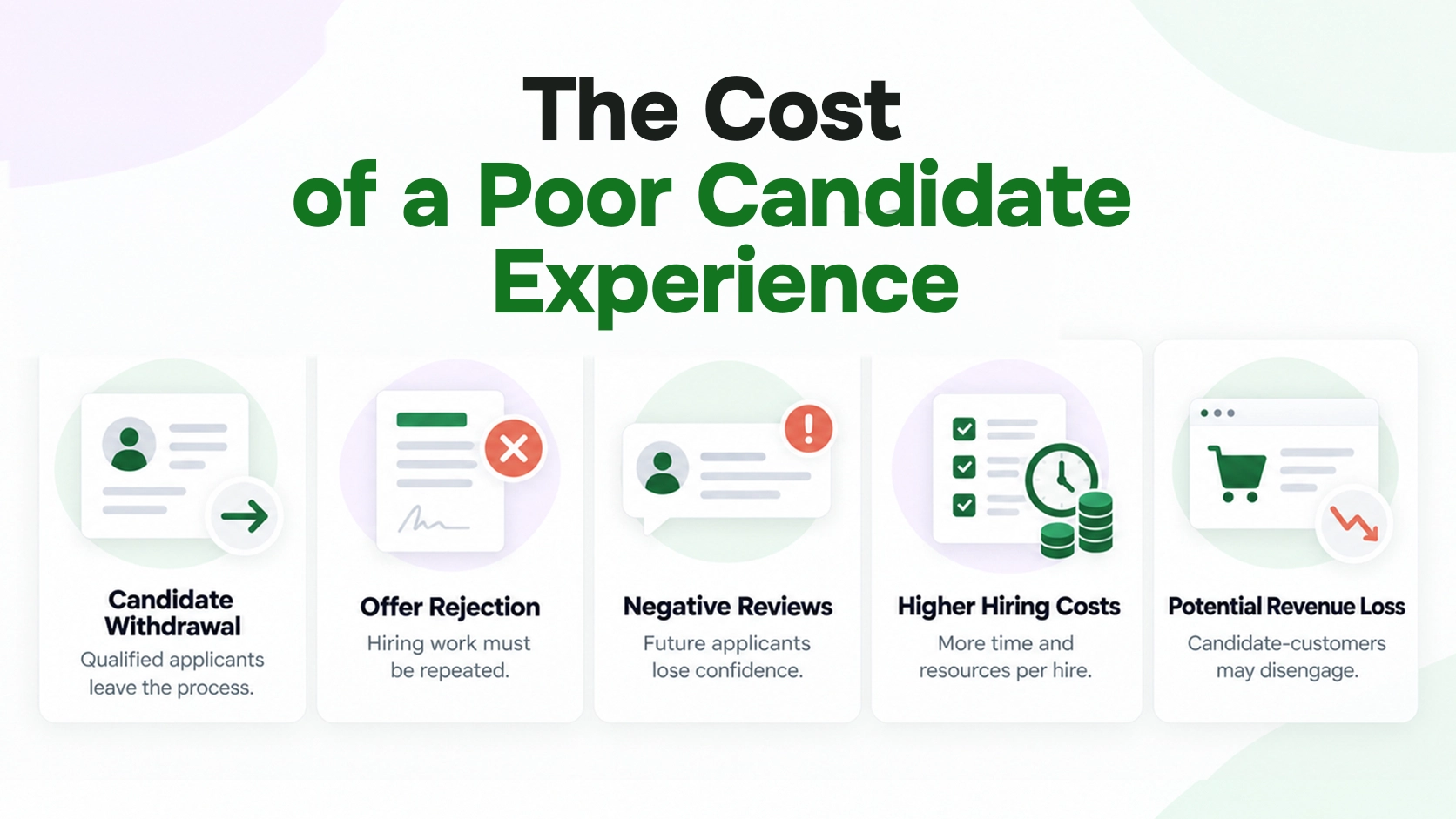
A poor candidate experience creates measurable recruitment costs, reputational damage, and potential revenue loss.
The most visible cost is candidate withdrawal. When qualified applicants leave, recruiters must return to sourcing, screening, and scheduling.
Offer rejection creates the same problem later in the process. The company might complete several interviews, assessments, and approval stages before discovering that its preferred candidate no longer trusts the organization.
The hiring team must then approach another finalist or restart the search. Both options increase time to hire and leave the role unfilled for longer.
The table below shows the business impact of a poor candidate experience:
Impact Area | What Happens | Business Consequence |
Offer acceptance | Candidates decline after a slow or disrespectful process | Repeated sourcing, interviewing, and approval work |
Employer brand | Candidates share negative experiences publicly | Fewer applicants and lower recruiter response rates |
Revenue | Candidates who are also customers disengage | Lost purchases, subscriptions, or business relationships |
Talent pipeline | Rejected candidates do not reapply | A smaller pool for future vacancies |
Referrals | Candidates discourage others from applying | Greater dependence on paid sourcing |
Cost per hire | A leaky process requires more recruitment activity | Higher spending to fill the same role |
Internal productivity | Recruiters and managers repeat hiring work | More time spent on administration and interviews |
"Never forget that behind every resume is a person who deserves respect and consideration throughout the hiring process."— Jeff Moore, VP of Talent Acquisition at Toast
How Poor Candidate Experience Damages Revenue and Reputation
Poor candidate experience influence customer loyalty, brand perception, and future business relationships.
The Virgin Media case is one of the clearest examples. Former Head of Resourcing Graeme Johnson found that rejected applicants who were also customers were cancelling their subscriptions after negative hiring experiences.
The company estimated that these cancellations cost approximately £4.4 million, or $5.4 million each year.
Poor experiences also damage reputation through word of mouth. RecruitBPM's 2026 research found that 55% of candidates have shared a negative experience on social media, and 72% have shared it on review sites.
These conversations can influence future applicants before they interact with your recruitment team.
"100% of candidates are also potential customers, especially for consumer-based employers. This means a potential loss of revenue for consumer-based businesses, referral networks for all companies, and whether or not future-fit and silver-medalist candidates apply again."— Kevin Grossman, President, Talent Board
Build a More Consistent Candidate Experience
Keep candidate communication and follow-ups organized in one place.
Book A DemoConclusion
Candidate experience influences every stage of hiring, from attracting qualified applicants to improving offer acceptance, referrals, employer reputation, and future applications.
Small improvements in communication, transparency, interview quality, and hiring speed can have a lasting impact on both recruitment outcomes and business perception.
Start by reviewing your recruitment process, gathering candidate feedback, and measuring key metrics such as cNPS, offer acceptance, and candidate withdrawals.
Then apply these candidates experience best practices to improve every stage of the hiring journey and learn how to create a great candidate experience that candidates will remember for the right reasons.
FAQs
Frequently Asked Questions
Candidate experience affects employer reputation, applicant engagement, offer acceptance, referrals, reapplication and long-term talent attraction.