
How to Create a Great Candidate Experience in 5 Practical Steps
Recruit
Candidate Experience
8 min read
Key Highlights
Candidate experience covers every interaction from job discovery through the onboarding handoff.
Journey mapping helps identify delays, unclear ownership, and inconsistent communication.
Touchpoint audits reveal where candidates hit confusion, excessive effort, or inconsistent treatment.
Response-time standards prevent candidates from being left without meaningful updates.
Structured interviews create a clearer and more consistent process for every applicant.
Candidate feedback helps hiring teams improve recurring problems rather than reacting to isolated complaints.
Introduction
A qualified candidate sometimes decides not to join a company because of the hiring experience rather than the role itself.
Slow responses, poor communication, unstructured interviews, long hiring timelines, unclear expectations, and a lack of feedback can frustrate candidates and damage your employer brand.
Even if you extend an offer, poor experience can reduce the chances of acceptance. This is where a great candidate experience makes a difference.
A structured, transparent, and respectful hiring process helps candidates stay engaged, builds trust in your organization, improves offer acceptance rates, and strengthens your reputation as an employer.
To build a stronger hiring journey, first understand what candidate experience is and why candidate experience is important.
Once you understand these fundamentals, you can start improving every stage of the hiring journey.
In this blog, you’ll learn five practical steps and useful tools to create a great candidate experience, from mapping the candidate journey and improving communication to strengthening interviews, offers, and feedback.
Create a Great Candidate Experience in 5 Practical Steps
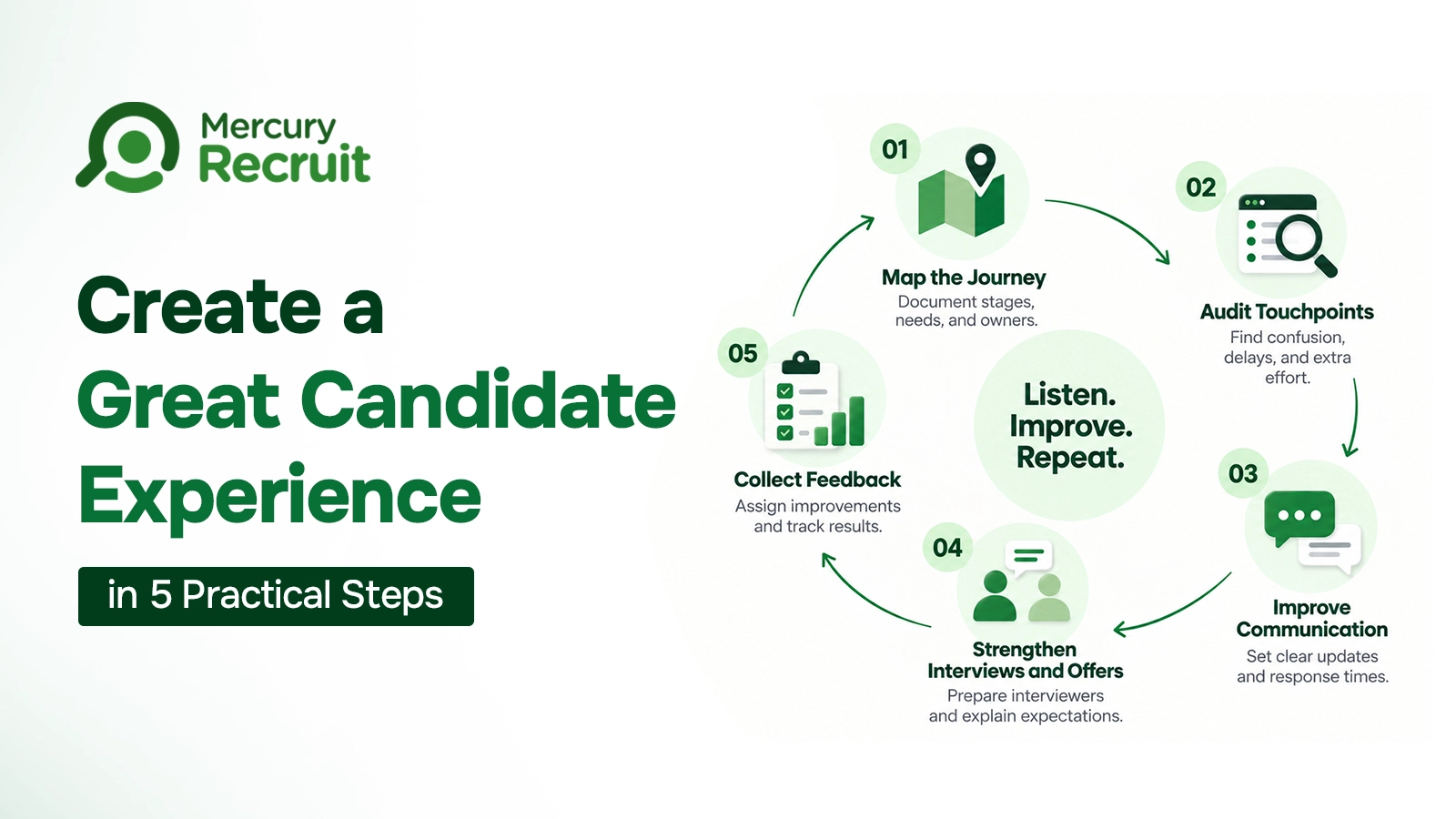
To create a great candidate experience, map all stage candidates pass through, identify friction, communicate consistently, improve interviews and offers, and act on feedback.
According to Greenhouse’s Candidate Experience Report, 20% of surveyed candidates had rejected a job offer because of poor interview experience.
This highlights how candidate experience can directly influence hiring outcomes.
The following five steps provide a repeatable candidate experience strategy rather than a collection of disconnected recruitment tactics.
1. Map the Candidate Journey
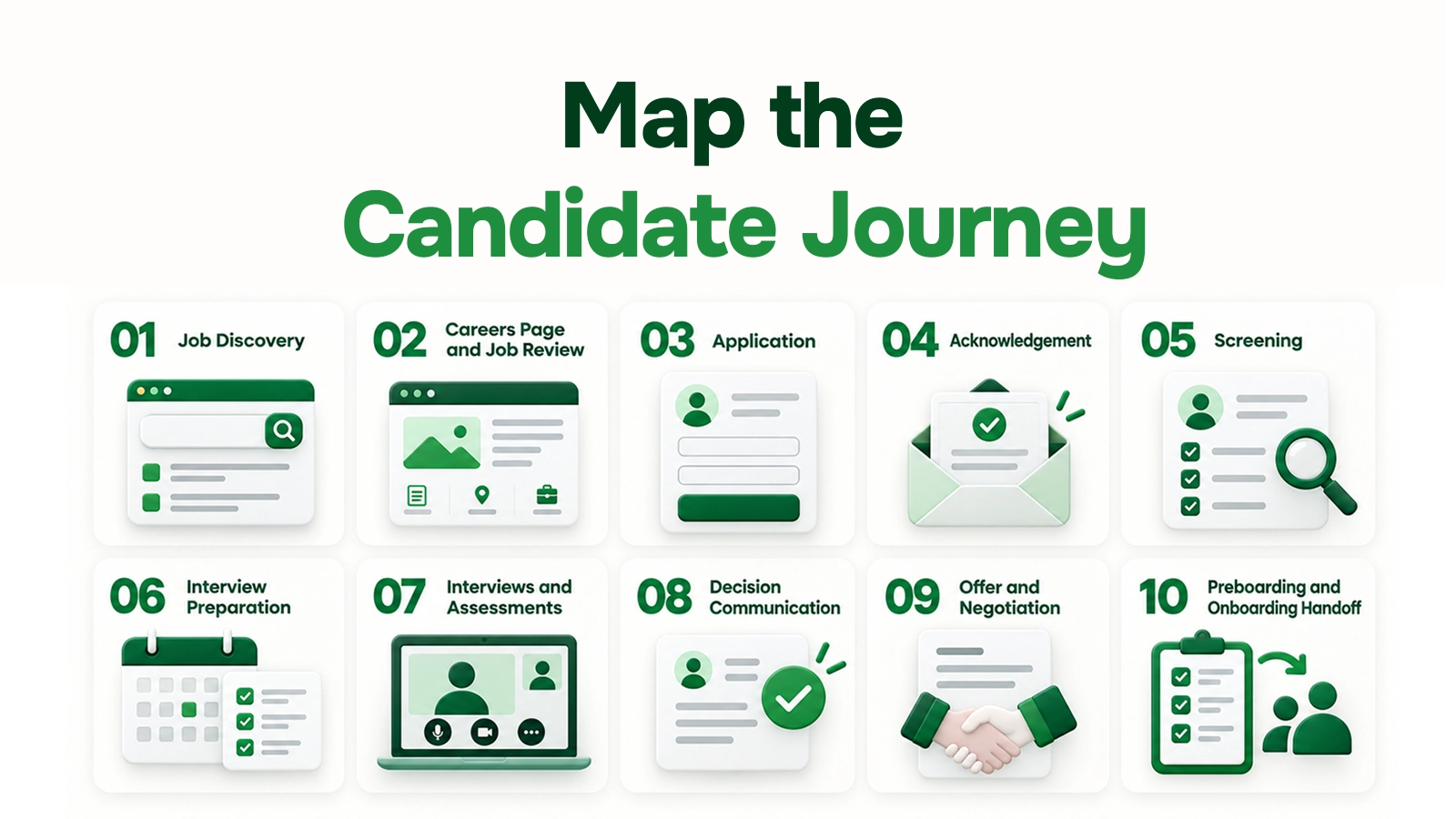
A candidate journey map documents every stage candidates pass through and the interactions that influence their perception of your organization.
A typical candidate journey includes:
Employer or job discovery
Careers-page and job-description review
Application
Application acknowledgement
Interview preparation
Interviews or assessments
Decision communication
Offer and negotiation
Once you have mapped these stages, review each one from the candidate’s perspective. Identify what the candidate is trying to achieve, what information they need, who owns the next action, which tool supports the interaction, and how long the response should take.
This process often reveals gaps that remain invisible when recruiters focus only on their internal tasks.
"To set the record straight, I believe that providing an extraordinary candidate experience for serious and well-qualified candidates is essential. "— Lou Adler, CEO, Performance-based Hiring Learning Systems
2. Audit Your Current Touchpoints
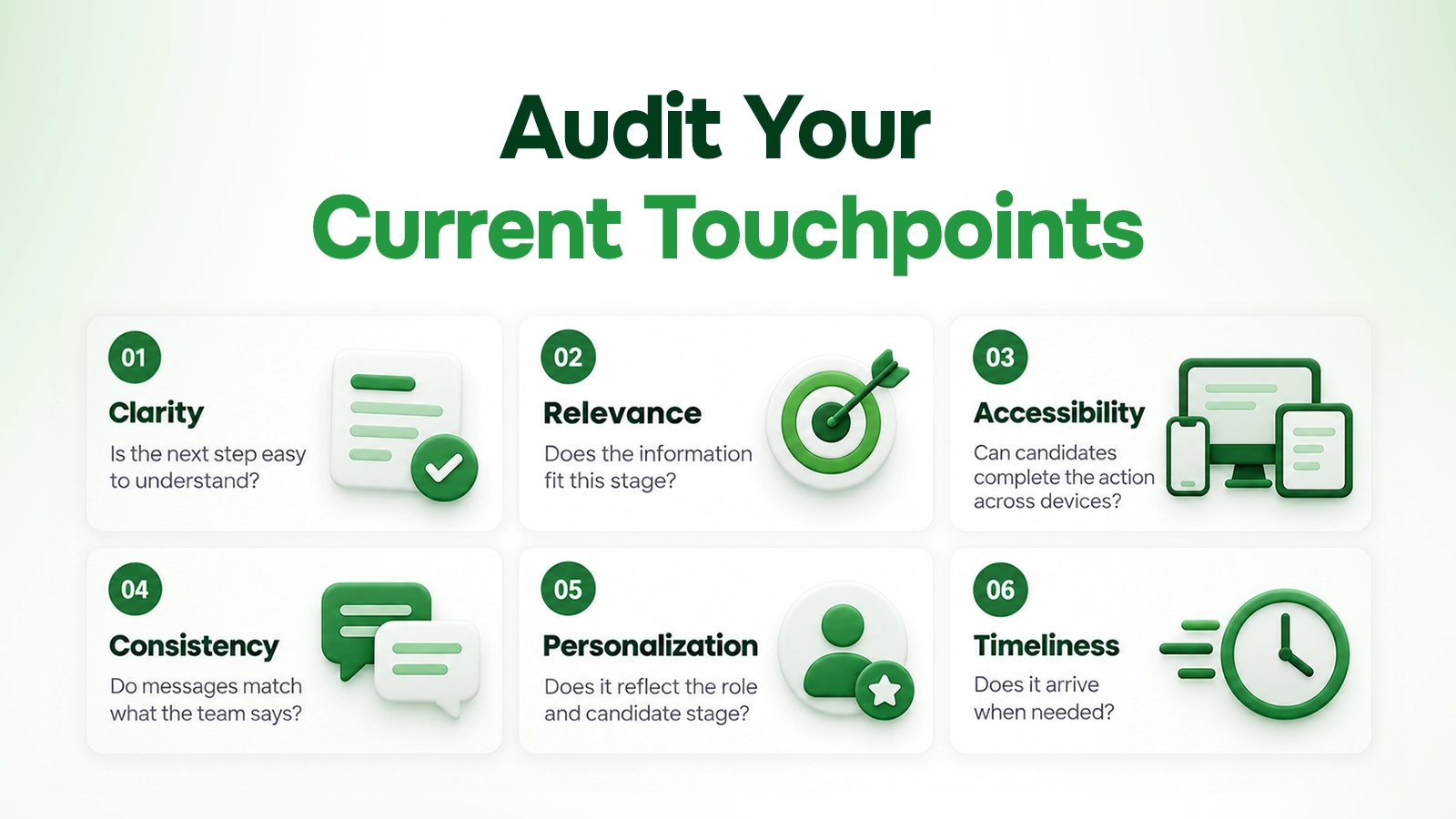
A touchpoint audit examines every interaction between candidates and your organization to identify confusion, excessive effort, delays, and inconsistent treatment.
Do not audit the process only from the recruitment team’s perspective. Follow the same path a real candidate takes and record what they see, receive, and need to do.
Audit touchpoints such as:
Careers pages
Application forms
Confirmation emails
Screening messages
Scheduling links
Interview invitations
Assessment instructions
Status updates
Rejection messages
Offer documents
Preboarding communication
Score each interaction using six criteria:
Clarity: Can the candidate understand what happens next?
Relevance: Is the information appropriate for the current stage?
Accessibility: Can the candidate complete the action across devices?
Consistency: Does the message match what recruiters and interviewers say?
Personalization: Does it reflect the role and candidate stage?
Timeliness: Does it arrive when the candidate needs it?
Once the audit is complete, prioritize the issues that create the most friction, such as broken links, missing instructions, inconsistent messages, lengthy forms, and unowned follow-ups.
After resolving these core process gaps, apply relevant candidate experience best practices to improve the clarity, consistency, and effectiveness of each touchpoint.
3. Improve Communication and Response Times
Clear, timely communication is one of the most direct ways to improve candidate experience because uncertainty can affect every stage of hiring.
You do not need a final decision before contacting a candidate. A short update explaining that the process is continuing, why a delay occurred, and when they can expect another message is better than silence.
Define what you will send after each hiring event:
Hiring Event | Candidate Communication | Owner |
Application received | Confirmation and expected next step | Recruitment system |
Screening completed | Progression or rejection update | Recruiter |
Interview scheduled | Format, participants, and preparation details | Recruiter |
Decision delayed | Status update and revised timeline | Recruiter |
Candidate rejected | Respectful closure | Recruiter |
Offer accepted | Welcome and onboarding instructions | Recruiter and HR |
Clear timelines are important because candidates view silence differently from your hiring team. Criteria research on candidate communication found that 75% of surveyed candidates felt ghosted after two weeks without an update.
This shows that a delay can damage the experience before an internal hiring team considers the decision overdue.
Therefore, set response times your team can follow. For example, you ask interviewers to submit feedback within 24 hours and update candidates within two business days.
“Candidates pay attention to how companies treat them, interpreting it as a sign of the company’s culture.”— Carin Van Vuuren, Chief Marketing Officer, Greenhouse
Turn Your Response Standards Into Automatic Triggers
Send the right update at each hiring event, without manual reminders.
Explore Automation Features4. Strengthen the Interview and Offer Stages
A strong interview experience is structured, relevant, transparent, and respectful of the candidate’s time.
Candidates assess your organization while you assess them. Unprepared interviewers, repetitive questions, unexplained delays, and unclear evaluation criteria can weaken confidence in the role and the wider company.
Prepare every interviewer by defining:
The purpose of the interview
The competencies being assessed
The questions assigned to each interviewer
The scoring criteria
Who will answer candidate questions
Which topics should not be discussed
When feedback must be submitted
Structured interviews help you compare candidates more consistently and reduce unnecessary repetition.
LinkedIn’s survey of more than 14,000 professionals found that 65% said a bad interview experience made them question whether they wanted the job.
Your interview process can therefore affect whether a preferred candidate remains interested.
Additionally, you should keep the offer stage clear and timely. Explain the compensation, benefits, responsibilities, start date, conditions, and response deadline, and provide contact information for related queries.
If approval or documentation is delayed, update the candidate promptly. Clear offer communication helps maintain trust and reduces the risk of losing a preferred candidate.
Get Every Interviewer’s Feedback in One Place
Shared scorecards keep interview decisions moving instead of stalling.
5. Collect Candidate Feedback and Keep Improving
Candidate feedback is especially important after rejection. Greenhouse’s candidate experience research found that 79% of surveyed candidates would consider applying to a company again if they received feedback after an unsuccessful interview.
This feedback helps you understand how applicants actually experience your hiring process.
Collect feedback from hired, rejected, and withdrawn candidates because each group notices different issues.
Ask about:
Communication clarity
Response speed
Application effort
Interview preparation
Process fairness
Role transparency
Overall process length
Keep the survey short and include one open question, such as: “What could we have done better?”
A dedicated candidate experience feedback process can help you choose relevant survey questions, analyze responses, and turn feedback into practical improvements.
Then review the feedback alongside key measures such as candidate withdrawals, time between stages, offer acceptance rates, and reasons for declined offers.
Finally, use the findings to identify one or two priority issues, assign an owner, make improvements, and compare the results over time.
This creates a continuous feedback loop that turns isolated complaints into systemic fixes.
“Like anything in business, you can only manage candidate experience if you can measure it.”— Jordan Burton, Author, LinkedIn Talent Blog
Tools to Support Every Candidate Experience Stage
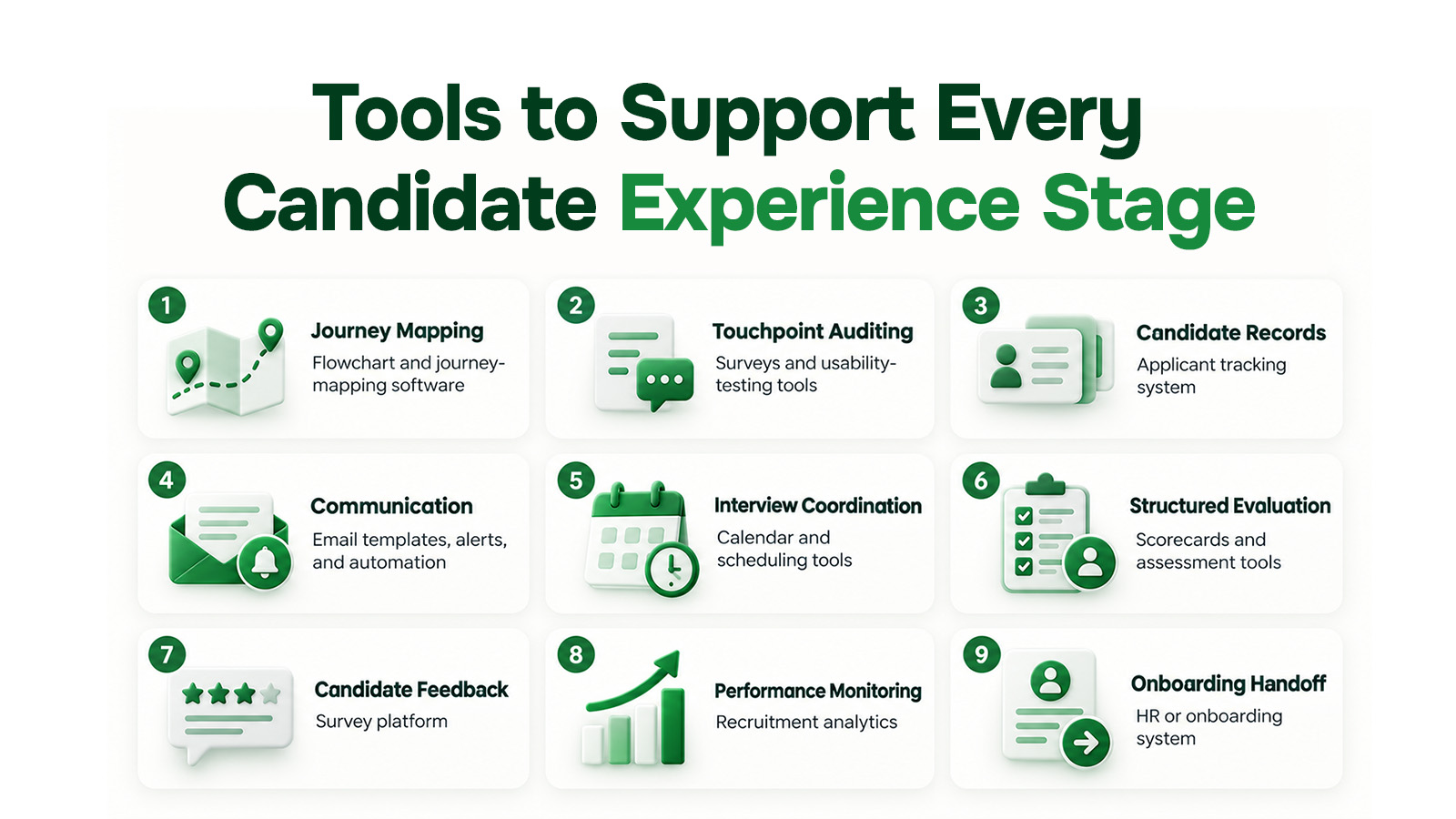
The right tools can help hiring teams coordinate communication, interviews, feedback, and candidate records.
However, technology should support a clearly defined process rather than replace ownership or realistic timelines.
Useful tool categories include:
Candidate Experience Need | Supporting Tool |
Journey mapping | Flowchart or journey-mapping software |
Touchpoint auditing | Survey and usability-testing tools |
Candidate records | Applicant tracking system |
Communication | Email templates, alerts, and automation |
Interview coordination | Calendar and scheduling tools |
Structured evaluation | Scorecards and assessment tools |
Candidate feedback | Survey platform |
Performance monitoring | Recruitment analytics |
Onboarding handoff | HR or onboarding system |
If you need these capabilities in a single platform, an applicant tracking system such as Mercury Recruit can connect candidate records, communication, scheduling, feedback, and analytics across the journey.
Map It Once, Run It on Every Role
Turn your candidate journey into a repeatable hiring workflow.
Try Mercury Recruit FreeConclusion
Building a great candidate experience takes more than friendly interviews and regular emails.
You need clear communication, consistent interviews, transparent offers, and useful feedback.
Start with one role or hiring process. Map the candidate journey, identify the biggest friction points, and assign responsibility for fixing them.
Track response times, withdrawals, feedback, and offer acceptance to see whether your changes are working.
When these practices become part of your recruitment process, candidate experience becomes easier to manage and improve across every role.
FAQs
Frequently Asked Questions
You can create a great candidate experience by simplifying the hiring journey, communicating clearly, respecting candidates’ time, and collecting feedback.