
Active Candidate Sourcing: Methods, Best Practices & Tools
Recruit
Candidate Sourcing
14 min read
Key Highlights
Active candidate sourcing is the process of finding and engaging active job seekers before submitting an application.
Active sourcing is useful for urgent hiring, hard-to-fill positions, high-volume recruitment, and building long-term talent pipelines.
Boolean search, X-ray search, LinkedIn recruiting, ATS mining, direct outreach, and employee referrals are among the most effective active sourcing methods.
Personalized and relevant outreach messages improve candidate response rates and increase engagement.
ATS, sourcing platforms, job boards, contact discovery tools, and recruitment CRMs simplify candidate search, outreach, and pipeline management.
Introduction
Skilled talent shortages remain a big concern for employers worldwide, with 74% of organizations reporting difficulty finding qualified candidates.
Meanwhile, top candidates often stay on the job market for only 10 days, leaving recruiters with little time to connect before another employer makes an offer. Therefore, relying only on job postings and inbound applications often results in missed hiring opportunities.
Active candidate sourcing speeds up the recruitment process. It allows recruiters to identify, engage, and build relationships with qualified talent across multiple sourcing channels. Industry trends highlight the growing role of active sourcing, with 77% of talent acquisition professionals considering it an essential recruitment strategy.
This guide explains what active candidate sourcing is, when to use it, effective sourcing methods, best practices, and the tools and metrics that improve sourcing success.
What is Active Candidate Sourcing?
Active candidate sourcing is the process of finding and contacting people who are looking for a job or have recently shown interest in new opportunities.
Instead of waiting for applications to come in, recruiters search for suitable candidates through job boards, professional networks, resume databases, and other sourcing channels, then start the conversation first.
Unlike passive sourcing, which targets professionals who are not actively searching for a job, active sourcing focuses on finding and engaging people who are already looking for new opportunities or are already exploring new opportunities.
Active candidates may have recently updated their resumes, enabled Open to Work, applied for similar roles, joined talent communities.
“Sourcing and finding people is the most important. You can’t recruit, message, or network with someone you haven’t found.”
— Glen Cathey, Former SVP, Consulting Principal, Talent Advisory, Randstad Enterprise
When Should You Use Active Sourcing?
Active sourcing is especially valuable in competitive hiring markets, where skilled professionals often apply to multiple roles and accept offers within a short time.
In particular, you should use this proactive recruiting method of active sourcing in the following situations:
Hard-to-fill roles: For roles that require specialized skills, niche expertise, or extensive industry experience.
High-volume hiring: When hiring multiple positions within a short period or during seasonal recruitment drives.
Urgent hiring needs: Vacancies that need to be filled within a limited timeframe.
Competitive hiring markets: Industries where employers compete for the same pool of qualified candidates.
Building talent pipelines: If you are a business with recurring hiring requirements, then you can reuse your old database and reach out to the past applicants.
Expanding candidate reach: Recruitment campaigns that require reaching potential hires beyond traditional job postings.
Filling Several Roles on a Tight Deadline?
Manage every open role and its sourced candidates in one place, so urgent hires don’t stall between outreach and interview.
Why Should Recruiters Use Active Sourcing?
Active sourcing helps recruiters fill roles faster, reach more qualified candidates, and maintain greater control throughout the hiring process.
Speeds up hiring: Active candidate sourcing allows recruiters to connect with suitable candidates instead of waiting for applications. As a result, open roles are filled faster, reducing delays in the hiring process.
Builds a stronger talent pipeline: Recruiters can continuously identify and nurture potential candidates, creating a talent pool for current and future hiring needs instead of starting every search from scratch.
Improves shortlist quality: Active sourcing focuses on candidates whose skills and experience closely match the role. Research shows that sourced candidates are more than twice as likely to be hired as inbound applicants.
Reduces reliance on inbound applications: Instead of depending only on job boards and career pages, recruiters can proactively search across multiple sourcing channels to reach talent that might otherwise remain undiscovered.
Supports hard-to-fill roles: Active sourcing makes it easier to identify professionals with specialized skills or niche experience who are less likely to apply through traditional job postings, improving hiring outcomes for difficult-to-fill positions.
What Are the Best Active Candidate Sourcing Methods?
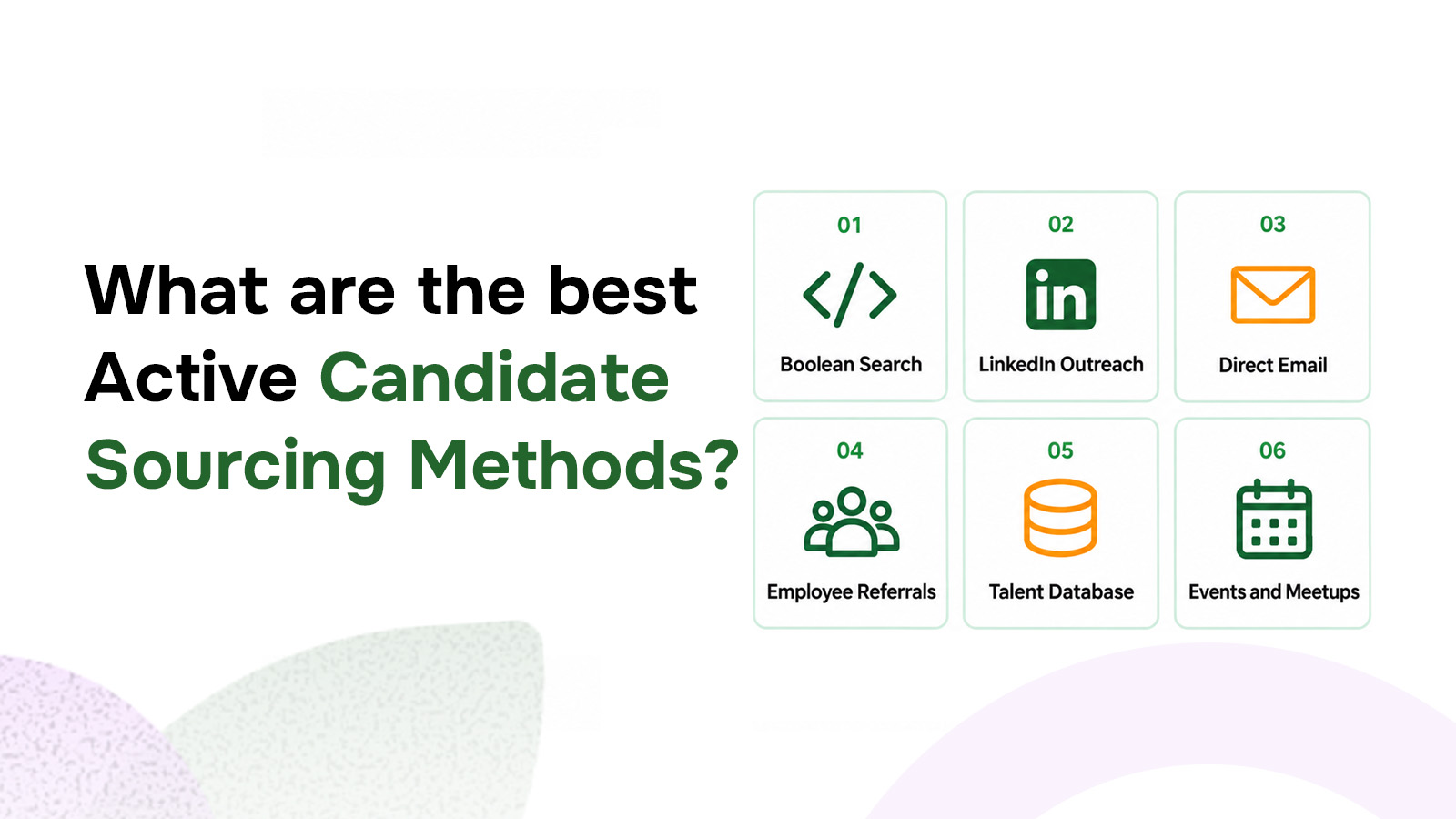
Recruiters use several candidate sourcing methods to reach active job seekers. The right approach depends on the role, hiring timeline, and where qualified candidates spend their time.
Some of major sourcing methods are as listed below:
1. Use Boolean & X-Ray Search
Boolean search uses operators such as AND, OR, and NOT to control how keywords appear in your search results. Instead of showing every profile containing a keyword, it filters results based on your requirements, helping you quickly identify candidates with the right combination of skills, experience, and qualifications.
Example
("software engineer" OR "backend developer") AND Python AND AWS
NOT intern
X-ray search uses search engines like Google to find candidate profiles on specific websites such as LinkedIn, GitHub, or personal portfolios.
Example
site:linkedin.com/in "Data Analyst" SQL "Power BI"
Quick tip: Try different job titles, skills, certifications, and locations to uncover more relevant profiles.
2. Source Candidates Through Social Platforms
Social media platforms are one of the easiest ways to find active job seekers. Search for candidates through professional networks, industry communities, and social platforms where they actively share their work and expertise. Review profiles, portfolios, and recent activities to identify candidates whose skills align with your open roles.
LinkedIn is the most widely used platform for active sourcing, but it is not the only option. Different platforms attract different types of professionals, so choosing the right sourcing channel depends on the role you're hiring for.
LinkedIn: Professionals across most industries
GitHub: Software developers and engineers
Behance and Dribble: Designers and creative professionals
Reddit, Slack, and Discord: Tech communities and niche talent groups
3. Revisit Your Existing Talent Pool
Many recruiters begin every new hiring campaign from scratch. However, some of your strongest candidates may already be in your talent pool. Previous applicants, interview finalists, employee referrals, and silver-medalist candidates have already shown interest in your company and may now be available for the right opportunity.
It's also worth checking your existing database regularly. Candidates gain new skills, earn certifications, change locations, or become open to new opportunities. Someone who wasn't the right fit before could now be an excellent match for your current opening.
If your organization uses an Applicant Tracking System (ATS), search for your candidate database using filters such as skills, experience, location, tags, ratings, interview feedback, and hiring stage.
Learn how Mercury Recruit helps you turn sourced candidates into an engaged talent pipeline for future roles. Explore Talent Pool.
4. Search Job Boards & Resume Databases
Many active job seekers update their resumes on job boards before applying directly to companies. Search resume databases to find candidates based on skills, job titles, experience, education, and location.
However, keep in mind that some resumes may be outdated. Therefore, you should verify recent experience before reaching out to improve the response rate.
“The key for us, number one, has always been hiring very smart people.”
-Bill gates, Cofounder of Microsoft
5. Direct Outreach and Cold Messaging
Finding a profile is only the beginning. After that you need to send personalized outreach to create stronger impressions. To create a lasting impression, mention their recent project, experience, or major achievement to make your message more relevant.
Once you've identified a suitable professional, start the conversation with a customized message.
Whether you connect through LinkedIn, email, or another platform, your cold message should explain why you're reaching out and why the opportunity matches their background. Also, instead of asking them to apply immediately, invite them to a short conversation first.
6. Leverage Events, Referrals & Professional Communities
Some of the best candidates are found through conversations rather than searches. Attend career fairs, industry conferences, webinars, meetups, and hackathons to connect with professionals and expand your talent network.
Another effective sourcing channel is employee referrals. Around 30% of all hires come through referrals each year because employees often recommend candidates who match the company's culture and role requirements. A strong referral program also reduces the average cost per hire by 50% compared to job board sourcing and shortens time-to-hire by 55%.
So, maintain good relationships with current and former employees. A positive offboarding experience and exit interview encourage departing employees to refer qualified professionals in the future.
Finally, explore professional communities for niche roles. Platforms like Reddit, Slack, Discord, and industry-specific forums bring together professionals with specialized skills, making them valuable sourcing channels when hiring for hard-to-fill position.
To learn more about finding the right talent through sourcing, check out our blog on candidate sourcing strategies.
How to Write Effective Active Candidate Sourcing Messages?
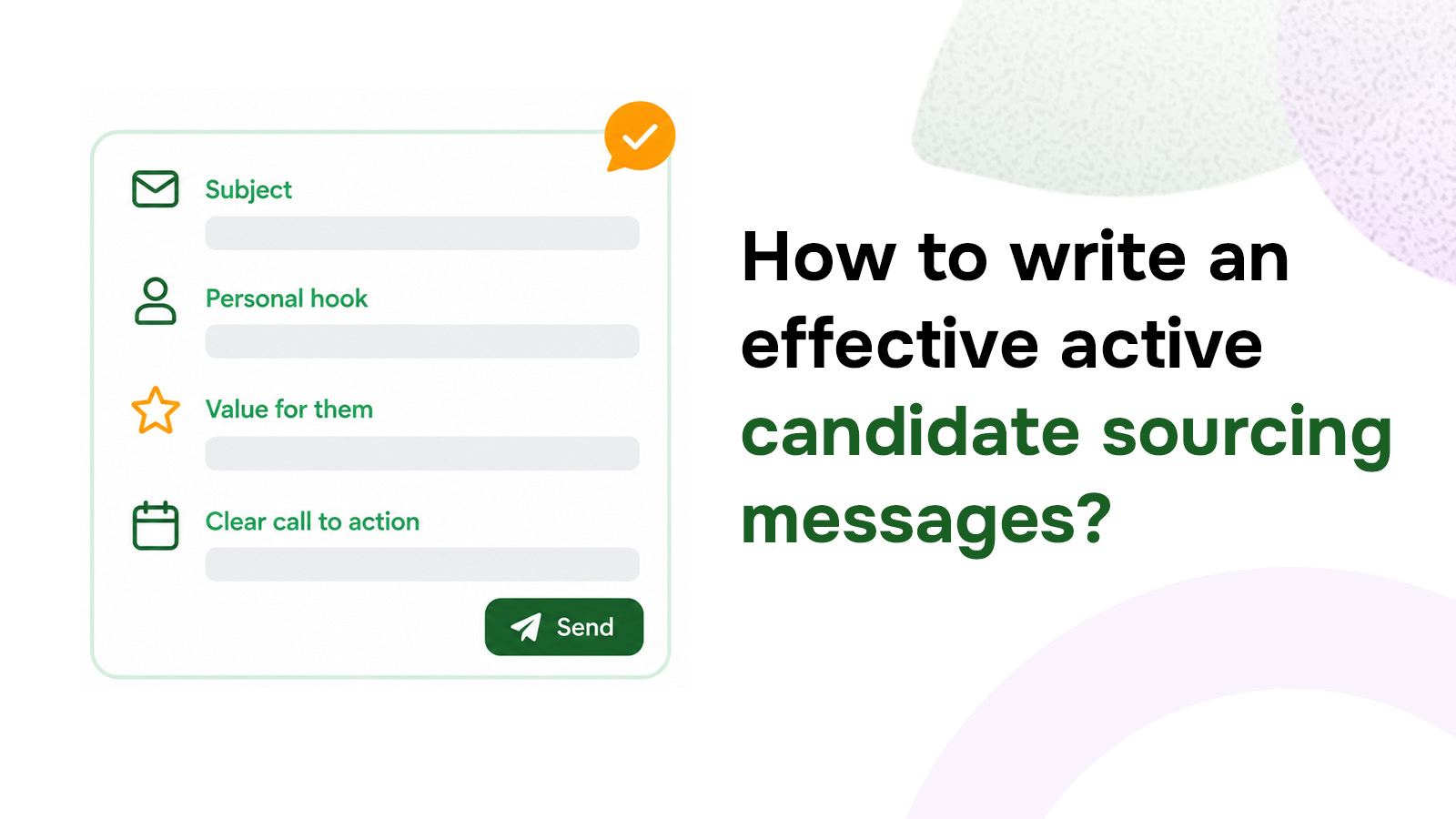
The way you approach candidates often determines whether they respond or ignore your message. Effective sourcing outreach should be personal, concise, and relevant to the opportunity.
Here's how to write an effective sourcing outreach to engage your active candidate:
1. Personalize Every Message
A generic outreach rarely stands out as it seems automated and not personal. But a cold message with reference to candidate skills, experience, or recent achievements shows that your message is tailored to their background and tends to engage people at first sight.
Instead of
"Hi, I have a job opening. Are you interested?”
Try
Hi Sarah, I noticed your experience leading cloud migration projects at ABC Tech. I'd love to discuss a Cloud Engineer opportunity with you, as your background seems like a great match. Would you be open to a quick conversation?
2. Keep It Short and Relevant
Most candidates spend only a few seconds reading a recruiting message. Therefore, briefly explain why you're reaching out, why they're a good fit, and what makes the opportunity worth considering.
3. Highlight the Opportunity
Candidates want to know why they should continue the conversation. Rather than focusing only on the job description, highlight career growth, interesting projects, flexible work arrangements, or other benefits that make the role appealing.
4. Follow Up Professionally
Not every candidate responds to the first message. In many cases, they may simply be busy or overlook it. A polite follow-up after a few days keeps the conversation open but sending repeated messages can be intrusive.
5. End with a Clear Call to Action
Once you've introduced the opportunity, make the next step simple. For example, invite candidates to reply, schedule a short call, or share a convenient time to connect.
Sample Active Sourcing Outreach Message
Hi Sarah,
I noticed that you're actively exploring Cloud Engineer opportunities. During my search for qualified candidates, your experience with AWS, Kubernetes, and cloud migration projects at ABC Tech caught my attention. I believe your background is a great match for the role we're hiring for.
The position offers the opportunity to work on large-scale cloud modernization projects alongside a collaborative engineering team, with flexible hybrid work arrangements.
If you're open to exploring the opportunity, I'd be happy to share more details. Would you be available for a quick call sometime this week?
Looking forward to hearing from you.
Best regards,
Alex Johnson
Senior Technical Recruiter
Looking to improve your hiring results? Explore our guide on how to write an effective job description that attracts qualified candidates and increases application quality.
Essential Tools for Active Candidate Sourcing
Different sourcing tools support different stages of the recruitment process. Some focus on finding candidates, while others organize applicant data, automate sourcing tasks, or manage relationships.
Some of the tools essential for active sourcing are as given below:
1. Applicant Tracking System (ATS)
An Applicant Tracking System (ATS) is recruitment software that helps recruiters to store and organize profiles throughout the hiring process. During active sourcing, you can use the ATS to rediscover previous applicants, interview finalists, and referrals who match new openings instead of beginning every search from scratch.
Examples: Mercury Recruit, Greenhouse, Lever, Workable, Ashby, iCIMS
2. Professional Sourcing Platforms
Professional sourcing platforms are talent search tools that collect profiles from professional networks and public sources. Advanced filters, AI-powered matching, and built-in messaging enable recruiters to identify qualified professionals and contact them directly.
Examples: LinkedIn Recruiter, SeekOut, hireEZ
“The hardest thing in life is to find the right people to hire.” – Elon Musk
3. Job Boards & Resume Databases
Job boards and resume databases contain profiles of candidates who are actively searching for jobs or have recently updated their resumes. Recruiters and HRs search these databases using filters such as job title, skills, location, education, and years of experience.
Examples: Indeed Resume, Monster, CareerBuilder, ZipRecruiter
4. Contact Discovery Tools
Contact discovery tools are used to find verified business contact details including emails and phone numbers linked to candidate profiles. Recruiters use them after identifying potential candidates on LinkedIn, GitHub, or other sourcing platforms.
Examples: ContactOut, Lusha, Hunter.io, Apollo.io
5. Recruitment CRM
A Recruitment CRM is a candidate relationship management software designed for long-term talent engagement. It records candidate interactions, organizes talent pools, schedules follow-ups, and keeps communication history for future hiring campaigns.
Examples: Beamery, Gem, Avature
For more details on candidate sourcing tools, check out our guide on the best candidate sourcing tools to discover the right tools to simplify candidate search and hiring.
How Do You Measure Active Candidate Sourcing Success?
The success of active candidate sourcing depends on more than the number of candidates you contact. The right metrics show whether you're reaching qualified talent, engaging them effectively, and turning sourcing efforts into successful hires.
1. Candidate Response Rate
Candidate response rate measures the percentage of sourced candidates who reply to your outreach. A higher response rate indicates that you're targeting the right candidates with relevant and personalized messages.
Formula
Candidate Response Rate = (Number of candidates replies ÷ Total outreach messages sent) × 100
2. Qualified Candidate Rate
Qualified candidate rate measures how many sourced candidates meet your job requirements. It indicates whether your sourcing strategy is attracting candidates with the right skills, experience, and qualifications.
Formula
Qualified Candidate Rate = (Number of qualified candidates ÷ Total candidates Identified) × 100
3. Outreach-to-Interview Conversion Rate
It shows how many contacted candidates progress to the interview stage. It reflects the effectiveness of both your sourcing strategy and your outreach messages.
Formula
Outreach-to-Interview Conversion Rate = (Number of candidates interviewed ÷ Total candidates contacted) × 100
4. Source-to-Hire Conversion Rate
Source-to-hire conversion rate measures how many sourced candidates eventually become hires. It helps identify which sourcing channels consistently produce successful hires.
Formula
Source-to-Hire Conversion Rate = (Number of hires from sourced candidates ÷ Total sourced candidates) × 100
See Which Channels Actually Produce Hires
Track response rates, conversions, and time-to-hire by sourcing channel, without maintaining spreadsheets.
Explore Analytics5. Candidate Engagement Rate
Candidate engagement rate measures the percentage of contacted candidates who respond or take the next step after your outreach. It shows how effective your sourcing messages are.
Formula
Candidate Engagement Rate = (Number of candidates who replied or took the next step ÷ Total candidates contacted) × 100
6. Pipeline Speed
Pipeline speed measures how long it takes to move a candidate from the first outreach to offer acceptance. A shorter pipeline speed indicates a faster and more efficient hiring process.
Formula
Pipeline Speed (Days) = Offer Acceptance Date − First Contact Date
Found candidates who match your requirements? Visit our guide on "What Is Candidate Screening?" to learn how to assess candidates efficiently and identify the best fit for your role.
Reach Active Candidates Before Your Competitors Do
Source, rediscover, and move qualified candidates through one AI-powered pipeline, so strong talent never gets lost in spreadsheets.
Try Mercury Recruit FreeConclusion
Active job seekers don’t stay on the market for long, and many accept an offer within days. Active candidate sourcing helps you reach them first by searching the channels where they’re visible and starting the conversation before another employer does. With the right sourcing methods, personalized outreach, and a consistent process, it strengthens your talent pipeline and leads to better hiring outcomes.
FAQs
Frequently Asked Questions
Active sourcing is a proactive recruitment strategy where recruiters use different platforms and networks to find, engage, and attract potential candidates instead of waiting for applications.