
How to Improve Employer Branding: 10 Proven Strategies
Recruit
Employer Branding
12 min read
Key Highlights
Your employer brand improves when the experience you provide consistently matches the promises you communicate.
A clear EVP helps candidates understand why they should join and why current employees choose to stay.
Employee stories and honest reviews build more trust than polished messages without supporting evidence.
Candidate experience and onboarding should continue the same expectations created by your recruitment content.
Measuring applications, reviews, offers, referrals and retention helps you identify whether your improvements are working.
Introduction
Your employer brand promises growth, flexibility and a supportive culture, but candidates will test those claims against employee reviews, interviews, social media and their own interactions with your team.
When those touchpoints tell different stories, qualified candidates lose trust before an offer is made.
LinkedIn reports that 75% of job seekers consider an employer brand before applying, which means improving your reputation can influence candidate interest early in the hiring journey.
The research also found that 57% of recruiters expected their investment in employer branding to increase.
In this blog, you will learn how to improve employer branding through your EVP, content, reviews, candidate experience, onboarding, social media, and leadership practices.
What Does Improving Employer Branding Involve?
Improving employer branding means changing how candidates and employees experience, understand, and describe your organization as a workplace.
Your employer brand is the reputation people form, whereas employer branding is the work you do to shape and communicate that reputation.
If you need a fuller explanation, start with our guide to what employer branding is.
Effective improvement begins with listening. You need to compare your official message with employee feedback, candidate comments, workplace reviews, and recruitment outcomes.
This helps you identify whether the main problem is unclear communication, an inconsistent hiring process, or a workplace issue that branding alone cannot solve.
You should also separate employer branding from short-term promotion. Employer branding builds long-term trust, whereas recruitment marketing promotes particular roles and hiring campaigns.
Our guide to employer branding and recruitment marketing explains how the two activities support each other.
How to Improve Employer Branding: 10 Proven Strategies
You can enhance your employer brand by improving both the employment experience and the way you communicate it.
The following employer branding tips will help you align your workplace experience with the message candidates see:
1. Define or Refresh Your Employer Value Proposition
Your employer value proposition (EVP) explains what employees receive in exchange for their skills, effort, and commitment.
A useful EVP should reflect what current employees value, what suitable candidates expect, and what your organization can consistently deliver.
It includes purpose, compensation, career growth, leadership, flexibility, recognition, and workplace culture.
Review the EVP if it contains generic claims such as “great culture,” “competitive benefits” or “exciting opportunities.” Replace them with practical evidence, such as:
Career development: Mentorship, learning budgets, or internal mobility.
Flexibility: Clear remote, hybrid or scheduling policies.
Recognition: Defined reward or performance review practices.
Purpose: Specific examples of how employees contribute to customers or communities.
Benefits: Transparent information about the support employees receive.
Your EVP should guide job descriptions, career-page content, interviews, onboarding, and internal communication.
If each channel communicates a different employment promise, candidates will struggle to understand what your organization genuinely offers.
2. Audit Your Employer Brand and Online Reviews
An employer-brand audit compares the reputation you want to build with how candidates and employees currently view your organization.
Review internal and external evidence rather than depending only on leadership assumptions.
The audit can include:
Employee engagement and pulse surveys
Candidate feedback and withdrawal reasons
Exit interviews and turnover themes
Glassdoor and Indeed reviews
Careers-page analytics
Social-media comments and engagement
Offer-decline reasons
Referral and retention data
Look for repeated themes rather than reacting to one negative comment. For example, several reviews mentioning limited career growth indicate that your EVP overstates development opportunities or that managers are not communicating those opportunities clearly.
Indeed reports that job seekers spend more than 27% of their time on an Indeed Company Page reading reviews.
This makes reviews a meaningful research source for candidates, not a minor reputation channel.
3. Turn Your Careers Page into a Trust-Building Tool
Your careers page should help candidates understand the workplace before they decide to apply.
Do more than list vacancies. Explain your culture, values, working arrangements, benefits, development opportunities and recruitment process in clear language.
The following content gives candidates practical information:
Employee stories from different roles and career stages
Realistic examples of day-to-day work
Leadership and team introductions
Learning and career-progression opportunities
Remote, hybrid or office expectations
Benefits and workplace policies
Recruitment stages and expected timelines
Accessible links to relevant vacancies
Keep the information current. An outdated careers page can weaken trust when job descriptions, interview explanations or workplace policies contradict it.
On LinkedIn, Company Pages with complete information receive 30% more weekly views, according to LinkedIn’s 2024 guidance.
Although this figure refers specifically to LinkedIn pages, it supports a broader point: complete and useful employer information gives more candidates a reason to continue researching your organization.
4. Encourage Authentic Employee Advocacy
Employee advocacy allows candidates to hear about the workplace from people who experience it directly.
Through referrals, professional conversations, reviews, events, and social-media posts, employees support your employer brand.
These contributions are most credible when participation is voluntary, and employees can share honest experiences.
Make advocacy easier by:
Providing clear social-media guidelines
Sharing optional content and company updates
Inviting employees to participate in events
Offering basic storytelling or social-media training
Recognizing contributions without controlling the message
Avoid giving employees scripts that make every post sound identical. Candidates are more likely to trust a specific personal story than a collection of carefully repeated claims.
5. Share Real Employee Stories and Workplace Content
Authentic workplace content helps candidates see how your employment promise appears in daily work.
Interview employees from different teams, locations, backgrounds, and levels of seniority. Ask about specific projects, learning experiences, challenges, career moves, and team practices instead of requesting generic praise.
You can turn these conversations into:
Short employee testimonials
Day-in-the-life articles or videos
Career-development stories
Team and project profiles
Employee-led social posts
Event and volunteering content
Leadership question-and-answer features
Balanced and authentic stories build more trust, while a clear employer branding strategy keeps your content, channels, and messages working toward the same goal.
“Employer branding is not only about hiring, it is also about shaping the perception of a company’s work culture.”— Marquise McCoy, former Employer Branding Program Manager, Netflix
6. Respond Constructively to Employer Reviews
Responding to review platforms such as Glassdoor and Indeed shows candidates that your organization listens, even when the feedback is critical.
Do not argue with reviewers, reveal personal information, or use the same response for every comment.
A useful response should acknowledge the feedback, address the theme professionally, and explain any relevant action without making promises you cannot confirm.
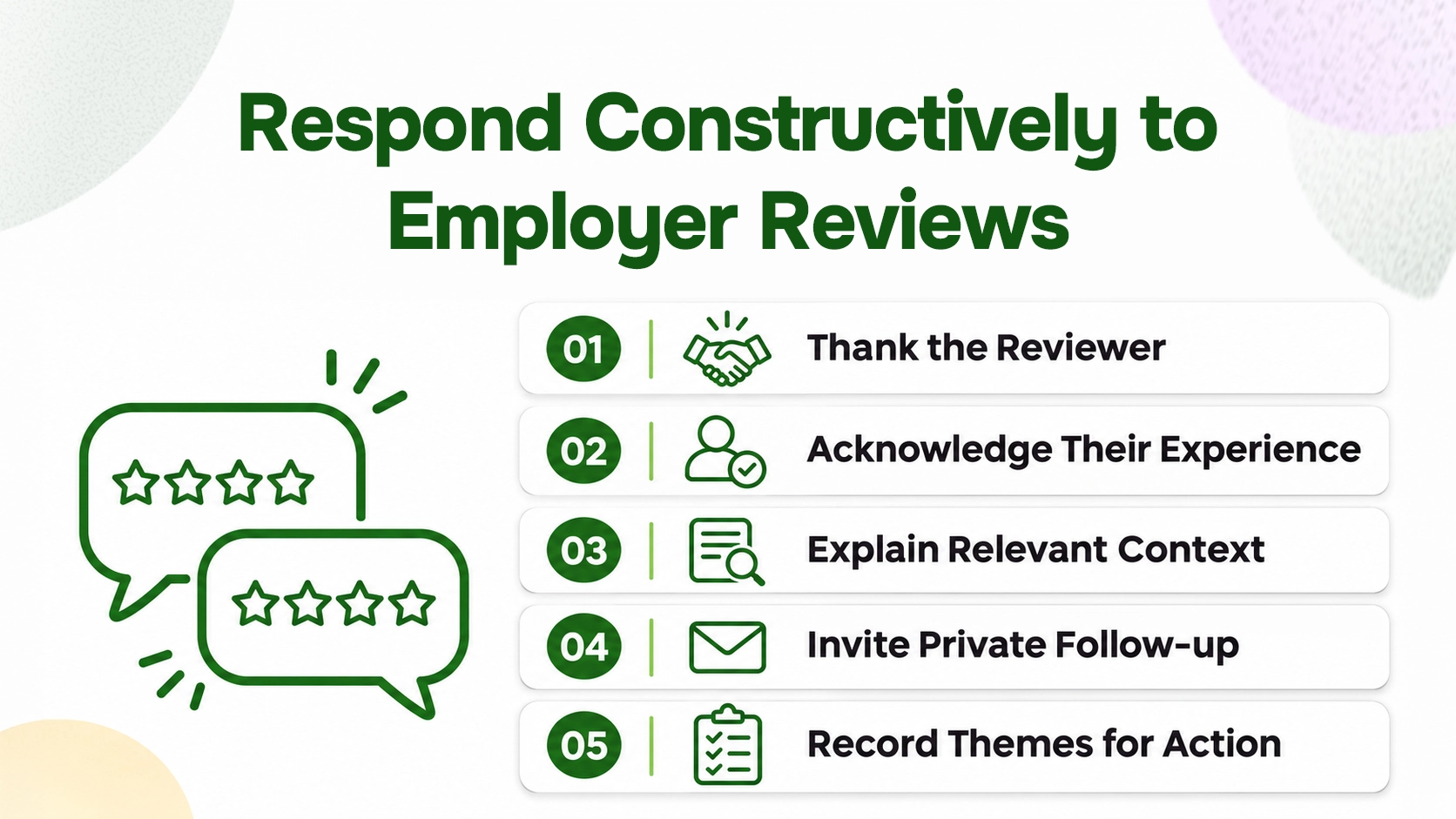
Use this simple structure:
Thank the reviewer for sharing feedback.
Acknowledge the specific issue or positive experience.
Explain relevant context without dismissing the person’s view.
Invite private follow-up when appropriate.
Record the theme for internal review.
According to Glassdoor’s review guidance, 86% of employees and job seekers are likely to research reviews when deciding where to apply, and more than 65% of users read at least five reviews before forming an opinion.
The same source reports that 80% of job seekers who read reviews say their perception improves after seeing an employer respond.
To understand the issues raised in public reviews also affect your hiring process, compare them with candidate experiences feedback.
7. Improve Every Stage of the Candidate Experience
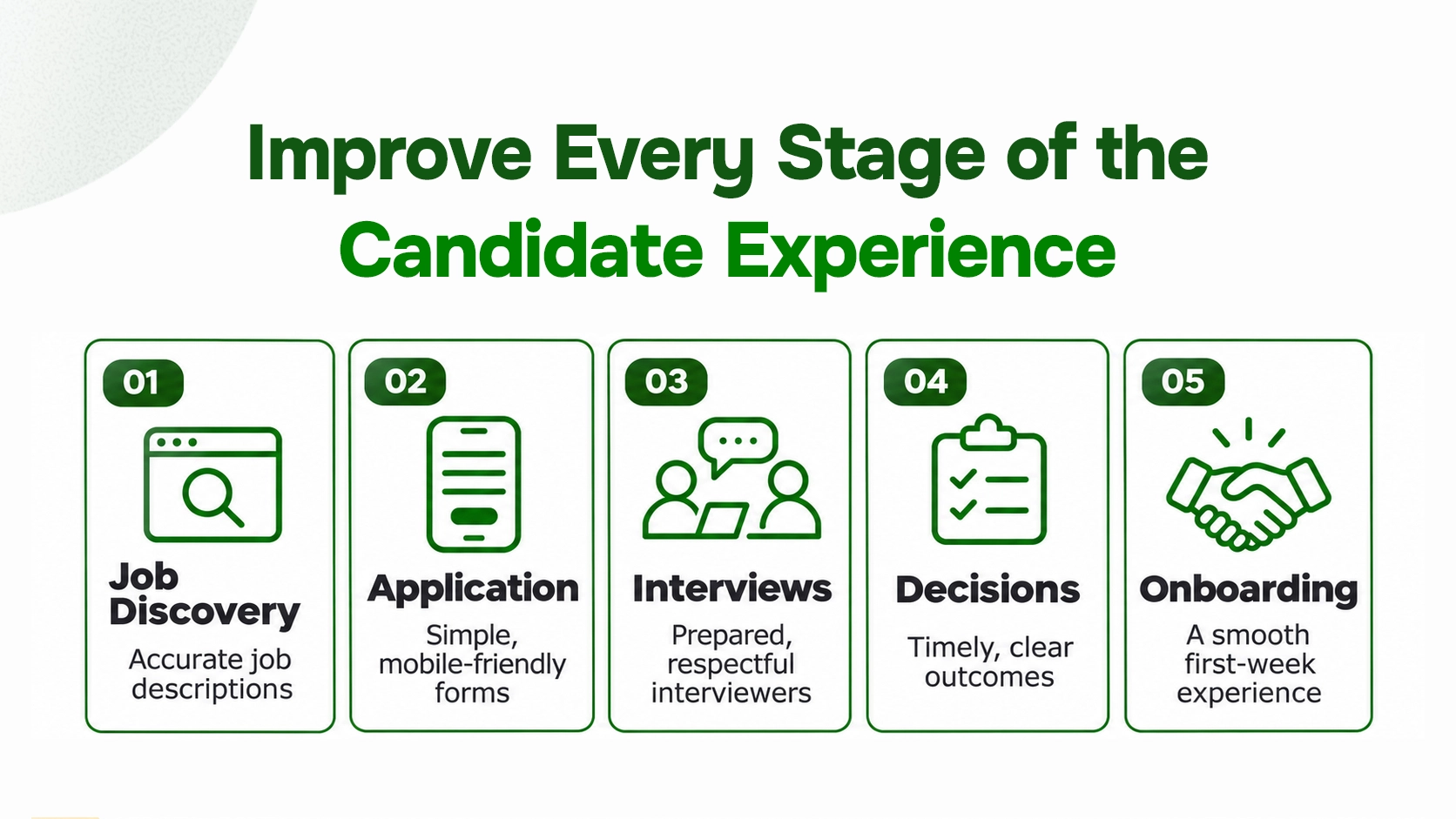
Candidate experience shapes your employer brand because applicants judge your organization through every recruitment interaction.
Review the journey from job discovery to final decision. Candidates should understand what happens next, how long each stage takes and who they can contact with questions.
Focus on practical improvements such as:
Shorter, mobile-friendly applications
Accurate job descriptions
Prompt application confirmations
Clear interview instructions
Relevant assessments
Regular status updates
Timely decisions
Respectful rejection messages
A strong candidate experience does not require every candidate to receive an offer. It requires a process that is organized, transparent, and respectful regardless of the outcome.
Use feedback to identify the stages where candidates withdraw, stop responding, or report confusion.
Then measure whether changes improve completion, interview attendance, offer acceptance and willingness to reapply.
Never Leave a Candidate Guessing
Send confirmations and status updates automatically at every stage.
8. Connect Recruitment with Employee Onboarding
Onboarding should continue the expectations created during recruitment rather than presenting new hires with different workplace experience.
Share onboarding information after the offer is accepted, prepare equipment and access in advance, and give new employees a clear first-week plan.
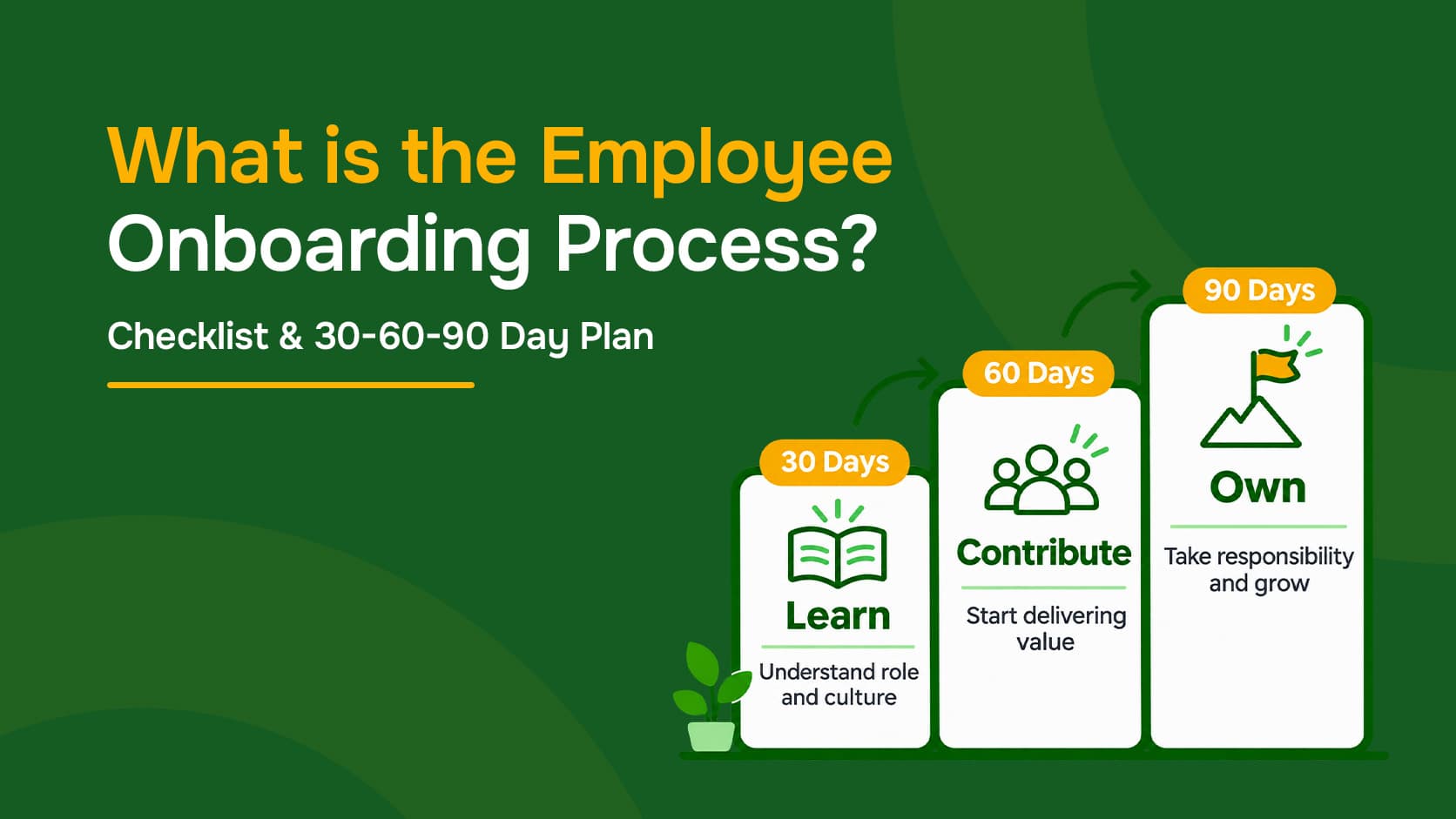
A consistent employee onboarding process helps new hires see that your employment promise continues after recruitment.
LinkedIn reports that 7 in 10 employees with exceptional onboarding experiences describe having “the best possible job” and are 2.6 times more likely to be extremely satisfied with their workplace.
These findings support treating onboarding as an employer-brand touchpoint rather than a purely administrative process.
9. Build Your Employer Brand Through Social Media
Social media gives candidates an ongoing view of your organization between formal recruitment campaigns.
Choose channels based on where your target candidates already spend time. LinkedIn suits professional and specialist audiences, whereas Instagram, TikTok, YouTube or industry communities support other talent groups.
Create a balanced content mix that includes:
Employee perspectives
Team achievements
Career-development stories
Leadership updates
Workplace events
Community initiatives
Practical career advice
Relevant job opportunities
Avoid turning every post into a vacancy announcement; instead, use content marketing to give candidates useful insight into your people, work, and values.
Then measure reach, engagement, career-page visits, and applications to see which social content supports your employer brand.
10. Align Leadership with the Culture You Promote
Leadership behavior has to support the company culture described in your EVP, recruitment content, and employee stories.
If leaders promote openness but avoid difficult questions, or promote flexibility while managers discourage its use, employees and candidates will notice the gap.
Leadership alignment requires:
Clear expectations for manager behavior
Consistent explanations of company values
Accountability for employee feedback
Visible support for workplace policies
Honest communication during organizational change
Coordination between HR, recruitment, marketing and communications
Give leaders evidence from employee surveys, candidate feedback, reviews, and recruitment data.
This turns employer branding from a content project into a business responsibility.
“You’ve got to own what you are and who you are.”— Ed Nathanson, former Vice President of Talent and Talent Branding, EQRx
How to Measure Employer Brand Improvement and Track Results
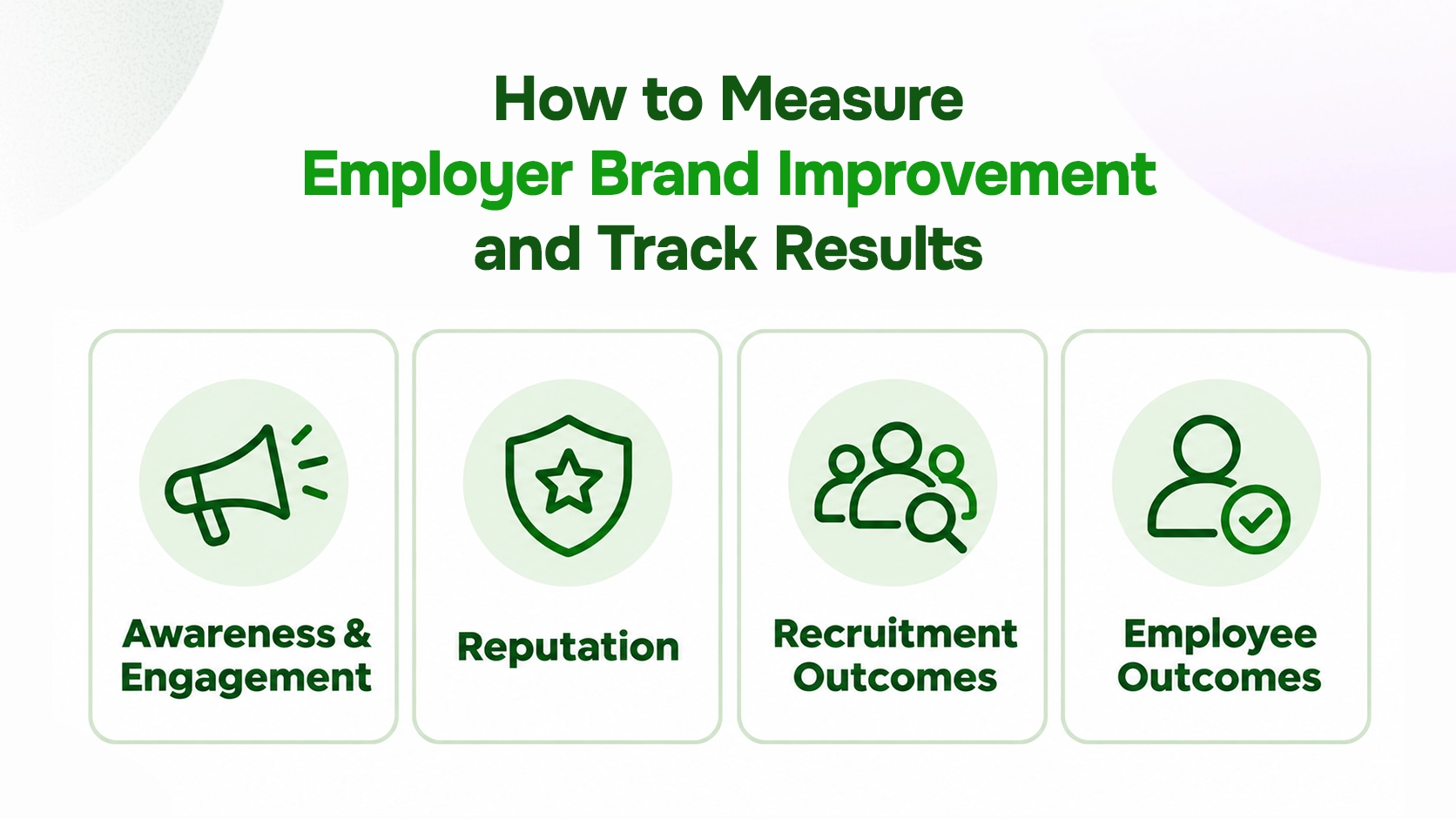
You can measure employer-brand improvement through reputation, engagement, recruitment, and employee outcomes rather than relying on one social media score.
The following table explains which metrics help you understand whether your actions are improving awareness, candidate decisions, and employee experience:
Metric | What it tells you |
Careers-page traffic | Whether more candidates are researching your workplace |
Qualified application rate | Whether your message attracts suitable applicants |
Application completion | Whether candidates encounter friction before submitting |
Review rating and sentiment | How employees describe the workplace publicly |
Employer-review response rate | Whether your team acknowledges candidate-facing feedback |
Social engagement | Whether employer-brand content reaches and interests candidates |
Offer acceptance | Whether finalists remain confident after recruitment |
Candidate withdrawal rate | Where trust or interest is declining |
Employee referral rate | Whether employees are willing to recommend the organization |
New-hire satisfaction | Whether onboarding matches recruitment expectations |
Retention and early turnover | Whether the employment promise reflects reality |
Review the results by role, department, location, and hiring stage instead of relying only on company-wide averages.
Then use the findings to guide action: improve career-page content when qualified applications stay low, and review compensation, interviews, and role expectations when offer acceptance falls.
See Whether Your Brand Work Is Paying Off
Track offer acceptance, withdrawals, and source of hire by stage.
Explore AnaCommon Employer Branding Mistakes to Avoid
Employer-branding improvements can fail when organizations focus on visibility without correcting the underlying experience.
The following mistakes weaken trust and make branding activity less effective:
Promoting claims without evidence: Statements about culture, development, or flexibility need practical examples.
Ignoring negative feedback: Unanswered patterns can suggest that leadership is not listening.
Using only polished corporate content: Candidates also want credible employee perspectives.
Treating reviews as a public-relations problem: Reviews should inform workplace and management improvements.
Separating recruitment from onboarding: New hires should not encounter a different experience after accepting.
Posting without a strategy: Content needs a clear audience, message, and business objective.
Copying competitors: Your employer brand should reflect your actual culture and employment offer.
Measuring only followers and likes: Visibility does not confirm candidate quality, offer acceptance or retention.
Contacting candidates inconsistently: Delays and unclear updates can weaken your brand during recruitment.
Leaving leaders outside the process: Employer branding loses credibility when leadership behavior contradicts the message.
Strengthen Every Candidate Touchpoint
Keep candidate communication and hiring stages consistent in one place.
Try Mercury Recruit FreeConclusion
Improving employer branding is not mainly about publishing more content. It is about making your employment promise clearer and ensuring that candidates and employees experience what you communicate.
Begin with an audit of your EVP, reviews, careers page and candidate feedback.
Then prioritize the gaps that most affect trust, such as unclear expectations, inconsistent communication, weak onboarding, or unsupported culture claims.
Your wider recruitment process should reflect the same message at every stage.
When leadership behavior, employee experience and recruitment communication align, you create an employer brand that attracts suitable candidates and remains credible after they join.
FAQs
Frequently Asked Questions
Improve your employer branding by reviewing your reputation, clarifying your EVP, strengthening your careers page, sharing authentic employee stories, and improving candidate and employee experiences.